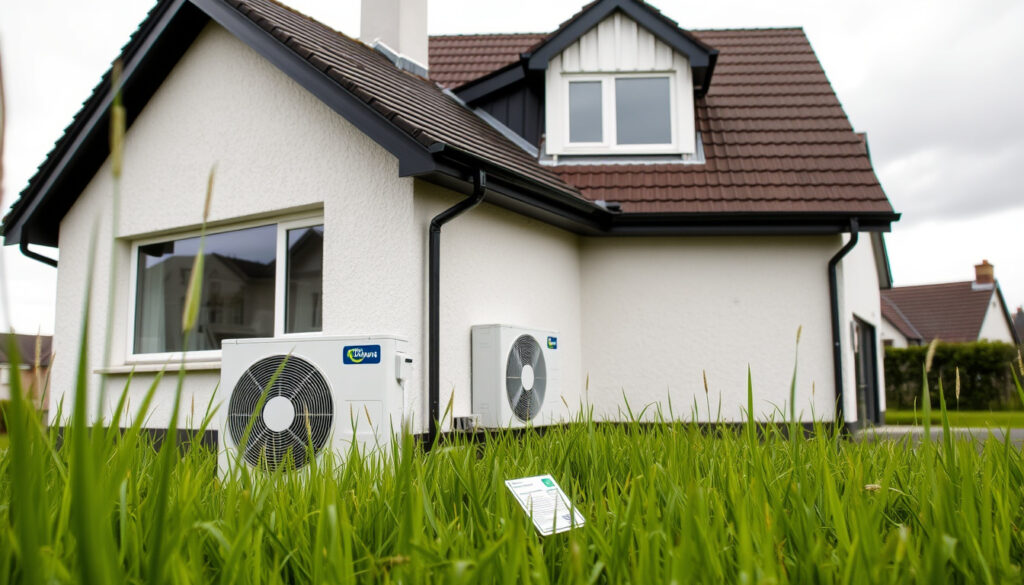
Air Source Heat Pump: Cost, Downsides & Grants in Ireland
Few home improvement decisions spark as much back-and-forth as whether to swap a trusty oil boiler for an air source heat pump. Irish homeowners, in particular, are weighing upfront costs between €12,000 and €18,000 against rising oil prices and generous SEAI grants of up to €6,500.
Average cost Ireland (installed): €12,000–€18,000 · Efficiency (CoP): 3.0–4.0 (300–400%) · Annual savings vs oil (typical home): €300–€600 · Lifespan: 15–20 years · Grants available (Ireland): Up to €6,500 (SEAI)
Quick snapshot
- SEAI offers up to €6,500 grant for a house and up to €4,500 for an apartment (SEAI (Ireland’s sustainable energy authority))
- Installed cost of an air-to-water heat pump for a typical 100m² semi-detached house is approximately €17,200 (Bord Gáis Energy (Irish energy supplier))
- Martin Lewis says: “If you’re replacing oil, it’s a no-brainer in the long run” (MoneySavingExpert (consumer finance authority))
- Exact payback period varies significantly by home insulation and future fuel prices
- Long-term reliability data for modern heat pumps in Irish climate is still emerging
- How future electricity price changes will affect total cost of ownership
- February 2026: SEAI maximum heat pump grant for houses increased from €6,500 to €12,500 (Pipelife Eco (Irish plumbing & heating specialists))
- Bord Gáis Energy guide valid as of May 2026 shows grant amounts up to €6,500 (Bord Gáis Energy heat pump guide) (Pipelife Eco (Irish plumbing & heating specialists))
- As electricity prices evolve, payback periods may shorten or lengthen
- More homes may become eligible as SEAI reviews insulation requirements
- Air-to-air systems could gain popularity due to lower upfront cost and simpler installation
Six key specs illustrate the performance and price range of air source heat pumps in Ireland.
| Specification | Value |
|---|---|
| Typical efficiency (CoP) | 3.0–4.0 |
| Average installed cost (air-to-water) | €12,000–€18,000 |
| Average installed cost (air-to-air) | €4,000–€8,000 |
| SEAI maximum grant (air-to-water) | €6,500 |
| Annual saving vs oil | €300–€600 |
| Lifespan | 15–20 years |
What are air source heat pumps and how do they work?
How a heat pump extracts heat from outside air
- A heat pump moves heat using refrigerant and a compressor, not by burning fuel (Bord Gáis Energy guide)
- Even at -15°C, air contains usable thermal energy
- Typical efficiency (CoP) is 3.0–4.0 meaning 1 kWh electricity produces 3–4 kWh heat
Air-to-water vs air-to-air systems
- Air-to-water systems connect to radiators or underfloor heating; air-to-air systems distribute warm air directly
- Air-to-water is more common for whole-home heating in Ireland
- Grant amounts differ: up to €6,500 for air-to-water, up to €3,500 for air-to-air (SEAI Heat Pump Webinar for Homeowners)
An air source heat pump is essentially a fridge in reverse. For every euro spent on electricity, you get three to four euros worth of heat — far more efficient than any boiler. The catch: it only works this well in a well-insulated home.
The pattern: heat pumps deliver high efficiency but depend on insulation and proper sizing for full savings.
What is the downside of the air source heat pump?
Higher upfront cost compared to gas or oil boilers
- Installation cost in Ireland typically €12,000–€18,000 before grants (Bord Gáis Energy)
- A new oil boiler costs roughly €2,500–€4,000 installed — the price gap is substantial
Lower efficiency in extreme cold
- Performance drops below -10°C; backup heating may be needed (SEAI guidance)
- Irish winters rarely hit those lows, but cold snaps can reduce efficiency
Noise from outdoor unit
- Outdoor unit noise can be 40–60 dB — comparable to a modern fridge
- Placement away from bedrooms is recommended
Requires well-insulated home
- Poor insulation reduces efficiency; retrofit insulation often needed to qualify for SEAI grants (SEAI)
- Homes built before 2011 may need extra insulation work
The biggest hidden cost for many Irish homeowners isn’t the heat pump itself — it’s the insulation upgrade. Without it, your heat pump will struggle and your electricity bill will climb. Budget for both or neither.
The implication: addressing insulation first makes the heat pump investment viable for most off-gas homes.
Is it worth getting an air source heat pump?
Cost savings vs oil, gas, and electric heating
- Annual savings of €300–€600 vs oil for average Irish home (Bord Gáis Energy)
- Compared to electric resistance heating, savings can exceed €1,000 per year
Payback period with SEAI grants
- SEAI grant up to €6,500 reduces net cost to roughly €6,700 after grant for a typical 3-bed semi-detached house (Bord Gáis Energy)
- Payback typically 5–10 years when replacing oil
- February 2026 grant increase to €12,500 (from Pipelife Eco) could shorten payback further if confirmed
Martin Lewis verdict on heat pumps
- Martin Lewis: “If you’re replacing oil, it’s a no-brainer in the long run” (MoneySavingExpert (Martin Lewis’s consumer advice site))
- He warns that homes with gas boilers or poor insulation should be more cautious
For the 40% of Irish homes still on oil (according to CSO data), the decision is accelerating. A heat pump now costs less per year to run than oil even with moderate efficiency — and with grants, the upfront sting is manageable.
What this means: homeowners with oil heating and adequate insulation can expect a positive return within a decade.
What is the difference between a heat pump and an air source heat pump?
Heat pump categories: air source, ground source, water source
- Ground source heat pumps use underground loops; air source uses outside air (SEAI)
- Water source heat pumps extract heat from a body of water — rare in Ireland
- All types use the same thermodynamic principle
Why ‘heat pump’ is the umbrella term
- Air source is cheaper to install but less efficient in extreme cold than ground source
- Ground source grants are also up to €6,500 (SEAI webinar)
The pattern: air source balances affordability and performance for most Irish homes.
Why does my house feel cold with a heat pump?
Heat pumps deliver lower temperature heat for longer periods
- Heat pumps produce 35–50°C flow temperature vs 60–70°C from boilers (Bord Gáis Energy)
- Homes feel comfortable if heat is steady; don’t chase ‘instant heat’
Common mistakes: thermostat settings and radiator sizing
- Oversized or undersized radiators cause discomfort
- Setting thermostat to a higher temperature does not speed up heating
- Leave heat pump running during the day rather than on-off cycles
If your house feels cold, first check radiator sizing and insulation. A heat pump needs properly sized emitters. Many Irish installers now recommend larger radiators for retrofit homes to compensate for the lower flow temperature.
The catch: proper emitter sizing and insulation are essential; without them, comfort suffers.
Is it okay for a heat pump to run all night in winter?
The 30 minute heating rule myth
- Running a heat pump constantly is normal and efficient
- The 30 minute rule applies to boilers, not heat pumps (Energy Saving Trust (UK efficiency body))
- Short on-off cycles waste energy and wear out the compressor
Optimal scheduling for efficiency
- Night setback of 2–3°C is acceptable; deeper setbacks waste energy
- Let the heat pump run steadily at low power overnight
- Smart thermostats can help balance comfort and cost
Your oil boiler was designed to blast heat for 30 minutes then shut off. A heat pump is designed to run for hours at low output. The 30-minute rule is the exact opposite of what a heat pump wants – leaving it on all night is actually cheaper.
The pattern: heat pumps reward continuous low-power operation, unlike boilers.
Air source heat pump cost and grants in Ireland (2025 update)
Installation cost breakdown: air-to-water vs air-to-air
- Air-to-water: €12,000–€18,000; air-to-air: €4,000–€8,000 (Bord Gáis Energy)
- Air-to-air is simpler and cheaper but only heats air, not water
SEAI grants and eligibility
- SEAI heat pump grant: up to €6,500 for air-to-water, up to €3,500 for air-to-air (SEAI Webinar)
- Additional €600 technical assessment grant may apply (SEAI grants page)
- Homes built before 2011 may need extra insulation to qualify
- February 2026: maximum grant for houses increased to €12,500 per Pipelife Eco (pending official SEAI update)
Three systems, one pattern: the higher the upfront cost, the larger the grant to bridge the gap.
| System | Installed cost | Max SEAI grant | Typical net cost |
|---|---|---|---|
| Air-to-water | €12,000–€18,000 | €6,500 | €5,500–€11,500 |
| Air-to-air | €4,000–€8,000 | €3,500 | €500–€4,500 |
| Ground source | €15,000–€25,000 | €6,500 | €8,500–€18,500 |
The implication: for eligible homes, grants make heat pumps a financially sound upgrade.
Upsides
- Lower running costs than oil or electric heating
- SEAI grants reduce upfront burden
- Lifespan 15–20 years with proper maintenance
- Works efficiently in most Irish winter conditions
- Reduces carbon footprint significantly
Downsides
- High upfront cost (€12k–€18k for air-to-water)
- Requires good insulation – often additional cost
- Lower heat output than oil – longer warm-up times
- Outdoor unit noise (40–60 dB)
- Efficiency drops in extreme cold (below -10°C)
What we know and what remains uncertain
Confirmed facts
- Air source heat pumps are 300–400% efficient (SEAI)
- SEAI offers grants up to €6,500 for air-to-water heat pumps
- Heat pumps work efficiently down to -15°C
- Martin Lewis has publicly supported heat pumps for oil-heated homes (MoneySavingExpert)
What’s unclear
- Exact payback period varies significantly by home insulation and fuel prices
- Long-term reliability data for modern heat pumps in Irish climate still emerging
- Impact of future electricity price changes on total cost of ownership
The pattern: confirmed facts support adoption, but individual outcomes depend on home condition and energy markets.
What the experts say
“If you’re replacing oil, it’s a no-brainer in the long run.”
Martin Lewis, founder of MoneySavingExpert.com (Consumer finance authority)
“Heat pumps are a proven, efficient technology that can deliver significant savings for Irish homes when installed correctly in a well-insulated property.”
SEAI spokesperson, from the official SEAI heat pump grants page
“For a typical three-bed semi-detached house, the net cost after grant for an air-to-water heat pump can be as low as €6,700.”
Bord Gáis Energy, heat pump guide (Irish energy supplier)
The implication: expert voices all point in the same direction. If your home is off the gas grid and insulated, a heat pump is not a gamble — it’s a calculated upgrade with predictable returns.
energlaze.ie, ohkenergy.com, boards.ie, youtube.com, facebook.com
Frequently asked questions
Do air source heat pumps work in cold weather?
Yes. Modern heat pumps are designed to operate efficiently down to -15°C. Below that, a backup heating element kicks in. In Irish winters, temperatures rarely dip that low, so performance is reliable.
Can you install an air source heat pump in an old house?
Yes, but older homes (especially pre-2011) often need insulation upgrades to meet SEAI heat-loss requirements. With proper insulation and radiator sizing, even older homes can benefit.
How loud is an air source heat pump?
Outdoor units typically produce 40–60 dB of noise — similar to a modern fridge. Placement away from bedrooms and neighbours is recommended to avoid disturbance.
How long do air source heat pumps last?
A high-quality heat pump lasts 15–20 years with proper maintenance. Regular servicing every 1-2 years helps maximise lifespan and efficiency.
Do heat pumps need servicing?
Yes. Annual or bi-annual servicing by a registered heating engineer is recommended to check refrigerant levels, clean filters, and ensure optimal operation.
Can a heat pump heat a whole house?
Yes. Air-to-water systems can heat the entire home via radiators or underfloor heating, plus provide hot water. Sizing is critical — your installer must calculate heat loss correctly.
What size heat pump do I need for a 3-bed house in Ireland?
A typical 3-bed semi-detached house (100m²) requires a heat pump with an output of about 6–8 kW. Your installer should perform a heat-loss calculation to confirm the correct size.
For Irish homeowners debating whether to swap their oil boiler, the answer is not a blanket yes or no. If your home is reasonably insulated and you plan to stay for at least five years, the heat pump is a winner — lower running costs, government support, and a smaller carbon footprint. For those in draughty houses or on gas, hold off until the insulation is fixed. Irish homeowners should invest in fabric first, then the heat pump.
More related posts
 Aer Lingus Cheap Flights: Best Tips, Deals & Seat Selection Guide
 Top Things to Do in Gran Canaria: Attractions, Beaches & Tips
 Cheap Holidays from Dublin: Budget Destinations & Tips
 Houses for Sale in Crumlin: 3 Bed, Detached, New Listings
 Types of Ear Piercings: Pain, Rules, and Style
 Hand Dryers for Schools: Hygiene, Noise & Cost Guide
 Hard Rock Hotel Tenerife – Amenities Prices Reviews 2025
 Luas Green Line Stops: Complete Guide with Map & Timetable
