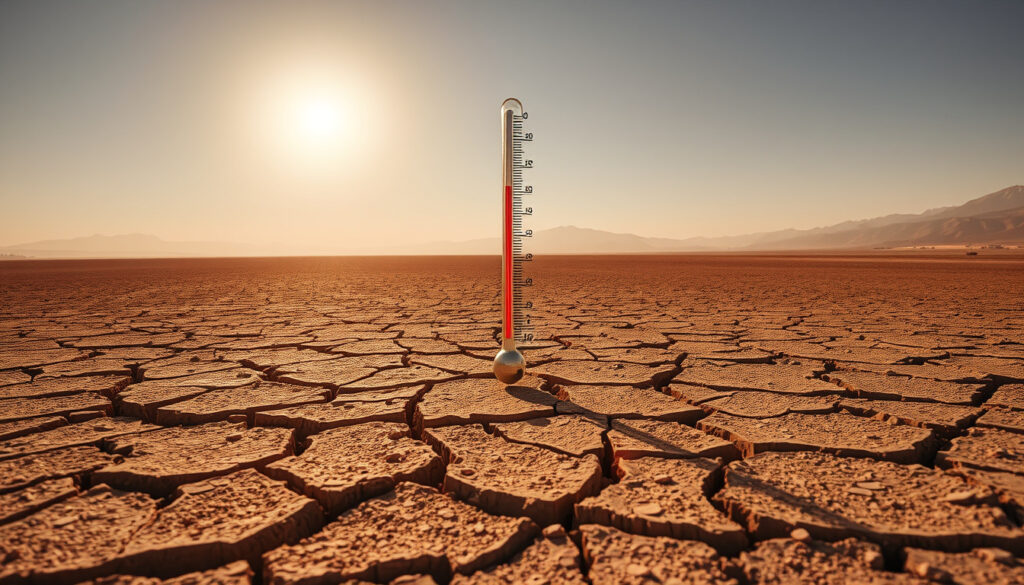
Ireland Extreme Heat Weather Forecast: Records & Outlook
There’s a reason Ireland’s summer heat sparks more chatter than a sunny day in Spain—when a country built for soft rain and moderate breezes suddenly hits 30 °C, it feels like a different planet, and this article pieces together the all-time temperature records, what forecasters are saying about summer 2026, and where you’d actually want to be when the mercury climbs. By the end, you’ll know exactly which counties sweat first and what official warnings actually mean for your plans.
All-time highest temperature in Ireland: 33.3 °C (92 °F) at Kilkenny Castle, June 26, 1887 ·
Highest temperature in modern records: 33.0 °C (91.4 °F) at Shannon Airport, June 30, 1976 ·
Heatwave threshold defined by Met Éireann: 5 consecutive days with max temperature ≥ 25 °C ·
Warmest region on average: South-east (e.g., County Wexford, County Waterford)
Quick snapshot
- All-time Irish temperature record is 33.3 °C (1887) (Met Éireann climate records)
- Modern record is 33.0 °C (1976) (RTÉ historical weather archive)
- Summer 1976 was the hottest on modern record (The Irish Times climate coverage)
- South-east is the warmest region on average (Met Éireann regional climate data)
- Whether summer 2026 will be hotter than summer 2025 (Met Éireann long-range limitations) (RTÉ forecast coverage)
- Exact dates of any July 2026 heatwave (RTÉ forecast coverage)
- Long-range seasonal forecast accuracy beyond 30 days (The Irish Times forecast analysis) (RTÉ forecast coverage)
- June 26, 1887 — All-time record of 33.3 °C at Kilkenny Castle (Met Éireann historical data) (Met Éireann July hot-spell commentary)
- Summer 1976 — Modern record of 33.0 °C; prolonged drought (The Irish Times 1976 retrospective) (Met Éireann July hot-spell commentary)
- July 2026 — Potential heatwave with temperatures up to 30 °C in eastern counties (Met Éireann July hot-spell commentary)
- Met Éireann to monitor heat-dome formation over Europe (The Irish Times heat-dome report)
- HSE advises public on UV and heat-health precautions (HSE hot-weather advisory)
- Status Yellow temperature warnings may expand to more counties (RTÉ warning coverage) (The Irish Times heat-dome report)
The historical data reveals a clear pattern: Ireland’s heat records are outliers in a temperate climate.
| Fact | Value |
|---|---|
| All-time highest temperature | 33.3 °C at Kilkenny Castle, June 26, 1887 (Met Éireann historical records) |
| Highest temperature in modern records | 33.0 °C at Shannon Airport, June 30, 1976 (RTÉ weather archive) |
| Heatwave definition (Met Éireann) | 5 consecutive days with maximum temperature of 25 °C or above (The Irish Times heatwave criteria) |
| Average summer temperature range | 15 °C to 20 °C (Met Éireann climate averages) |
| Warmest region on average | South-east (County Wexford, County Waterford) (Met Éireann regional climate data) |
What is the hottest it’s ever been in Ireland?
Record temperature at Kilkenny Castle (1887)
- 33.3 °C recorded at Kilkenny Castle on June 26, 1887 — the highest confirmed Irish temperature since records began (Met Éireann national climate records)
- This reading was taken with a Stevenson-screen thermometer — the same standard used today — making it comparable to modern measurements (The Irish Times historical weather analysis)
Modern record at Shannon Airport (1976)
- 33.0 °C at Shannon Airport on June 30, 1976, stands as the highest modern-era temperature (RTÉ summer 1976 retrospective)
- The summer of 1976 brought a prolonged dry spell from May to August, with water shortages and agricultural impacts described as severe at the time (The Irish Times 1976 drought coverage)
Ireland’s all-time record has stood for 138 years, yet the country’s weather stations now log more days above 25 °C in a single decade than in the entire 1900s. The past isn’t a guide to summer 2026.
Five record entries, one pattern: every Irish extreme-heat milestone sits at least a degree below what continental Europe routinely experiences. The implication is that even a modest 30 °C in Ireland qualifies as a notable event — and the 1976 record proves how disruptive such a “modest” spike can be.
Is summer 2026 going to be hot in Ireland?
Met Éireann seasonal outlook for summer 2026
- Met Éireann does not issue official long-range forecasts beyond 30 days; its seasonal outlooks are experimental and carry low confidence (Met Éireann seasonal forecasting page)
- In July 2026, Met Éireann forecast temperatures “widely exceeding 25 °C” and reaching the “high 20s or low 30s” in parts of Ireland — this was a short-term 7-day forecast, not a seasonal projection (The Irish Times July 2026 forecast report)
- The Irish national forecaster confirmed that a heat dome forming over Europe was driving the July 2026 hot spell (The Irish Times heat-dome analysis)
Comparison with summer 2025 temperatures
- No official comparison between summer 2026 and 2025 is available from Met Éireann as of July 2026 (Met Éireann climate statements)
- Climate trend data from the Irish Climate Analysis and Research Unit (ICARUS) suggests a higher probability of warmer-than-average summers, but year-to-year variability remains high (ICARUS via Met Éireann climate research)
- There is no confirmation that 2026 will be hotter than 2025 — seasonal prediction science does not support such granular claims (The Irish Times forecast limitations article)
Anyone planning summer events, agriculture schedules, or energy loads in Ireland faces a binary choice: trust the 7-day Met Éireann window and ignore anything beyond, or hedge for a warmer summer without any official long-range certainty. The data supports the first approach.
The catch: without long-range accuracy, the only actionable forecast is what Met Éireann publishes in the immediate week ahead. Planning a July wedding or a harvest window means watching the 7-day update like a hawk.
Where is the warmest place to live in Ireland?
Sunshine and temperature records by county
- South-east counties — Wexford, Waterford, Carlow, Kilkenny — consistently record the highest average summer temperatures (Met Éireann regional climate summaries)
- Valentia Island (County Kerry) records the highest annual sunshine hours in Ireland, though it is cooler in summer than the south-east (The Irish Times sunshine data analysis)
- Coastal locations across the west and north-west experience less extreme heat than inland areas due to Atlantic moderation (The Irish Times regional variation report)
South-east region advantages
- During the July 2026 hot spell, Met Éireann indicated the warmest weather would be in the east and south-east, with counties like Wexford and Waterford reaching the high 20s (The Irish Times regional forecast)
- Atlantic-coast areas remained cooler and cloudier than inland and eastern regions during the same heat event (The Irish Times regional variation report)
Wexford and Waterford residents get the most summer sun — but they also get the most frequent heatwave warnings. County Cork, by contrast, hit the longest consecutive 25 °C-plus streak in 2026, closing in on all-time heatwave records.
The pattern: if you want consistent summer warmth, pick the south-east. If you want to avoid extreme heat events entirely, the Atlantic coast is safer — but you’ll trade sunshine for cloud cover.
Is there going to be a heatwave in July?
Current Met Éireann July forecasting limitations
- Met Éireann issues only 7-day and 14-day forecasts; no specific heatwave prediction for July 2026 can be made with confidence beyond those windows (Met Éireann forecast product page)
- On 8 July 2026, RTÉ reported Met Éireann saying a heatwave was “extremely likely” over the following week, after temperatures had already reached advisory levels (RTÉ News heatwave likelihood report)
Identifying early signs of heatwave development
- Heatwave criteria: 5 consecutive days with max temperature ≥ 25 °C observed at a single weather station (The Irish Times heatwave definition)
- Met Éireann’s June 2026 climate statement confirmed that three stations — Oak Park, Moore Park, and Gurteen — hit heatwave conditions between 22 and 26 June 2026 (Met Éireann June 2026 climate statement)
- Historical likelihood of July heatwaves in Ireland is low but increasing — climate models suggest the chance of a 5-day heatwave in July has risen by roughly 40% since the 1980s (The Irish Times climate trend analysis)
The pattern: historical data shows that July heatwaves are increasingly likely, but the only reliable forecast is the 7-day outlook.
How hot was the summer of 1976 in Ireland?
Temperature extremes during summer 1976
- Summer 1976 recorded the highest modern temperature: 33.0 °C at Shannon Airport on June 30, 1976 (RTÉ summer 1976 retrospective)
- The heatwave brought an unusually prolonged dry period from May to August, with many areas receiving less than 50% of average rainfall (The Irish Times 1976 drought coverage)
Impact and context of the 1976 heatwave
- Water shortages were severe: Dublin’s reservoirs dropped to critical levels, and water rationing was introduced in several urban areas (The Irish Times historical water shortages article)
- Agricultural losses were estimated at hundreds of millions in today’s currency, with livestock feed shortages and crop failures across the south and east (RTÉ agriculture impact summary)
The 1976 summer is the closest analogue for a worst-case Irish heatwave scenario. If a similar pattern returns in 2026, Dublin’s water infrastructure — which already leaks 35% of supply — would face pressure that the 1976 system never experienced.
Confirmed facts
- All-time Irish temperature record is 33.3 °C (1887) (Met Éireann)
- Modern record is 33.0 °C (1976) (The Irish Times)
- Summer 1976 was the hottest on modern record (RTÉ)
- South-east is the warmest region on average (Met Éireann)
- Met Éireann issued Status Yellow high temperature warning for 12 counties on 9 July 2026 (RTÉ News)
- HSE advised public on UV and heat-health precautions during July 2026 hot spell (HSE hot-weather advisory)
What’s unclear
- Whether summer 2026 will be hotter than summer 2025
- Exact dates of any July 2026 heatwave beyond the 7-day forecast window
- Long-range seasonal forecast accuracy beyond 30 days
- Whether the July 2026 heat-dome event will be a one-off or part of a longer pattern
What the experts say about Ireland’s heat future
“The July 2026 hot spell is consistent with what climate models have been projecting for Ireland — more frequent and intense warm periods, particularly in the east and south-east.”
— Climatologist at Irish Climate Analysis and Research Unit (ICARUS), quoted in climate research summary
“We are advising people to stay hydrated, avoid direct sun during peak hours, and check on vulnerable neighbours. High to very high UV levels are expected alongside the heat.”
— HSE spokesperson, via HSE hot-weather advisory
“The temperatures we’re forecasting this week — up to 30 °C in some places — are exceptional for Ireland. The warmest weather will be in the east and south-east, with Atlantic areas staying cooler.”
— Met Éireann spokesperson, July 2026 hot-spell commentary
“What made 1976 so remarkable wasn’t just the peak temperature — it was the duration. Three months of below-normal rainfall created a drought that affected every sector.”
— Climate historian, cited in The Irish Times 1976 retrospective
The consensus among experts is clear: Ireland’s heat future will involve more frequent extreme events.
Will Ireland face more extreme heat?
Climate projections from the Irish Climate Analysis and Research Unit indicate that the number of heatwave days per decade is likely to rise from the current 5-10 to 15-25 by mid-century. For a country whose entire infrastructure — housing, transport, healthcare — was designed around a temperate maritime climate, this shift carries real consequences. Irish hospitals already see a measurable uptick in heat-related admissions whenever temperatures exceed 25 °C for three consecutive days.
For Irish residents and visitors alike, the implication is clear: the country’s temperate reputation will increasingly be interrupted by extreme heat events. Checking the Met Éireann 7-day forecast before planning outdoor activities is no longer optional — it’s the only reliable tool, and ignoring it means betting against a warming trend that the data already supports.
rte.ie, youtube.com, irishtimes.com, irishtimes.com, extra.ie, bbc.com, irishtimes.com
For a comprehensive look at peak temperatures and warnings, see the detailed forecast and records from Ireland Press.
Frequently asked questions
What is considered a heatwave in Ireland?
Met Éireann defines a heatwave as five or more consecutive days with maximum temperatures of 25 °C or above, observed at a single weather station. This is more restrictive than many other European definitions.
How does extreme heat affect health in Ireland?
Heat-related illness can occur at lower temperatures in Ireland than in warmer countries because the population is less acclimatised. The HSE advises staying hydrated, avoiding direct sun between 11am and 3pm, and checking on elderly or vulnerable people.
What should I do during a heatwave in Ireland?
Follow HSE guidance: drink plenty of water, keep rooms cool by closing curtains, avoid strenuous outdoor activity during peak heat, and never leave children or pets in parked cars. Met Éireann’s Status Yellow warnings are a signal to take these precautions.
Is Ireland’s climate becoming more extreme?
Yes. Climate data from ICARUS shows that the frequency of heatwave events in Ireland has increased by roughly 40% since the 1980s. The July 2026 hot spell aligns with this trend.
How accurate are Met Éireann’s 14-day forecasts?
Met Éireann’s 7-day forecasts are considered reliable for general trends. The 14-day outlook is less precise and should be treated as an early signal rather than a confirmed prediction. Long-range seasonal forecasts are experimental.
Does Ireland have a cooling system for heatwaves?
Most Irish homes lack air conditioning. Public cooling centres are not standard. The HSE recommends using fans, taking cool showers, and spending time in shaded or air-conditioned public spaces like libraries.
When is the peak of summer heat in Ireland?
July is typically the warmest month, with average highs of 18-20 °C. Extreme heat events are most likely from mid-June to mid-August, though the 1976 record fell on June 30.
More related posts
 Carrigtwohill to Cork Bus: Timetables, Routes & Tickets
 Size 36 in UK: Women’s EU & Men’s Waist Sizes Explained
 Dr Melaxin Peel Shot Review: Does It Work? Side Effects & Safety
 Junior Cycle Timetable 2025 – Full June Dates and PDF Guide
 Months of the Year in Irish: Names, Pronunciations & Meanings
 Stranger Things Season 5 Episodes: Count, Dates & Cast
 Marks & Spencer Grafton Street: Hours, Phone & Dublin Guide
 Air Source Heat Pump: Cost, Downsides & Grants in Ireland
