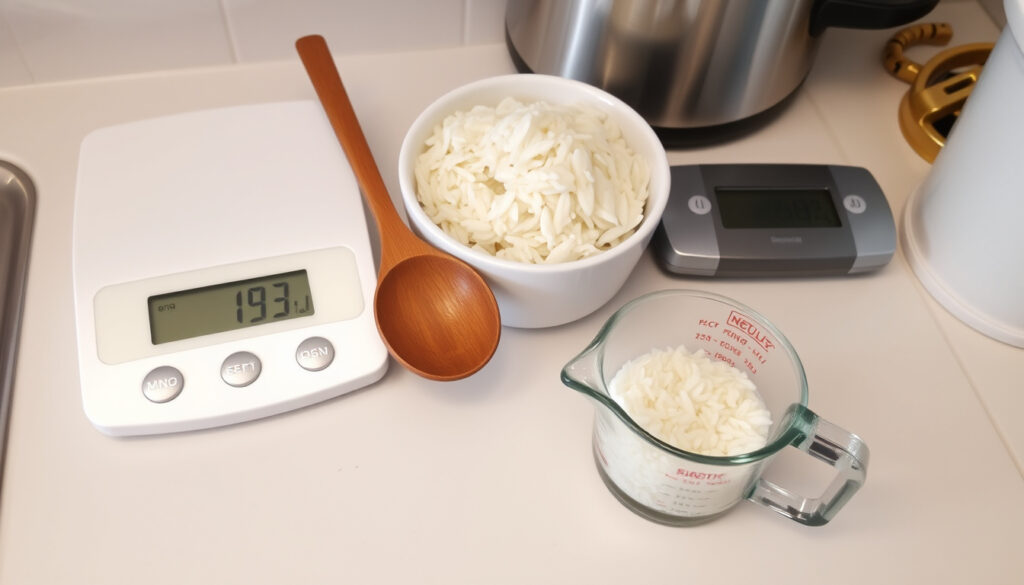
How Much Rice Per Person? Portions in Grams & Cups
Getting the rice portion right is surprisingly tricky, with recommendations ranging from 50 to 100 g of uncooked rice per person depending on the source. Here’s how to nail the portion every time, backed by editorial and brand sources.
Standard serving (uncooked): 50–75 g per person · Standard serving (cooked): 150–225 g per person · Volume increase: Rice triples in volume when cooked · Cup measure (uncooked): 1/4 to 1/2 cup per person · Water ratio: 2:1 for white rice
Quick snapshot
- 50–75 g uncooked per person is standard for a main meal (Kikkoman UK guide)
- Rice triples in volume when cooked (Foodess guide)
- 1/4 cup uncooked rice serves one as a side dish (Live Eat Learn guide)
- Exact portion depends on appetite, meal context (side vs main), and rice type
- Long-term effects of different portion sizes on weight loss are not well-documented for generic advice
- Cooking times: white rice 15–20 min, brown rice 40–50 min (GIGAcalculator tool)
- Let rice rest 5–10 minutes off heat after cooking (GIGAcalculator tool)
- Use a kitchen scale for consistent portions across diets (weight loss, bodybuilding)
- Adjust water ratio for different rice varieties
A home cook cooking for two or four faces a real trade-off: too little rice leaves them hungry, too much leads to waste. Precise portioning saves money and calories — a 75 g serving of uncooked white rice adds about 270 calories, while a 100 g serving pushes past 360. Knowing your baseline means you can adjust for your own appetite without guesswork.
How much uncooked rice per person?
Standard serving sizes for different rice types
- Long-grain white rice (basmati, jasmine): 60–75 g uncooked per person for a main meal (Kikkoman UK guide)
- Brown rice: 50–75 g uncooked per person, because it retains more fibre and bran (BBC Good Food guide)
- Sushi rice: 80–100 g uncooked per person for a main dish, as it’s denser (CulinaryPedia guide) — this is on the higher end of typical ranges.
The implication: the 50–75 g baseline works for most white and brown rices, but denser varieties like sushi rice call for an extra 10–25 g to match the cooked volume.
How to adjust portion for side dish vs main course
A common rule of thumb: for a side dish, use about 1/4 cup (around 50 g) uncooked per person; for a main course, double that to 1/2 cup (around 75–100 g) (Live Eat Learn guide). The calculator at GIGAcalculator tool offers a similar split: 60 g for a side, 90–100 g for a main.
How much dry rice for 1, 2, 4, or 5 people
- 1 person: 50–75 g (1/4 to 1/2 cup uncooked)
- 2 people: 100–150 g (1/2 to 3/4 cup uncooked)
- 4 people: 200–300 g (1 to 1 1/2 cups uncooked)
- 5 people: 250–375 g (1 1/4 to 1 3/4 cups uncooked)
How much rice per person in cups?
Conversion from cups to grams
One cup of uncooked long-grain white rice weighs roughly 185 g (Foodess guide). That means 1/4 cup is about 46 g, 1/2 cup about 93 g, and 1 cup about 185 g. For brown rice, a cup is slightly heavier (around 200 g) because the grains are denser.
How many cups of uncooked rice per serving
- Side dish: 1/4 cup uncooked per person
- Main dish: 1/2 cup uncooked per person
- 1 cup uncooked serves 3–4 people as a main dish (Live Eat Learn guide)
Cups for different rice varieties
The pattern across varieties: most white and brown rices fit a 1/4-to-1/2 cup range, but the cooked yield and water needs shift.
| Rice type | Uncooked per person (cup) | Cooked yield per person (cup) |
|---|---|---|
| Long-grain white | 1/4–1/2 | 3/4–1 1/2 |
| Basmati | 1/4–1/2 | 3/4–1 1/2 |
| Brown | 1/4–1/2 | 1–1 3/4 |
| Sushi | 1/3–1/2 | 1–1 1/2 |
Source: GoodRx guide and Foodess guide
The catch: cup measures are convenient, but density varies by brand, making grams more reliable for calorie-conscious cooks.
Cup measures are convenient, but rice density varies by brand. A scale removes the guesswork — 1/2 cup of one brand may weigh 80 g; another may hit 100 g. For calorie‑conscious cooks, grams are far more reliable than volume.
Is 100 g of rice enough for one person?
When 100 g is sufficient
For a main meal with a hungry appetite, 100 g uncooked is above the typical 75 g maximum and will yield roughly 300 g cooked — plenty for one person. Many calculators and blogs recommend 90–100 g for a main dish (GIGAcalculator tool).
When you need more than 100 g
If you’re particularly active, very tall, or having rice as the only substantial carb in the meal, 100 g may leave you wanting. Some guides suggest up to 125 g for a large appetite (RiceArray guide).
Comparing 100 g to standard recommendations
The most common recommendation is 50–75 g uncooked per person (Kikkoman UK guide, BBC Good Food guide). So 100 g is definitely on the higher end — enough for one, possibly too much for a light eater.
For the average adult cooking at home, 100 g uncooked is generous but not excessive. The sweet spot for most main dishes lies between 75 g and 100 g. If you’re aiming for a 400‑calorie meal, 75 g white rice (about 270 calories) leaves room for protein and vegetables.
How to cook rice for 1 person?
Stovetop method for single serving
- Use 1/2 cup (about 95 g) uncooked rice and 1 cup water for white rice (Foodess guide)
- Bring to a boil, reduce heat, cover, and simmer 15 minutes (white) or 40 minutes (brown)
- Let rest 5 minutes off heat, then fluff
What this means: the stovetop gives you full control over timing and texture, perfect for single servings.
Rice cooker for one
Most rice cookers have a 1‑cup marking for the inner pot. For one person, use the 1/2‑cup line (about 95 g rice) and fill water to the line for 1/2 cup. The cooker handles timing automatically.
Microwave rice in a bowl
Combine 1/2 cup rice and 1 cup water in a microwave‑safe bowl. Microwave on high for 10 minutes (white rice), then let stand 2–3 minutes. Check for doneness and add 1–2 minutes if needed. This method works best for small quantities.
What are common mistakes when cooking rice?
Using wrong water ratio
The classic mistake is adding too much or too little water. For white rice, the standard is 2 parts water to 1 part rice by volume (Kikkoman UK guide). Brown rice needs about 2.5 parts water. Using a measuring cup helps avoid guesswork.
Lifting the lid while cooking
Steam is essential for even cooking. Each time you lift the lid, you release heat and moisture, which can lead to undercooked grains or sticky rice. Trust the timer.
Not rinsing rice
Rinsing removes excess starch that makes rice gluey. Run cold water over rice in a strainer until the water runs clear — about 30 seconds for white rice, longer for jasmine (GoodRx guide).
Overcooking or undercooking
White rice typically needs 15–18 minutes of simmering, brown rice 40–50 minutes. After cooking, let the rice rest off heat for 5–10 minutes. Skipping the rest results in a mushy or uneven texture.
The pattern: most mistakes stem from impatience — trust the water ratio, the lid, and the rest time.
The biggest culprit for beginners is the water ratio. A 2:1 ratio works for most white rice, but basmati and jasmine may need slightly less water. A good test: after cooking, the grains should be separate and tender, not hard or soupy.
What experts say about rice portions
“For long-grain rice, we recommend 75 g per person as a main course.”
— Kikkoman UK guide
“Aim for 50–75 g of dry weight rice per person for brown rice.”
Clarity check: What we know vs what’s uncertain
Confirmed facts
- 50–75 g uncooked rice per person is a standard range for a main dish
- Rice triples in volume when cooked
- 1 cup uncooked rice yields about 3 cups cooked
- Water ratio of 2:1 is standard for white rice
What’s unclear
- Exact portion depends on individual appetite, meal context, and rice type
- Long-term effects of different portion sizes on weight loss are not well-documented for generic advice
For the home cook, the choice of portion size directly affects both satiety and food waste. A 75‑g baseline gives room to adjust: add 15–25 g for active lifestyles, subtract 15–25 g for lighter meals. Without a reference, the risk of over‑ or under‑cooking is real. For anyone in the UK aiming to reduce food waste, sticking to the 50–75 g range per person per meal and using a digital scale can save money and calories over time.
reddit.com, neary.fr, joteo.net, irelandfocus.com, eathealthy365.com
Frequently asked questions
How much water do I need for 1 cup of rice?
For white rice, use 2 cups of water per 1 cup of rice. For brown rice, use 2.5 cups. This ratio holds for most standard long-grain varieties (Kikkoman UK guide).
Can I store cooked rice and reheat it?
Yes. Cool cooked rice within an hour, store in an airtight container in the fridge for up to 3 days. Reheat thoroughly in the microwave or on the stovetop with a splash of water.
What is the portion size for jasmine rice vs basmati?
Both are long-grain white rices. Use the same 1/4–1/2 cup uncooked per person. Jasmine tends to be slightly stickier; basmati separates more. The volume increase is about 3x for both.
How much rice per person for a side dish?
Use 1/4 cup (about 50 g) uncooked per person. This yields roughly 3/4 cup cooked rice — enough for a modest side next to a protein and vegetables.
Is the portion different for brown rice compared to white rice?
Yes — brown rice is denser and more filling. Stick to the 50–75 g uncooked range, but expect slightly less volume cooked (about 2.5x instead of 3x). Water ratio is also higher (2.5:1).
How many calories in a serving of rice?
A 75‑g serving of uncooked white rice contains about 270 calories. The same amount of brown rice has about 260 calories. Cooked rice (225 g) from that portion has similar calories per weight.
How much rice for 2 people in the UK?
For two as a main course, use 150–200 g uncooked (about 3/4 to 1 cup). For two as a side, use about 100 g (1/2 cup).
Is 500 g of rice enough for 5 people?
Yes. 500 g uncooked divided by 5 = 100 g per person, which is on the generous side but works for a main dish. You’ll have about 150–200 g cooked rice per person.
Related reading: Foods High in Iron · Can Dogs Eat Peppers
More related posts
 MSC Last Minute Cruises 2026: Best Deals & How to Save
 Right Price Tiles Navan: Location, Hours, Reviews & Costs
 The Rookie Season 7: Watch, Episodes & Renewal
 The Madame Blanc Mysteries: Seasons, Cast & Filming Guide
 France v New Zealand Rugby: Scores, History & How to Watch
 Real Madrid vs Real Betis: TV Channel, Mbappé Injury
 Top Things to Do in Gran Canaria: Attractions, Beaches & Tips
 ASICS Gel-Kayano 32 Review: Stability, Comfort, and Comparison
