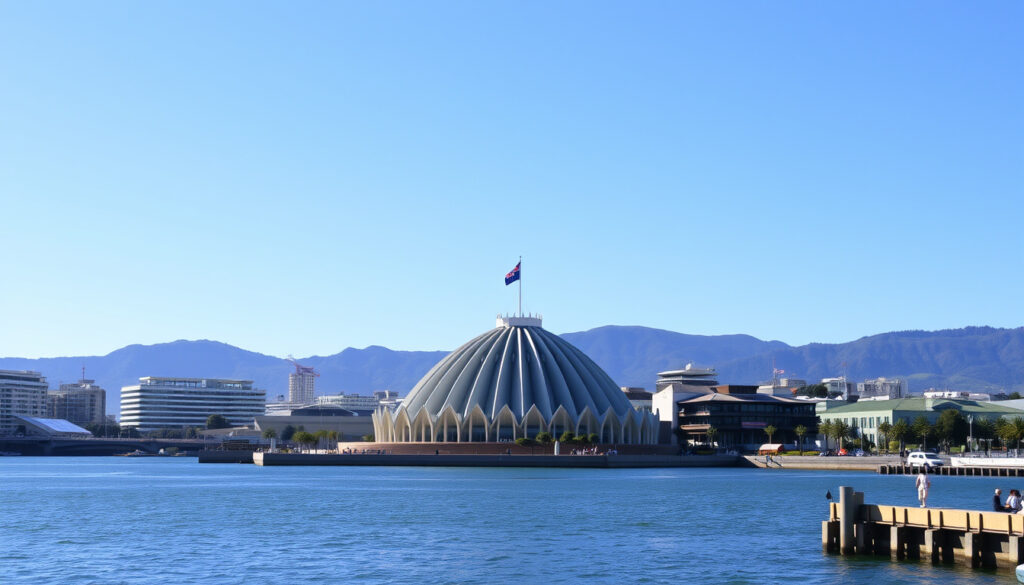
Capital of New Zealand: Why Wellington Won the Seat
Anyone who’s ever looked at a map of New Zealand and wondered why the capital isn’t the biggest city is asking the right question. The story of how Wellington became the capital is a tale of political compromise, geography, and a bit of luck — from the first shaky settlement at Russell to the final move in 1865.
Capital city: Wellington ·
Year Wellington became capital: 1865 ·
Population of Wellington (2023 est.): ~215,000 ·
Location: Southern tip of North Island, near Cook Strait ·
Previous capitals: Russell (1840–1841), Auckland (1841–1865) ·
Largest city (not capital): Auckland (~1.7 million)
Quick snapshot
- Wellington is the official capital of New Zealand since 1865 (Wellington City Council)
- Parliament first sat in Wellington on 26 July 1865 (Wellington City Council)
- Wellington is the most centrally located major city, chosen for its harbour and access to both islands (Waitangi Treaty Grounds)
- Exact reasons for choosing Wellington over alternatives are debated — some cite planning, others political pressure (Waitangi Treaty Grounds)
- 1840: First capital at Russell (Okiato) (NZHistory)
- 1841: Capital moved to Auckland (NZHistory)
- 1865: Capital moved to Wellington (Wellington City Council)
- Wellington remains the sole capital by constitutional convention; no active proposals to move the seat of government (Wikipedia)
Five key facts, one pattern: the capital moved south as the colony sought a central seat that balanced the interests of both islands. Reliable sources confirm the official timeline and the reasons behind the shift.
| Label | Value |
|---|---|
| Official capital since | 1865 |
| Previous capitals | Russell (1840–1841), Auckland (1841–1865) |
| Coordinates | 41°17′20″S 174°46′38″E |
| Nickname | Windy Wellington or ‘Wellywood’ |
| Notable landmark | Beehive (Parliament Building) |
The implication: New Zealand’s capital history is shorter than many assume, but the current arrangement has proven remarkably stable.
What is the capital of New Zealand?
Wellington is the capital city of New Zealand, serving as the political and administrative centre since 1865. It sits at the southwestern tip of the North Island, on the shores of Cook Strait, making it a natural gateway between the North and South Islands. According to the NZHistory website (New Zealand’s official history portal), the capital status is tied to the presence of central government institutions, including the Parliament buildings known as the Beehive.
Location and geography of Wellington
- Coordinates: 41°17′20″S 174°46′38″E
- Located at the southern tip of the North Island, near the Cook Strait
- The city is built around a natural harbour, Port Nicholson (Wellington Harbour)
Wellington’s geography is dominated by steep hills and a compact urban core. It is often called “Windy Wellington” because of the strong winds funnelled through the Cook Strait, a feature noted by Britannica (encyclopaedia entry on Wellington).
Quick facts: population, area, nickname
- Population: approximately 215,000 (city proper), as reported by Wikipedia (Wellington article)
- Area: 290 km² (city proper)
- Nickname: “Windy Wellington” or “Wellywood”
Wellington’s compact size and central location make it one of the most accessible capitals in the world — a deliberate choice that has shaped New Zealand’s governance for more than 150 years.
The pattern: New Zealand’s capital was chosen for access and balance, not size — a principle that still defines how the country governs itself.
Why is Auckland no longer the capital of New Zealand?
To understand why Auckland lost its capital status, we need to go back to the early colonial days. New Zealand’s first capital was Russell (Okiato), established in 1840 by Governor William Hobson. But the shift to Auckland and then to Wellington was driven by geography, politics, and the need for a central seat of government.
The short-lived capital at Russell
- 1840: Governor Hobson set up the first capital at Russell (Okiato) in the Bay of Islands (NZHistory)
- 1841: The capital moved to Auckland, which had a better harbour and more room for growth (NZHistory)
Auckland becomes the capital (1841–1865)
Auckland served as the capital for 24 years. During that time, the South Island grew rapidly due to the Otago gold rush, and southern provinces began to complain that Auckland was too far north. As Te Ara – the Encyclopedia of New Zealand (official government encyclopaedia) notes, the seat of government was transferred from Auckland to Wellington in 1865.
Reasons for the shift to Wellington
- Central location: Wellington is roughly equidistant from the main population centres of the North and South Islands (Waitangi Treaty Grounds)
- Good harbour: Wellington’s natural deep-water port was suitable for larger ships
- Political pressure: Southern provinces argued that Auckland was too far north, and a more central seat was needed (Te Ara)
The final move in 1865
Parliament officially sat in Wellington for the first time on 26 July 1865, as recorded by the Wellington City Council (local government archives). The move was not without controversy — several other towns, including Whanganui, Picton, and Nelson, were considered before Wellington was chosen (Waitangi Treaty Grounds).
The pattern: capital decisions are rarely about size — they are about access, balance, and political will.
What is the biggest city in New Zealand?
Auckland is the largest city in New Zealand, both by population and area. With an estimated 1.7 million residents, it dwarfs Wellington’s 215,000. But size alone doesn’t make a capital, as the history shows.
Auckland: largest city by population and area
- Population: ~1.7 million (2023 estimate) — roughly one-third of New Zealand’s total population (Wikipedia (Auckland article))
- Area: 1,086 km²
- Auckland is the economic and cultural hub, with the country’s busiest port and international airport
How Auckland grew to dominate
Auckland’s growth was fuelled by its natural harbour, fertile land, and early colonial investment. After losing the capital, it continued to expand as a commercial centre. According to NZHistory, Wellington’s capital role helped centralise businesses, but Auckland remained the largest urban area.
Comparison with Wellington’s size
One key difference, one clear pattern: Auckland is sprawling and populous, while Wellington is compact and dense. The table below shows the contrast.
| Metric | Auckland | Wellington |
|---|---|---|
| Population (2023 est.) | ~1.7 million | ~215,000 |
| Area (city proper) | 1,086 km² | 290 km² |
| Status | Largest city (former capital 1841–1865) | Capital since 1865 |
| Economic role | Primary economic hub | Political and administrative centre |
| Nickname | City of Sails | Windy Wellington |
The takeaway: Auckland is the heavyweight, but Wellington holds the political sword. The two cities complement each other, each with a distinct role in the nation’s fabric.
Why is Wellington so famous?
Wellington punches above its weight in culture, cuisine, and politics. Known as New Zealand’s “creative capital”, it is home to the national film industry, a thriving coffee scene, and the iconic Parliament buildings.
Wellington as the cultural capital
- Wellington is known for its vibrant arts scene and craft beer culture (Britannica)
- It is the home of Te Papa, the national museum, and the New Zealand Symphony Orchestra
The film industry and Wētā Workshop
Wellington is the birthplace of the modern New Zealand film industry. The Wētā Workshop (special effects company) brought the Lord of the Rings and Avatar franchises to life, earning the city the nickname “Wellywood”.
Cuisine, coffee, and harbour views
Wellington has a thriving food scene, with more cafes per capita than New York City. The waterfront, with its Oriental Bay beach and promenade, is a popular destination for locals and tourists alike.
Government and Parliament buildings
- The Beehive (Executive Wing of Parliament) is one of New Zealand’s most recognisable landmarks (NZHistory)
- The Parliament Buildings also include the Edwardian-style Parliament House and the Library
Wellington is famous for its small size and wind, yet it has produced some of the world’s biggest blockbuster films. The city’s creative energy is partly a response to its compact, challenging geography.
The implication: Wellington’s limitations in scale have become its creative advantage, turning a windy harbour town into a cultural powerhouse.
Are there two capitals in New Zealand?
No — New Zealand has a single capital: Wellington. But some confusion arises from the fact that the country has had three different capital cities in its history. Let’s clear up the misconceptions.
No, New Zealand has one capital: Wellington
- Wellington has been the sole capital since 1865, by constitutional convention (Wikipedia)
- No other city currently holds capital status
Historical capitals: Russell and Auckland
Russell (Okiato) was the first capital from 1840 to 1841, followed by Auckland from 1841 to 1865. These were not concurrent capitals; they were sequential moves. The Waitangi Treaty Grounds (cultural heritage site) explains that the three capitals reflect the colony’s evolving needs.
Misconceptions about Christchurch or other cities
Some people mistakenly think Christchurch is the capital of the South Island, but no such designation exists. Christchurch is the largest city in the South Island, but it has never been a national capital. The only cities ever to hold the title are Russell, Auckland, and Wellington.
The pattern: New Zealand’s single-capital structure is unambiguous, but its three historical capitals often confuse visitors unfamiliar with the country’s colonial evolution.
Timeline of New Zealand’s capitals
The journey of the capital is best understood through a timeline. Here are the key dates, drawn from official sources.
- 1840 – New Zealand’s first capital established at Russell (Okiato) by Governor William Hobson (NZHistory)
- 1841 – Capital moved to Auckland for better harbour and growth potential (NZHistory)
- 1865 – Capital moved to Wellington – chosen for central location and easier access from both islands (Wellington City Council)
- 1865–present – Wellington remains the capital city of New Zealand (Te Ara)
Moving the capital was a political gamble that paid off: Wellington’s central location has kept the government accessible to both islands, but the city’s small size means it has never rivaled Auckland’s economic muscle.
Clarity: confirmed facts and what’s unclear
Confirmed facts
- Wellington is the current capital of New Zealand (NZHistory)
- Auckland is the largest city (Wikipedia)
- The capital moved from Auckland to Wellington in 1865 (Britannica)
- New Zealand has never had two simultaneous capitals (Waitangi Treaty Grounds)
What’s unclear
- Exact reasons for choosing Wellington over alternatives are debated – some cite planning, others political pressure (Waitangi Treaty Grounds)
Quotes from sources
The southern provinces argued that Auckland was too far north, and a more central seat was needed.
— Te Ara – the Encyclopedia of New Zealand (government encyclopaedia)
Wellington became the capital in 1865 and is the political and cultural centre.
— Wikipedia (Wellington article)
Summary
New Zealand’s capital journey is a story of pragmatic decision-making driven by geography and politics. From Russell’s brief stint to Auckland’s 24-year reign and finally Wellington’s enduring role, the moves reflect a colony trying to find a seat that served all its people. For anyone visiting or studying New Zealand, the lesson is clear: the capital is not the biggest city, but it is the most central — and that was the whole point. For travellers heading to the country, the choice is not between size and status; it’s between Auckland’s urban sprawl and Wellington’s compact, creative hub.
en.wikipedia.org, archivesonline.wcc.govt.nz, youtube.com, wellington.govt.nz, nzhistory.govt.nz
Frequently asked questions
What is the population of Wellington?
The population of Wellington city proper is approximately 215,000, according to Wikipedia.
What is the nickname of Wellington?
Wellington is commonly called “Windy Wellington” due to the strong winds from Cook Strait, and sometimes “Wellywood” for its film industry connections (Britannica).
What is the currency of New Zealand?
The currency of New Zealand is the New Zealand dollar (NZD).
What is the time zone of New Zealand?
New Zealand is in the New Zealand Standard Time zone (NZST, UTC+12), with daylight saving time (NZDT, UTC+13) from late September to early April.
Is Christchurch the capital of the South Island?
No. Christchurch is the largest city in the South Island, but it has never been a national capital. The only official capitals have been Russell, Auckland, and Wellington.
What was the first capital of New Zealand?
The first capital was Russell (Okiato), established in 1840 by Governor William Hobson (NZHistory).
What is the capital of New Zealand’s South Island?
New Zealand’s South Island does not have a separate capital. The entire country is governed from Wellington.
More related posts
 Chinese Sweet and Sour Chicken Near Me: Best Ireland Spots
 Zara McDermott and Louis Tomlinson Relationship Timeline
 Liverpool F.C. vs PSV Eindhoven Standings: Results & Table
 Dr Melaxin Peel Shot Review: Does It Work? Side Effects & Safety
 Luas Green Line Stops: Complete Guide with Map & Timetable
 Google Pixel 10 Pro XL – Release Date, Price and Specs
 Irish Whale and Dolphin Group: Guide & Opportunities
 Tottenham vs Bodø/Glimt Stats – 3-1 Result, Goals and Key Figures
