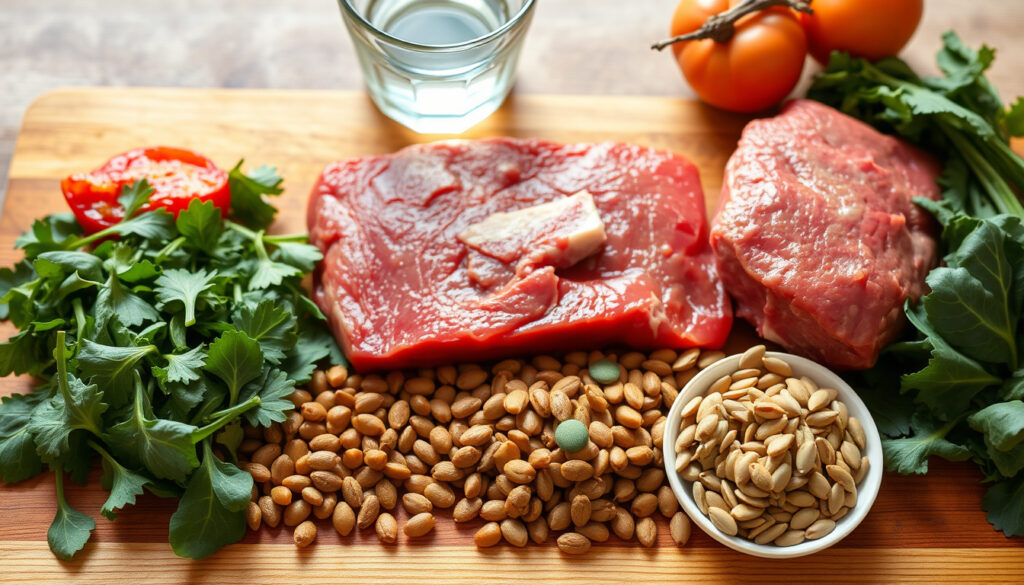
Foods High in Iron: Top Sources, Raise Levels, Deficiency Signs
You’ve probably heard that iron is essential, but did you know iron deficiency is the most common nutritional deficiency worldwide, according to the World Health Organization? That persistent tiredness might have a simple explanation — low iron. This guide cuts through the confusion, covering the top foods high in iron, how to raise your levels fast, and the signs you shouldn’t ignore.
Daily requirement (adult men): 8 mg (NIH) · Daily requirement (adult women 19–50): 18 mg (NIH) · Iron in 3 oz beef liver (cooked): 6.5 mg (USDA) · Iron in 1 cup cooked spinach: 6.4 mg (USDA) · Heme iron absorption rate: 25 % (PMC review) · Iron in ½ cup fortified cereal: 18 mg (USDA)
Quick snapshot
- Iron deficiency is the most common nutritional cause of anaemia worldwide (WHO)
- Heme iron from animal sources is absorbed at ~25 % efficiency (PMC)
- Pairing vitamin C with non‑heme iron can boost absorption up to 6× (Healthline)
- No major shift in dietary guidelines is imminent; current recommendations remain stable (NIH)
- Check your diet against the foods in this guide and consider a blood test if symptoms persist (Mayo Clinic)
| Category | Value |
|---|---|
| Highest food per 100 g (cooked) | Beef liver: 6.5 mg (USDA) |
| Daily requirement women (19–50) | 18 mg (NIH) |
| Daily requirement men (19–50) | 8 mg (NIH) |
| Heme iron absorption rate | 25 % (PMC review) |
| Non‑heme iron absorption rate (without enhancers) | 5–12 % (PMC) |
| Vitamin C effect on non‑heme absorption | Increases up to 6 times (Healthline) |
Liver and clams dominate the top spots among heme sources, but plant-based eaters have solid alternatives in fortified cereals and legumes — the catch is absorption efficiency.
What food has the highest iron?
Top iron-rich animal sources
- Beef liver — 6.5 mg per 3 oz (cooked) (USDA)
- Clams — 24 mg per 3 oz (canned) (Harvard Health)
- Oysters — 8 mg per 3 oz (Harvard Health)
Top iron-rich plant sources
- Spinach (cooked) — 6.4 mg per cup (USDA)
- Lentils (cooked) — 6.6 mg per cup (USDA)
- Fortified breakfast cereal — up to 18 mg per serving (Harvard Health)
Iron content comparison table
Five top sources, one pattern: heme options deliver more absorbable iron per bite.
| Food | Serving | Iron (mg) | Type |
|---|---|---|---|
| Beef liver | 3 oz cooked | 6.5 | Heme |
| Clams (canned) | 3 oz | 24 | Heme |
| Spinach (cooked) | 1 cup | 6.4 | Non‑heme |
| Lentils (cooked) | 1 cup | 6.6 | Non‑heme |
| Fortified cereal | ½ cup | 18 | Non‑heme |
| Pumpkin seeds | 1 oz | 4.2 | Non‑heme |
The implication: animal livers and shellfish dominate the top spots, but fortified cereals and legumes offer high amounts for plant‑based eaters. The trade‑off is absorption efficiency — heme iron’s 25 % rate vs. non‑heme’s 5–12 %.
How can I raise my iron levels quickly?
Dietary changes for rapid iron increase
- Eat a serving of red meat, liver, or shellfish at least 2‑3 times per week (NHS)
- Combine plant iron sources (spinach, lentils) with vitamin C‑rich foods like bell peppers, oranges, or strawberries (Healthline)
- Avoid coffee, tea, or calcium‑rich foods within one hour of iron‑rich meals (UC Davis)
Role of vitamin C in iron absorption
Vitamin C transforms non‑heme iron into a form that is up to six times more absorbable. A squeeze of lemon on spinach salad or a glass of orange juice with cereal works wonders.
When to consider iron supplements
The NHS recommends iron tablets only after a confirmed deficiency diagnosis. Taking too much iron can cause nausea, constipation, and in rare cases, organ damage — always consult a doctor first.
Calcium (dairy, fortified milk) and tannins (tea, coffee) are absorption blockers. Separate them from iron meals by at least an hour, or your fast‑track plan will stall.
The pattern: quick results come from pairing, not just piling. A single tactic — like adding strawberries to oatmeal — can double the usable iron from that meal.
Are 2 eggs enough iron?
Iron content in eggs
One large egg contains about 1 mg of iron, mostly in the yolk (USDA). Two eggs deliver ~2 mg — a tenth of the daily need for most women.
How eggs compare to other iron sources
| Food | Iron per serving |
|---|---|
| 2 eggs | ~2 mg |
| 3 oz beef liver | 6.5 mg |
| 1 cup cooked lentils | 6.6 mg |
| ½ cup fortified cereal | 18 mg |
Two eggs barely scratch the surface. For women needing 18 mg daily, they contribute only about 11 % of the requirement.
Meeting daily iron needs without relying on eggs
Combine eggs with spinach, fortified toast, or a side of beans to bring the total up. The pattern: eggs are a supporting player, not a lead — they work best as part of a varied plate.
The catch: relying on eggs to correct low iron is like using a teaspoon to fill a bathtub. They help, but they can’t do the job alone.
What drink is very high in iron?
Top iron-rich drinks
- Prune juice — 3 mg per cup (USDA)
- Fortified orange juice — up to 1.8 mg per serving (Harvard Health)
- Spinach‑beet smoothie — varies, but a cup of cooked spinach alone supplies 6.4 mg (USDA)
Homemade iron‑boosting smoothie recipe
Blend 1 cup spinach, ½ cup cooked beets, 1 orange (for vitamin C), and ½ cup fortified plant milk. This delivers roughly 5‑7 mg of iron per serving.
Considerations for iron‑fortified beverages
Check labels — some plant milks and juices add ferrous sulfate, which is well absorbed but can cause stomach upset. The UC Davis nutrition team recommends reading serving sizes carefully to avoid excess.
The implication: drinks can be a convenient boost, especially for those who struggle with swallowing pills. But whole foods still offer the widest nutrient package.
What are 5 signs of low iron?
Common symptoms of iron deficiency
- Fatigue and weakness — most reported sign (Mayo Clinic)
- Pale skin — reduced red blood cell production (Mayo Clinic)
- Shortness of breath — even during light activity (Mayo Clinic)
- Dizziness or lightheadedness (AMA)
- Cold hands and feet — poor oxygen circulation (Johns Hopkins Medicine)
When to see a doctor
If you experience two or more of these symptoms persistently, the Mayo Clinic (leading US hospital network) advises a complete blood count (CBC) test. Early detection prevents progression to severe anemia.
Mild vs severe deficiency
Mild deficiency often shows only fatigue. Severe cases can lead to brittle nails, pica (craving non‑food items), and restless legs syndrome (Johns Hopkins Medicine).
The pattern: the body saves its loudest alarms for when iron stores are nearly empty. Don’t wait for the full list — act on the first sign.
Iron content comparison table
Sixteen common foods, one clear takeaway: liver and clams top the list, but legumes and fortified grains offer solid alternatives for non‑meat eaters.
| Food | Serving | Iron (mg) | Type |
|---|---|---|---|
| Beef liver (cooked) | 3 oz | 6.5 | Heme |
| Clams (canned) | 3 oz | 24 | Heme |
| Oysters | 3 oz | 8.0 | Heme |
| Sardines (canned) | 3 oz | 2.5 | Heme |
| Chicken thigh (cooked) | 3 oz | 1.5 | Heme |
| Spinach (cooked) | 1 cup | 6.4 | Non‑heme |
| Kale (raw) | 1 cup | 1.2 | Non‑heme |
| Swiss chard (cooked) | 1 cup | 4.0 | Non‑heme |
| Lentils (cooked) | 1 cup | 6.6 | Non‑heme |
| Chickpeas (cooked) | 1 cup | 4.7 | Non‑heme |
| Kidney beans (cooked) | 1 cup | 5.2 | Non‑heme |
| Pumpkin seeds | 1 oz | 4.2 | Non‑heme |
| Cashews | 1 oz | 2.0 | Non‑heme |
| Hemp seeds | 1 oz | 2.4 | Non‑heme |
| Fortified breakfast cereal | ½ cup | 18.0 | Non‑heme |
| Fortified oatmeal | 1 packet | 10.0 | Non‑heme |
The trade‑off: heme sources give you more iron per gram, but plant sources come with fiber and vitamins. A mixed diet covers both bases.
3 Steps to Boost Your Iron Levels
- Eat at least one heme source daily — 3 oz of beef, liver, or clams covers 30‑50 % of daily needs for most adults (NHS).
- Add vitamin C to every non‑heme meal — a glass of orange juice or a handful of strawberries can triple the iron you absorb (Healthline).
- Separate iron inhibitors by one hour — avoid calcium (milk, cheese, yogurt) and tannins (tea, coffee) during and right after iron meals (UC Davis).
What we know and what’s still unclear
Confirmed facts
- Iron content values from USDA National Nutrient Database are reliable for planning
- Daily recommended intakes from the NIH Office of Dietary Supplements: 8 mg (men), 18 mg (premenopausal women)
- Heme iron absorption is consistently higher than non‑heme (PMC)
What’s unclear
- Exact personal absorption rates vary by iron stores and microbiome (PMC)
- Optimal supplement timing relative to meals is still debated (NHS)
- Long‑term effects of high‑dose fortified foods are not fully studied (NIH)
For anyone trying to fix low iron fast, the safest bet is whole foods plus vitamin C, not megadoses of fortified products. More isn’t always better — iron overload is a real risk.
Quotes from experts
“Liver is a rich source of iron but should be avoided during pregnancy due to high vitamin A content.”
NHS (UK public health authority)
“Meat, poultry, fish, eggs, beans, and whole grains are good sources of iron.”
Healthdirect Australia (Australian government health service)
“Iron‑rich foods include strawberries, watermelon, raisins, dried apricots, and beans.”
Summary: Your iron action plan
Iron deficiency is widespread but fixable with the right foods and smart pairing. Meat eaters can rely on liver, clams, and red meat; vegetarians should lean on lentils, spinach, and fortified cereals — always with a side of vitamin C. Avoid calcium and coffee at iron meals, and track symptoms. For women aged 19–50, the choice is clear: meet the 18 mg target through diet, or consult a doctor about supplementation before fatigue takes over.
Frequently Asked Questions
What foods block iron absorption?
Calcium (dairy, fortified milks) and compounds in tea/coffee (tannins) are the strongest blockers. Separate them by at least one hour before or after an iron meal (UC Davis).
Can I take iron supplements on an empty stomach?
Iron is best absorbed on an empty stomach, but it can cause nausea. The NHS recommends taking them with a small amount of food (avoiding calcium‑rich foods) and at a different time from other medications.
What is the best time to take iron for maximum absorption?
Morning on an empty stomach, at least 30 minutes before eating or drinking coffee/tea, is often recommended. However, individual tolerance varies.
Do coffee and tea affect iron absorption?
Yes. Tannins in coffee and tea can reduce non‑heme iron absorption by up to 60 % (UC Davis). Wait at least one hour after eating.
Is it possible to get too much iron from food alone?
It is very rare to overdose on iron from food alone. Excessive iron from supplements or fortified foods can cause toxicity, especially in people with haemochromatosis (NIH).
What vegetarian foods have the most iron?
Cooked lentils (6.6 mg/cup), spinach (6.4 mg/cup), kidney beans (5.2 mg/cup), chickpeas (4.7 mg/cup), and pumpkin seeds (4.2 mg/oz) are top plant sources (USDA).
How should I cook spinach to retain its iron?
Lightly steam or sauté spinach rather than boiling, which leaches nutrients into the water. Pair with lemon to enhance absorption (Healthline).
Can iron deficiency cause hair loss?
Yes. Severe iron deficiency can lead to hair thinning and brittle nails (Johns Hopkins Medicine). Treating the deficiency often reverses these effects.
Related reading
More related posts
 Shiba Inu Coin Price: Current Rate, Predictions, and Analysis
 When to Prune Roses: Timing, Rules & Common Mistakes
 Shops in Wexford Town – Clothes, Crafts & Food Guide
 Easy Portuguese Recipes at Home: Quick Dinner Ideas
 7 PM EST in Ireland: Time Converter, Chart & DST Rules
 Tomorrow’s Racecards at the Races: Meetings, Tips & Jockeys
 Calories in a Pint of Guinness: Complete Guide
