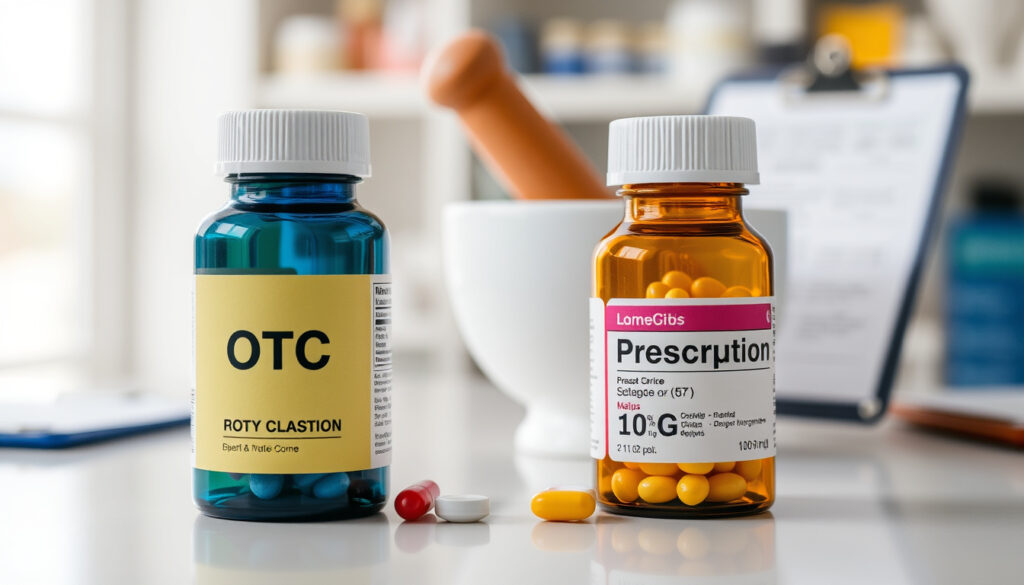
Where to Buy Hormone Pills: OTC vs Prescription
Few healthcare searches spark as much confusion as looking up where to buy hormone pills — the answers depend entirely on your country, medical needs, and whether you mean prescription hormone therapy or an over-the-counter supplement. Knowing the real rules, costs, and differences is the only way to make an informed choice without wandering into unsafe territory.
HRT prescriptions in UK (2022): 10.6 million items ·
OTC hormone supplements approval: Not FDA-approved for hormone replacement ·
Typical HRT prescription cost in US: $20–$100 per month with insurance
Quick snapshot
- All medical HRT is prescription-only in the UK, Ireland, and US (Office on Women’s Health (U.S. HHS authority))
- Feminizing gender-affirming therapy is not FDA-approved for OTC use (CDC (U.S. public health agency))
- Effectiveness of herbal supplements for balancing hormones is unproven by FDA standards
- OTC regulations for hormone products vary widely outside Western countries
- Telemedicine is expanding legitimate access to prescription HRT (Plume Clinic (telehealth provider))
- Ireland’s free HRT scheme rolled out in 2022 (Plume Clinic (telehealth provider))
- Watch for regulatory shifts in online hormone prescribing as demand grows
- More countries may follow Ireland’s free HRT model
Four key facts, one pattern: all medical-grade hormone pills require a prescription in major English-speaking markets.
| Fact | Value | Key source |
|---|---|---|
| Prescription required in UK | Yes for all HRT | NHS guidelines |
| Prescription required in US | Yes for all HRT | Office on Women’s Health |
| OTC estrogen supplements | Not FDA-approved for HRT | U.S. FDA (federal drug regulator) |
| Free HRT scheme in Ireland | Yes, with prescription | HSE Ireland |
Can you buy hormone tablets over-the-counter?
What are the alternatives to prescription HRT?
An OTC supplement labeled for menopause support is not a hormone pill in the medical sense. It is typically a plant extract with no guarantee of effect on your estrogen levels.
The short answer is no, if you are looking for medically recognized hormone replacement therapy (HRT). In the US, the Office on Women’s Health makes it clear that menopausal hormone therapy is prescription medicine, not over-the-counter medicine. The FDA echoes this, stating all estrogen, progestin, and combination products for menopause are FDA-approved prescription treatments.
What exists OTC are non-hormonal vaginal moisturizers and lubricants. The American College of Obstetricians and Gynecologists (ACOG) lists these as nonprescription options for vaginal symptoms, but they do nothing for systemic menopausal issues like hot flashes.
What are OTC estrogen supplements?
- Supplements like black cohosh and red clover are not estrogen
- They are not regulated as medications by the FDA or MHRA
These are dietary supplements containing phytoestrogens or herbal extracts. Digital health company Hers points out that these products “are not tested for safety or effectiveness in the same way as prescription estrogen” and do not contain actual estrogen.
Despite their availability, regulators in the US and UK do not classify them as treatments for hormone deficiency. They are not FDA-approved for hormone replacement and cannot be marketed as such.
The pattern is clear: medical-grade hormone therapy requires a prescription, and OTC products are a separate, unregulated category.
Where can you get hormone pills?
Can you buy oestrogen gel over the counter?
No. Estrogen gel is prescription-only in the UK, Ireland, and US.
In these markets, oestrogen (estrogen) gel is strictly prescription-only. It is a topical formulation of estradiol, a bioidentical hormone, and falls under the same regulations as oral HRT. ACOG’s guidelines list gels, sprays, and creams among the prescription delivery methods for menopausal therapy. OTC gels labeled for “vaginal dryness” typically contain no estrogen—they are lubricants or moisturizers, not hormone replacement.
How to get estrogen pills for trans woman
- Requires a prescription from a gender identity clinic or endocrinologist
- Telehealth platforms like Plume offer an online path without requiring a therapist letter or insurance
- NIH/PMC research confirms exogenous estrogen is used to feminize secondary sex characteristics
Feminizing gender-affirming hormone therapy (GAHT) follows a different but equally regulated pathway. The CDC explicitly states that feminizing GAHT is not approved by the FDA for over-the-counter use. Access typically involves a specialist clinic, though telehealth platforms like Plume offer a streamlined path. Plume says it does not require a therapist letter or insurance to begin gender-affirming hormones online via a licensed clinician. Research from the NIH/PMC confirms that exogenous estrogen is used to feminize secondary sex characteristics, with anti-androgens as adjuncts—this is specialist care that requires a prescription.
Where can I buy HRT patches online?
- Legitimate patches require a prescription
- Online services (Boots, Superdrug) offer consultations
In the UK, services like Boots Online Doctor and Superdrug Online Doctor provide private prescriptions for patches, tablets, and gels after a consultation. In the US, GoodRx notes that hormone therapy is only available with a prescription. In Ireland, a free HRT scheme covers the cost for eligible patients who have a prescription from a doctor, nurse, or midwife.
The availability of telemedicine is widening the door to legitimate HRT, but the prescription requirement remains the non-negotiable gate. Bypassing it means trading medical oversight for dangerous unknowns.
If you are in Ireland, registering with the public health system is a key first step. Our guide to the HSE My Self Service portal explains how to navigate the system. Ireland’s regulatory approach to reproductive healthcare—as seen in its detailed legal framework for abortion laws and procedure access—mirrors the level of oversight applied to hormone therapy.
The implication: prescription requirements are consistent across menopause and transgender care, with telemedicine expanding access but not eliminating the need for medical oversight.
Do I need a prescription for hormones?
Yes, for all medically recognized hormone therapy. This applies to menopause HRT, transgender care, and any treatment addressing a diagnosed hormone deficiency.
What is the difference between prescription HRT and OTC supplements?
- Regulation: Prescription HRT is tested and approved by the FDA, MHRA, or HPRA. OTC supplements are not subject to the same rigorous approval process. The Office on Women’s Health clarifies that OTC products “are not the same” as prescription hormone therapy.
- Effectiveness: Prescription HRT delivers controlled doses of bioidentical hormones. OTC products rely on plant-derived compounds with variable potency.
- Safety: Prescription HRT is monitored for side effects and interactions. The Hers blog cautions that OTC estrogen supplements are not tested for safety and effectiveness the way prescription estrogen is.
Are there any OTC hormone pills for menopause?
FDA stance: No OTC estrogen pills approved · NHS stance: Prescription-only
No, there are no OTC pills that contain actual hormones (estrogen or progesterone) for menopause treatment. The Cleveland Clinic states that HRT for menopause is prescribed by healthcare providers and starts at a low dose. Transgender hormone therapy follows the same principle—masculinizing GAHT is a Schedule III controlled substance in the US.
Some countries allow limited access to progesterone creams without a prescription, but these are not considered primary treatments for menopause or hormone imbalance.
What this means: whether for menopause or transgender care, the prescription requirement is the legal and medical standard.
What are signs of low estrogen?
What are signs that a woman is lacking estrogen?
- Hot flashes and night sweats (vasomotor symptoms)
- Vaginal dryness and thinning of vaginal tissues
- Irregular or absent menstrual periods
- Mood swings, irritability, or depression
- Sleep disturbances unrelated to night sweats
ACOG identifies these as core symptoms of the menopausal transition, but low estrogen can also result from surgical menopause, eating disorders, or genetic conditions. Menopause is the most common cause, affecting millions of women in their late 40s and 50s.
How is low estrogen diagnosed?
Standard test: Blood estradiol (E2) level · Considered with: Symptom evaluation
A blood test measuring estradiol (E2) levels is the standard diagnostic method. The NHS typically recommends a hormone test only after a discussion of symptoms and medical history. The Office on Women’s Health confirms that a discussion of symptoms and blood tests if needed is part of the HRT prescription process.
Self-diagnosing low estrogen based on internet symptom lists is unreliable. A blood test is the only way to confirm levels, and vasomotor symptoms can overlap with other medical conditions.
The takeaway: diagnosis relies on clinical assessment and blood tests, not self-diagnosis.
What is the best pill to balance hormones?
There is no single “best” pill. The right choice depends on your symptoms, health profile, and treatment goals. Most brands contain the same active ingredients—estradiol, progesterone, or a combination—and differ mainly in dosage and delivery method.
What are the names of HRT tablets?
- Elleste Solo, Estradot, Premarin, Progynova, Utrogestan
- Generic estradiol and progesterone are widely available
Common HRT tablet brands in the UK and US include Elleste Solo, Estradot, Premarin, Progynova, and Utrogestan. In Ireland, many of these are available through the free HRT scheme. GoodRx notes that oral estrogen, progestogen, and combination tablets are generally the most affordable menopause medications.
What is the best estrogen supplement?
The “best” OTC supplement is still not estrogen. Prescription estradiol remains the only proven option for clinically diagnosed deficiency.
Supplements like black cohosh, red clover, and soy isoflavones are often marketed as “estrogen supplements,” but they are not estrogen. The FDA has not approved them for hormone balance. Hers calls them “supplements that may contain phytoestrogens, creams, or herbal remedies instead of actual estrogen.”
For clinically diagnosed low estrogen, prescription estradiol remains the only regulated, proven option. The choice between a patch, pill, or gel depends on personal preference and medical guidance.
The pattern: no supplement matches the precision of prescription HRT.
Pros and cons of prescription HRT vs OTC options
Upsides
- Regulated and tested by national health agencies
- Delivers controlled, bioidentical hormone doses
- Proven effectiveness for symptoms of menopause and hormone deficiency
- Available in multiple forms (pills, patches, gels)
Downsides
- Requires a doctor’s appointment and prescription
- Can be expensive without insurance (US average: $20–$100/month)
- OTC supplements claimed to be “natural hormone balancers” lack evidence
- Unregulated online hormone pills pose serious health risks
The balance clearly favors prescription HRT for medical needs, while OTC supplements remain unregulated and unproven.
How to get a prescription for hormone pills
Getting a legitimate prescription involves a straightforward medical process. Here are the typical steps:
- Consult your GP or a specialist. Discuss your symptoms, medical history, and treatment goals. For transgender care, an endocrinologist or gender identity clinic is the appropriate specialist.
- Undergo necessary tests. A blood test to measure hormone levels (estradiol, FSH) is common. The NHS recommends this after a symptom discussion.
- Receive a prescription. Your doctor prescribes the appropriate form—pill, patch, or gel—and dosage. UCSF Transgender Care notes that annual visits are sufficient for stable regimens.
- Fill the prescription. Use a local pharmacy or an online service. In the UK, Boots and Superdrug offer online doctor consultations. In the US, Plume offers virtual gender-affirming care.
- Attend follow-up appointments. Regular monitoring ensures the treatment is effective and safe. Dose adjustments are common based on response.
Following these steps ensures safe, regulated access to hormone therapy.
What we know vs what remains unclear
Separating verified facts from ongoing uncertainties helps clarify the choices involved.
What’s confirmed
- All HRT (estrogen, progestin, combination) requires a prescription in the UK, US, and Ireland
- OTC supplements are not a substitute for medical hormone therapy
- Low estrogen causes specific, measurable symptoms (hot flashes, vaginal dryness, menstrual changes)
What’s still unclear
- The effectiveness of herbal “estrogen supplements” varies widely and lacks consistent clinical evidence
- OTC hormone regulations differ significantly outside of Western countries
- The long-term safety profile of unregulated online hormone purchases is largely unknown
The distinction between confirmed and unclear informs safe decision-making.
Expert perspectives on hormone treatment
“HRT is usually prescribed by a doctor after a discussion of your symptoms and blood tests if needed.”
NHS (UK national health authority)
“Free HRT is available at participating pharmacies if you have a prescription from a GP, nurse or midwife.”
HSE Ireland (national health service)
“Feminizing gender-affirming hormone therapy is not approved by the FDA for over-the-counter use.”
CDC (U.S. public health agency)
Summary
For anyone in the UK, US, or Ireland considering hormone pills, the core reality is simple: a prescription is non-negotiable for safe, regulated therapy. The OTC aisle offers vaginal moisturizers and herbal supplements, but nothing that can replace the precise, tested medicine a doctor prescribes. Telemedicine is making that prescription easier to obtain, but the medical gatekeeping exists for a reason—your safety. Trusting your doctor over a supplement label is the most reliable choice you can make for your hormonal health.
Frequently asked questions
Can I buy HRT online?
Yes, but only through a licensed online doctor who issues a prescription. Legitimate services conduct a consultation first. Buying from unverified websites without a prescription is dangerous and often illegal.
What is the cheapest way to get hormone pills?
In the UK, NHS prescriptions cost £9.65 per item. In the US, generic oral estradiol can cost $10–$30 with insurance. Ireland’s free HRT scheme covers the cost for eligible patients with a prescription.
Do I need a blood test for HRT prescription?
Often yes. A blood test measuring estradiol and FSH levels helps confirm low estrogen and guides the starting dose. Many GPs prescribe based on symptoms and follow up with tests.
How long does it take to get an HRT prescription?
It can take anywhere from one week to a few months, depending on appointment availability. Online consultations through private providers can shorten this to a few days.
Can I buy estrogen cream over the counter?
No, estrogen vaginal cream requires a prescription in the UK, US, and Ireland. Non-hormonal OTC vaginal moisturizers are available and can help with dryness, but they do not deliver estrogen.
Are there any risks with buying hormones online?
Yes. The CDC has documented cases of transgender women obtaining hormones without a prescription in contexts of marginalization, highlighting the risks of unregulated use. Without medical oversight, you risk incorrect dosing, unsterile products, and dangerous side effects.
More related posts
 Tattle Life Sebastian Bond: Founder, Court Case, and Legal Woes
 Latest News in Ireland: Limerick Shootings and More
 Talking Pictures TV Listings: Today’s Schedule & Catch-Up Guide
 Ebon Moss-Bachrach Movies and TV Shows: Complete List
 Grant for Solar Panels Ireland 2026: How Much & Who Qualifies
 Houses to Rent Wexford: Private & Council Options
 Four Star Pizza Tallaght – Menu, Phone, Reviews & Hours
