Top Things to Do in Gran Canaria: Attractions, Beaches & Tips
There’s a reason people keep returning to Gran Canaria, and it’s not just the beach towels. Beyond the resort strips of Playa del Inglés lies an island of volcanic craters, sculpted dunes, and mountain villages where time moves at a different pace, and this guide separates the tourist-cliché from the genuine experience using official sources and trail maps.
Island area: 1,560 km² ·
Annual tourists: 3.5 million ·
Number of beaches: 80+ ·
Highest point: Pico de las Nieves (1,949 m) ·
Capital city: Las Palmas de Gran Canaria
Quick snapshot
- Gran Canaria is not on any no-travel list issued by the EU, UK, or US governments as of 2025 (UK Foreign Office travel advice)
- The six-drink rule does not apply in Gran Canaria; it is a Balearic Islands policy (BBC reporting on Balearic alcohol restrictions)
- Maspalomas Dunes are part of a Special Nature Reserve (Official Gran Canaria Tourist Website)
- Whether individual hotels in Gran Canaria voluntarily impose drink limits — varies by property, no government mandate exists (Official Gran Canaria Tourist Website)
- 2024: Maspalomas Dunes attract over one million visitors annually — pressure on the natural reserve continues (Official Gran Canaria Tourist Website) (Three Points of the Compass hiking guide)
- 2025: New Camino hiking routes documented (S-54, S-50, S-01) for walkers (Three Points of the Compass hiking guide)
- Expect growing interest in interior hiking and rural tourism as travellers seek alternatives to crowded beaches (Official Gran Canaria trekking section)
The numbers tell a story: Gran Canaria is smaller than you think but more diverse than its beach reputation suggests.
| Attribute | Value |
|---|---|
| Location | Atlantic Ocean, approximately 210 km off northwest Africa |
| Capital | Las Palmas de Gran Canaria |
| Population | Approximately 850,000 (2024 estimate) |
| Highest point | Pico de las Nieves (1,949 m) |
| Tourist arrivals | 3.5 million annually (pre-COVID) |
| Languages | Spanish (official), but English widely spoken in tourist areas |
What not to miss on Gran Canaria?
Natural wonders
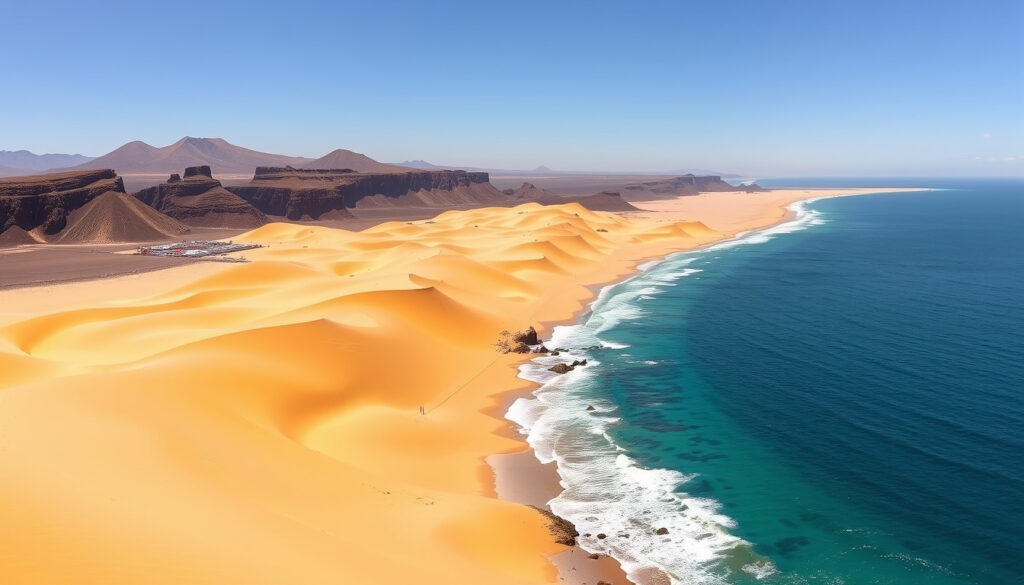
- Maspalomas Dunes — The island’s most iconic natural feature, a 400-hectare Special Nature Reserve of golden sand shaped by wind and tide (Official Gran Canaria highlights page). Walk the boardwalk at sunrise before the crowds arrive.
- Roque Nublo — A volcanic rock formation standing 80 metres tall, one of the island’s best-known hiking destinations (Where Next hiking roundup). The trail from the car park takes about 45 minutes each way.
- Pico de las Nieves — The highest point on the island, providing panoramic views across to Tenerife’s Mount Teide on clear days (Official Gran Canaria highlights page).
- Caldera de Bandama — A volcanic crater with a 1,000-metre diameter, viewable from the rim or by hiking down to the bottom.
- Los Tilos de Moya — A lush laurel forest, a rare ecosystem found only in the Canary Islands and Madeira.
The pattern across these sites: the interior is as dramatic as the coast. Gran Canaria’s volcanic geology gives you desert, pine forest, and crater landscapes within a 45-minute drive.
Cultural landmarks
- Vegueta district (Las Palmas) — The historic quarter houses the Santa Ana Cathedral and colonial-era architecture, a UNESCO-listed quarter (Official Gran Canaria highlights page). The Casa de Colón museum documents Columbus’s stopovers on his voyages.
- Tejeda — A mountain village perched at 1,050 metres, famous for almond blossoms in February and exceptional mountain views (Official Gran Canaria highlights page).
- Teror Old Town — A preserved historic town centred around the Basílica de Nuestra Señora del Pino, the island’s patron saint (Official Gran Canaria highlights page).
- Fataga — A small village in a valley of palm trees, often called the island’s prettiest settlement.
Why this matters: Most visitors never leave the south coast. The interior villages give you November-level temperatures when the beach is baking — and far fewer selfie sticks.
Iconic beaches
- Las Canteras (Las Palmas) — A 3-kilometre urban beach with a natural reef, popular with locals for surfing and swimming (Official Gran Canaria highlights page).
- Maspalomas Beach — Stretching alongside the dunes, this is the classic golden-sand beach with calm waters (Tripadvisor top attractions ranking).
- Playa de Amadores — A man-made beach with imported sand, popular for its calm waters and family-friendly services (Tripadvisor top attractions ranking).
- Puerto de Mogán Beach — A small harbour beach set beside canals, earning the nickname ‘Little Venice’ (Official Gran Canaria highlights page).
The trade-off: The southern beaches are windier but sunnier. The northern beaches (Las Canteras) are calmer for swimming but can be cloudier. Choose based on your tolerance for constant breeze.
What are the main attractions in Gran Canaria?
Top natural attractions
- Maspalomas Dunes — A protected nature reserve that attracts over a million visitors annually (Official Gran Canaria Tourist Website). The dunes can shift several metres a year, so the landscape changes constantly.
- Roque Nublo — One of the most photographed spots on the island, with established walking trails from La Goleta car park (Where Next hiking roundup).
- Tamadaba Natural Park — A pine forest in the northwest, offering hiking trails and views down to the coast. Less crowded than the southern attractions.
Beaches and water parks
- Aqualand Maspalomas — The largest water park on the island, with slides, a wave pool, and children’s areas. A reliable option for families who need a full-day activity.
- Palmitos Park — A botanical garden and zoo featuring dolphin shows, bird of prey displays, and tropical gardens (Official Gran Canaria highlights page).
- Puerto de Mogán — A purpose-built marina with colourful houses, restaurants, and a weekly market every Friday (Official Gran Canaria highlights page).
Towns and cultural sites
- Las Palmas — The capital offers the Vegueta quarter, the Casa de Colón museum, and the Carnival of Las Palmas in February, one of the world’s largest carnivals (Official Gran Canaria highlights page).
- Tejeda — A mountain village with traditional Canarian architecture and a viewpoint overlooking the Roque Nublo.
- Agaete — A coastal town in the northwest with natural rock pools (Las Salinas de Agaete) and the Valerón archaeological site, a network of pre-Hispanic grain silos.
The implication: Gran Canaria has more museums, archaeological sites, and cultural landmarks than the typical resort-goer realises. The interior towns see a fraction of the tourist traffic of the south coast.
What is the nicest area to stay in Gran Canaria?
For families: Maspalomas and Playa del Inglés
- Maspalomas offers a long sandy beach and proximity to the dunes, plus family-friendly resorts with water parks and mini-clubs (Official Gran Canaria highlights page).
- Playa del Inglés has the highest concentration of bars and clubs, but also family-oriented hotels near the beach (Tripadvisor top attractions ranking).
For couples: Puerto Rico and Puerto de Mogán
- Puerto de Mogán is often called ‘Little Venice’ due to its canals, with a quieter atmosphere and excellent seafood restaurants (Official Gran Canaria highlights page).
- Puerto Rico offers a sheltered cove beach and a selection of mid-range hotels, popular with British and German couples.
For nightlife: Playa del Inglés
- The area has the highest concentration of bars and clubs, including the famous Yumbo Centre with its diverse nightlife scene (Official Gran Canaria highlights page).
For culture: Las Palmas
- Las Palmas features urban beaches like Las Canteras and the historic Vegueta area (Official Gran Canaria highlights page).
- The city has museums, a cathedral, and the annual Carnival of Las Palmas — a cultural experience that rivals the south’s sunbeds.
What this means: If you want to walk to the beach without a cab, stay in Maspalomas or Playa del Inglés. If you want to explore the interior, base yourself in Las Palmas or a rural hotel in Tejeda. You will compromise one thing either way.
Does the 6 drink rule apply in Gran Canaria?
What is the six-drink rule?
The six-drink rule limits all-inclusive alcohol to six drinks per person per day, typically served with meals. It was introduced by the regional government of the Balearic Islands in 2020 to reduce alcohol-related tourism problems (BBC reporting on Balearic alcohol restrictions).
Where does the rule apply?
The rule is enforced in some resorts in the Balearic Islands (Mallorca, Ibiza, Menorca, Formentera). It does not apply in the Canary Islands, including Gran Canaria (Official Gran Canaria Tourist Website).
What are the rules in Gran Canaria?
Individual hotels in Gran Canaria may voluntarily limit alcohol, but no government mandate exists. The Spanish national government has not extended the Balearic policy to the Canary archipelago (Official Gran Canaria Tourist Website).
The catch: While the six-drink rule does not apply in Gran Canaria, some hotels — especially large all-inclusive chains — may impose their own limit. Check with your specific hotel before booking.
Is there much to do in Gran Canaria?
Outdoor adventures
- Gran Canaria offers hiking trails through pine forests and volcanic landscapes, with the official tourism site listing paths by municipality (Official Gran Canaria trekking section).
- A 2025 trail guide identifies the main Camino routes as S-54 Maspalomas-Tunte, S-50 Tunte-Cruz de Tejeda, and S-01 Cruz de Tejeda-Gáldar (Three Points of the Compass hiking guide).
A family of four spending a week in Maspalomas can fill two days at Aqualand, two days at the beach, one day at Palmitos Park, and two days exploring the interior — without repeating an activity. The variety is real, not a marketing line.
Beach and water activities
- Diving, surfing, and windsurfing are popular along the coast, especially at Las Canteras and Playa del Inglés (Official Gran Canaria highlights page).
- The island has over 80 named beaches, from golden sand to black volcanic sand (AllTrails beach trails category).
Cultural and historic sites
- Las Palmas has museums, a cathedral, and the annual Carnival of Las Palmas — listed among the world’s top carnivals (Official Gran Canaria highlights page).
- Archaeological sites include the Valerón grain silos and the Cueva Pintada museum in Gáldar, showing pre-Hispanic cave dwellings.
Family-friendly fun
- Aqualand Maspalomas and Palmitos Park are the two main animal-and-water attractions, both suitable for young children (Official Gran Canaria highlights page).
- The camel rides at Maspalomas Dunes are a tourist cliché, but children under 10 tend to love them.
Many travellers ask if Gran Canaria is worth visiting for more than a beach holiday. The answer is yes — but only if you hire a car. The interior is 45 minutes from the coast, and public transport between the interior villages is limited.
The pattern: Gran Canaria offers more than enough to fill a week-long trip, even for repeat visitors.
Is Gran Canaria on the no-travel list?
Gran Canaria is not on any no-travel list issued by the EU, UK, or US governments as of 2025 (UK Foreign Office travel advice for Spain). The island has not been subject to any blanket travel restriction since the COVID-19 pandemic ended. The UK Foreign Office currently advises normal precautions for Spain, including the Canary Islands.
The pattern: During the pandemic, the Canary Islands were added and removed from quarantine lists based on case rates. As of 2025, no such restrictions apply. The question persists in search engines likely due to outdated news articles from 2020–2022.
Pros and cons of visiting Gran Canaria
Upsides
- Year-round spring climate — average 22°C in winter, 26°C in summer
- Diverse landscape: beaches, mountains, desert dunes, pine forests, and volcanic craters
- Direct flights from most European cities (2.5 hours from Madrid, 4 hours from London)
- Above 80 named beaches, so you can find a quiet spot even in peak season
- Affordable compared to other European island destinations
Downsides
- Wind on the southern beaches can be relentless, especially in July-August
- Public transport to interior villages is sparse — a car is essential for exploring beyond resorts
- Mass tourism has made parts of Playa del Inglés feel generic and overcrowded in peak season
- Some beaches have strong currents (e.g., Playa del Inglés when the tide is high)
- Prices in southern restaurants are often inflated compared to Las Palmas
Summary
Gran Canaria offers more than its reputation as a package-holiday island suggests. The interior’s hiking trails, volcanic viewpoints, and historic villages provide a genuine alternative to the beach towels of Maspalomas. For the traveller coming from Ireland or the UK, the choice is clear: you can spend a week on a sunbed, or you can hire a car and discover an island with over 80 beaches, a UNESCO quarter, and a mountain village that feels a world away from the resort strip. Either way, you get the weather. The difference is how much of the island you actually see.
doyouspain.com, wanderingnomada.com, reddit.com, localguidegrancanaria.com, grancanaria.com
Frequently asked questions
Is Gran Canaria safe for tourists?
Yes. Gran Canaria is considered safe for tourists. The UK Foreign Office does not advise against travel to the Canary Islands. Petty crime like pickpocketing occurs in tourist areas, but violent crime is rare.
What is the best time to visit Gran Canaria?
The best time is from October to May, when temperatures are comfortable (22–26°C) and the crowds are smaller. July and August are hottest (30°C+) and busiest.
Do I need a car to get around Gran Canaria?
Not for the southern resorts or Las Palmas — public buses connect the main areas. But to explore the interior (Tejeda, Roque Nublo, Tamadaba), a car is highly recommended as buses are infrequent (Official Gran Canaria trekking section).
What currency is used in Gran Canaria?
The euro (EUR) is the official currency. ATMs are widely available, and card payments are accepted almost everywhere.
Are there any entry requirements for Gran Canaria (post-Brexit)?
Yes. British citizens need a valid passport to enter Spain (including the Canary Islands). As of 2025, a visa is not required for stays under 90 days. The ETIAS system is expected to be implemented in 2025 — check the EU travel information site for updates (EU ETIAS official page).
Is Gran Canaria good for a family holiday?
Yes. The southern resorts offer family-friendly hotels, water parks (Aqualand Maspalomas), and safe swimming beaches. Palmitos Park and camel rides are hits with younger children.
What is the nightlife like in Gran Canaria?
Playa del Inglés is the main nightlife hub, with dozens of bars, clubs, and the Yumbo Centre. The atmosphere is lively and diverse, attracting all age groups.
More related posts
 When Does Wimbledon Start? 2026 Dates, TV & Tickets
 When Is High Tide Today – NOAA Predictions Near You
 Offshore Law Companies in Guernsey: The Top Firms and Services
 Viking Hotel Waterford: Free Parking, Dining & More
 Kidney Stones Symptoms in Women: First Signs & Pain Guide
 Chinese Sweet and Sour Chicken Near Me: Best Ireland Spots
 Is Poland in the EU? Membership, Currency & Schengen
 Vodafone iPhone 17 Pro: Price, Plans & Value in Ireland
