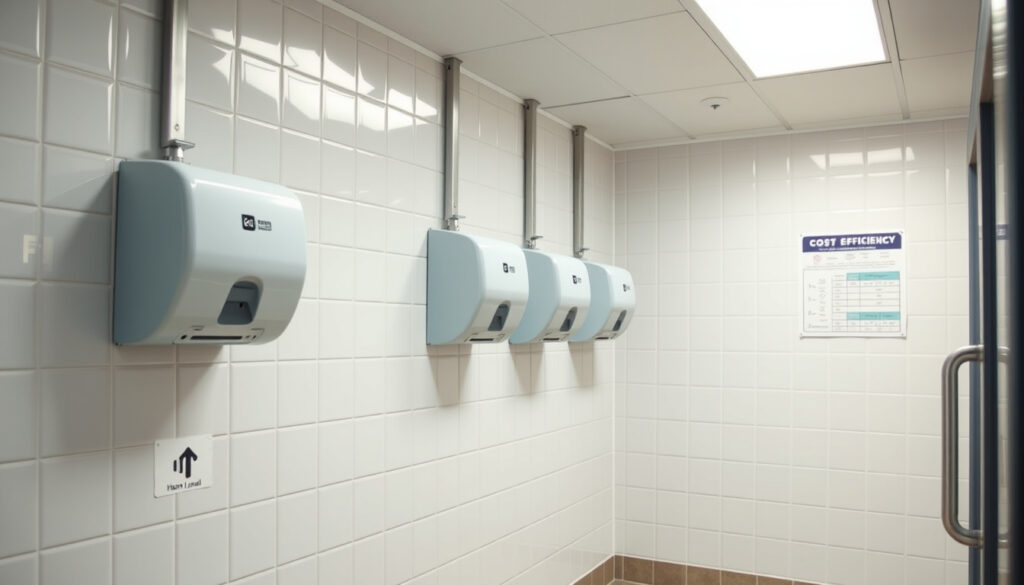
Hand Dryers for Schools: Hygiene, Noise & Cost Guide
Cheap hand dryers in school restrooms blast noise that rattles classroom doors, but choosing the right dryer means balancing noise, durability, hygiene, and budget. This guide lays out the trade-offs so you can pick a model that actually works for a hallway full of kids.
Noise levels for quiet school hand dryers: Start at 60 dB · Energy savings vs paper towels: Up to 80% reduction · Typical installation cost per unit: $200–$800 · Average lifespan of a commercial hand dryer: 7–10 years
Quick snapshot
- Hand dryers can spread bacteria if not maintained (NIH public health research)
- Paper towels generate more waste (EPA environmental agency)
- Quiet hand dryers exist at 60 dB (Not Just Taps UK commercial washroom supplier)
- Long-term health effects of hand dryer spray (NIH public health research)
- Effectiveness of HEPA filters in schools (Intelligent Hand Dryers Australia school hand dryer guide)
- School hand dryer prices range from £120 to £895, affecting budget timelines (Direct365 UK facilities supplier)
- Look for low-noise models with HEPA filters and vandal-resistant construction (QBIC Washrooms UK school washroom specialist)
Five key specs, one pattern: the quietest models often trade off drying speed, while the most durable ones cost more upfront but last longer.
| Specification | Value |
|---|---|
| Typical noise level | 60–80 dB |
| Average unit cost | $300–$500 |
| Energy efficiency rating | Up to 80% reduction vs. paper towels |
| Lifespan | 7–10 years |
| Warranty range | 1–5 years |
The takeaway: a school hand dryer that hits 60 dB and lasts a decade can cut long-term costs, but the warranty length tells you how confident the manufacturer is in its build.
School facilities managers should commit to a quieter, longer-lasting dryer now or face higher replacement costs and classroom disruptions later.
How hygienic are hand dryers?
Hygiene is the top concern for school restrooms. Studies show that hand dryers can spread bacteria if they aren’t cleaned regularly – a 2018 study published by the NIH U.S. National Library of Medicine found that jet air dryers can disperse bacteria up to 1.5 meters. However, the same study notes that the risk of infection is low if hands are properly washed first.
Paper towels vs hand dryers: which is more sanitary?
- Paper towels – reduce bacterial spread because they physically remove microbes, but they generate waste and can clog toilets (EPA environmental agency).
- Warm air dryers – take longer and may not dry as thoroughly, creating a moist environment for bacteria.
- Jet air dryers – fast but can blow particles around; HEPA filters help reduce this (Intelligent Hand Dryers Australia school hand dryer guide).
The pattern: for schools, the most hygienic choice is a HEPA-filtered dryer or paper towels, but the trade-off is cost and environmental impact.
Do hand dryers spread fecal matter?
Some studies have found that hand dryers can suck in and blow out bacteria from the restroom air, including fecal matter. A 2016 study by the NIH U.S. National Library of Medicine detected E. coli and other bacteria near hand dryers. However, the levels are generally low and the risk is minimal if hands are washed properly. The catch: in a school, where handwashing compliance varies, a HEPA filter becomes a sensible upgrade.
A school restroom with a HEPA-filtered hand dryer can reduce bacterial spread, but it won’t fix poor hand hygiene. The real health gain comes from teaching kids to wash properly.
What are the downsides of using a hand dryer?
No school hand dryer is perfect. The main drawbacks are noise, energy use, drying time, and vulnerability to vandalism.
Are hand dryers worth it?
Noise levels can exceed 80 dB in some models – loud enough to disturb a classroom next door. Direct365 UK facilities supplier notes that low-noise models are essential for education settings. Energy consumption varies: modern dryers use 80% less energy than paper towels, according to Energy Star U.S. energy efficiency program. Drying time ranges from 10 to 30 seconds.
Common drawbacks: noise, energy, drying time, vandalism
- Noise – quiet models operate at 60–70 dB; loud ones can hit 85 dB.
- Energy – older units use 2,000–2,400 W; newer brushless motors cut that.
- Drying time – fast models (10–15 sec) are better for high traffic.
- Vandalism – unsupervised restrooms mean tamper-proof screws and metal covers are essential (Intelligent Hand Dryers Australia school hand dryer guide).
The pattern: a quiet, fast, vandal-resistant dryer costs more upfront, but the savings on paper towels and maintenance can offset the price within a few years.
A cheap dryer may save money today, but if it’s loud enough to interrupt classes or breaks down often, the real cost – disruption and replacement – is much higher.
What is the best hand dryer for commercial use?
Schools need dryers that are quiet, durable, and fast. Top brands include Dyson, Mitsubishi, World Dryer, and Biodrier. QBIC Washrooms UK school washroom specialist lists Airstream Whisper as a low-noise option. Washroom Hub UK washroom equipment retailer offers the BlueDry Junior at £42, a quiet 2000W model.
Which brand of hand dryer is best?
It depends on the school’s priorities. For noise, Dyson Airblade dB is rated at 64 dB. For durability, World Dryer’s vandal-resistant models feature steel covers and tamper-proof screws (Hand Dryer Supply vandal-resistant product range). Mitsubishi’s Jet Towel is fast but louder.
What are the best small hand dryers for schools?
Compact models like the Biodrier Metis and the BlueDry Junior fit smaller restrooms and still offer low noise. Not Just Taps UK commercial washroom supplier highlights vandal-resistant units with HEPA filters that are ideal for primary schools.
Which hand dryers are quietest for schools?
Models with brushless motors and sound-absorbing materials run at 60–70 dB. The Airstream Whisper from Direct365 UK facilities supplier is one example, priced at £425.99. The Dyson Airblade dB is another. The pattern: quiet dryers cost more, but they keep classrooms undisturbed.
The implication: for a school, the best hand dryer is quiet, vandal-resistant, and HEPA-filtered. The premium brands deliver that, but at a higher upfront cost.
What is the best way to dry your hands in a public restroom?
The CDC U.S. Centers for Disease Control and Prevention recommends air drying or using paper towels after handwashing. Proper handwashing is more important than the drying method. No-touch drying reduces cross-contamination, which is why automatic hands-under dryers are preferred (Direct365 UK facilities supplier).
How to choose between hand dryers and paper towels
Paper towels are more hygienic per use but create waste and cost. Hand dryers are cheaper over time but require maintenance. For schools, a combination – paper towels in the nurse’s office, dryers in main restrooms – can balance hygiene and budget.
Best hand drying technique for hygiene
Dry thoroughly: rubbing hands under a dryer for 20 seconds, or using two paper towels. The WHO World Health Organization advises drying to prevent recontamination. The catch: if the dryer is dirty, it can undo the cleaning.
The pattern: the drying method matters less than the cleanliness of the device. A well-maintained hand dryer is a solid choice for a school.
How much do hand dryers for schools cost?
Entry-level units start around $200, high-end models exceed $800. Installation may require electrical work, adding $100–$300. Long-term savings on paper towels offset the upfront investment. Frills Australian compliance guide advises comparing cost per dry rather than wattage alone.
Factors affecting hand dryer prices
- Motor type – brushless motors are quieter and more expensive.
- Material – metal housings cost more than plastic but resist vandalism.
- HEPA filter – adds $50–$100 but improves hygiene.
- Warranty – longer warranties (5 years) indicate better build.
Installation and maintenance costs
Installation by a qualified electrician can cost $150–$300. Maintenance is minimal – cleaning the filter and housing. Washroom Hub UK washroom equipment retailer lists a BlueDry Junior at £42, but installation is extra. The pattern: the cheapest dryer can become expensive if it breaks or needs frequent cleaning.
The implication: spending $500 on a quiet, durable dryer saves money over a decade compared to buying a $200 unit that needs replacement in three years.
School procurement officers should target a mid-range dryer ($300–$500) with a 5-year warranty, HEPA filter, and vandal-resistant metal cover. The upfront cost is higher, but the total cost of ownership is lower.
Comparison of popular school hand dryers
Three models, one pattern: quiet and durable cost more but last longer.
| Model | Price (approx) | Noise level | Vandal-resistant | HEPA filter | Drying time |
|---|---|---|---|---|---|
| BlueDry Junior | £42 | ~65 dB | No | No | 25 sec |
| Airstream Whisper | £425.99 | ~60 dB | Yes | Optional | 15 sec |
| Vandal-Resistant Model (generic) | $300–$500 | ~65 dB | Yes | Yes | 15–20 sec |
Sources: Washroom Hub UK washroom equipment retailer, Direct365 UK facilities supplier, Not Just Taps UK commercial washroom supplier.
The implication: schools that prioritise quiet and durability should skip the cheapest model and invest in a mid-range vandal-resistant unit.
Specifications to look for in a school hand dryer
Six specs, one pattern: the best school dryers combine low noise, fast drying, and tough construction.
| Specification | Recommended value |
|---|---|
| Noise level | ≤ 65 dB |
| Drying time | ≤ 20 seconds |
| Motor type | Brushless (quieter, longer life) |
| Housing material | Steel or brushed stainless (Intelligent Hand Dryers Australia school hand dryer guide) |
| Vandal resistance | Tamper-proof screws, steel back plate (Intelligent Hand Dryers Australia school hand dryer guide) |
| HEPA filter | Yes (reduces bacteria spread) (Not Just Taps UK commercial washroom supplier) |
| Warranty | ≥ 3 years |
| Energy consumption | ≤ 1,500 W (or cost per dry < $0.02) |
| Mounting | Secure wall mounting, no exposed wires |
| Sensor type | Automatic hands-under (no-touch) (Direct365 UK facilities supplier) |
The catch: not all specs are equally important. Noise and vandal resistance trump drying speed in a school setting.
Upsides and downsides of hand dryers for schools
Upsides
- Lower operating cost than paper towels over time (Energy Star U.S. energy efficiency program)
- Reduces paper waste and toilet clogging (EPA environmental agency)
- Fast drying speeds (10–15 sec) for high-traffic restrooms
- No-touch operation improves hygiene (Direct365 UK facilities supplier)
Downsides
- Noise can disrupt classrooms if not quiet models
- Initial purchase and installation cost ($200–$800 per unit)
- Potential bacterial spread if not cleaned regularly (NIH public health research)
- Vandalism risk in unsupervised restrooms
What we know and what we don’t
Confirmed facts
- Hand dryers can spread bacteria if not maintained (NIH public health research)
- Paper towels generate more waste (EPA environmental agency)
- Quiet hand dryers exist at 60 dB (Not Just Taps UK commercial washroom supplier)
What’s unclear
- Long-term health effects of hand dryer spray (NIH public health research)
- Effectiveness of HEPA filters in school environments (Intelligent Hand Dryers Australia school hand dryer guide)
Perspectives from the field
“Quiet hand dryers are essential for schools where restrooms are located near classrooms or exam halls.”
Intelligent Hand Dryers Australia school hand dryer guide
“Vandal-resistant features – like steel back plates and anti-vandal screws – reduce maintenance costs and keep the dryers operational in unsupervised school restrooms.”
Intelligent Hand Dryers Australia school hand dryer guide
“Automatic hands-under hand dryers are the best option for staying hygienic in a school setting.”
Direct365 UK facilities supplier
Summary: what schools should do
Hand dryers can save money and reduce waste, but they only work if chosen for the school environment. The quietest models (60–65 dB) with HEPA filters and vandal-resistant construction are the smartest investment. School facilities managers should spend a bit more on a durable, quiet dryer now, or face higher maintenance costs and classroom disruptions later.
Related reading: Hand dryers for schools · Hand dryers for the education sector
tutorcity.sg, airdri.com, handydryers.co.uk, prodryers.com, intelligenthanddryers.com
Frequently asked questions
Do hand dryers require special electrical wiring?
Most hand dryers need a dedicated circuit; some high-power models require 240V. Always consult a qualified electrician. (Not Just Taps UK commercial washroom supplier)
Can hand dryers be installed in existing restrooms?
Yes, most units can be retrofitted. Installation involves mounting and wiring, which typically takes 1–2 hours per unit.
What is the typical warranty on school hand dryers?
Warranties range from 1 to 5 years. Longer warranties are common on commercial models from top brands. (Hand Dryer Supply vandal-resistant product range)
Are there hand dryers designed for young children?
Yes, models like the BlueDry Junior have lower activation thresholds and quieter operation, making them suitable for primary schools. (Washroom Hub UK washroom equipment retailer)
How often should hand dryers be cleaned?
Manufacturers recommend cleaning the filter and housing monthly. In high-traffic school restrooms, weekly cleaning may be needed.
Do hand dryers use a lot of electricity?
Modern dryers use 1,200–1,500 W, costing about $0.01–$0.02 per dry. Energy-efficient models are certified by Energy Star U.S. energy efficiency program.
Are battery-powered hand dryers suitable for schools?
Battery models are less common and typically weaker. They may be used in remote areas but are not ideal for high-traffic school restrooms.
More related posts
 What Is Parkinson’s Disease: Symptoms, Causes & Life Expectancy
 Google Pixel 10 Pro XL – Release Date, Price and Specs
 Boeuf & Frites Blanchardstown: Hours, Menu, Reviews & Booking
 Signs of Ectopic Pregnancy: Early Symptoms and When to Seek Help
 Four Star Pizza Tallaght – Menu, Phone, Reviews & Hours
 Drogheda United vs Bohemians – 0-0 Draw, Stats & Highlights
 Irish Social Welfare Application Rejections: Reasons & Appeals
 Daylight Saving Time Ireland: Dates, Summer Confusion, Longest Day
