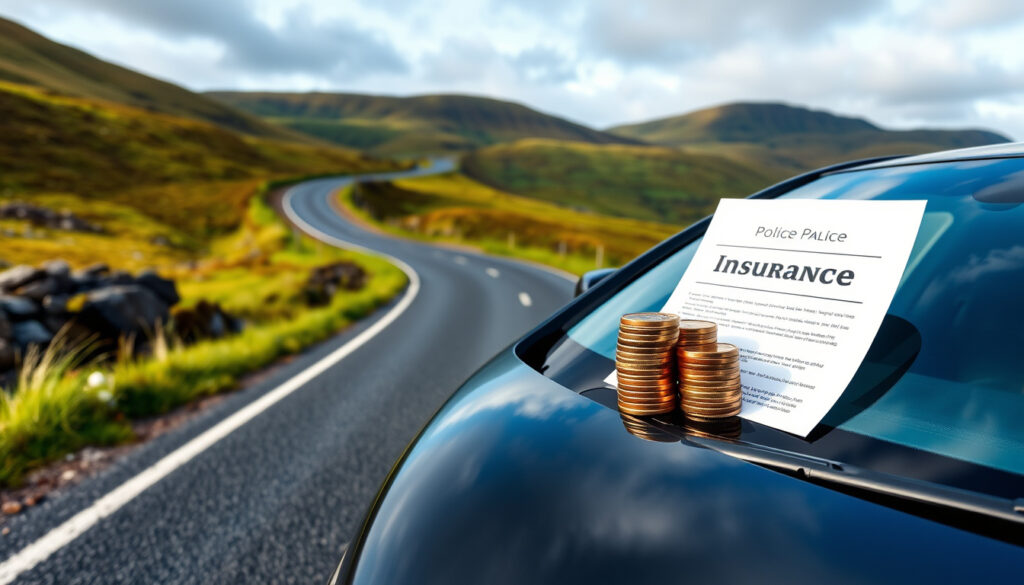
Auto Insurance in Ireland: Compare Rates & Save
Few things in Ireland stir more frustration than renewing your car insurance and finding the premium has crept up again. The paradox is that while the market is packed with providers, the cheapest quote for you might come from an insurer you have never heard of – if you take the time to compare. This guide unpacks the real cost of auto insurance in Ireland, from average premiums to the fine print, so you can make a choice that actually fits your driving habits.
Number of insurers compared by aggregator sites: 14 ·
Maximum no-claims discount offered: 75% ·
Online discount common: 10% ·
Irish-owned insurer with largest market share: FBD ·
Pay-per-mile insurer: Aviva Zero
Quick snapshot
- Aviva Zero uses a pay-per-mile pricing model (Aviva Ireland (direct insurer))
- Chill compares quotes from 14 insurance providers (bonkers.ie (Irish price comparison site))
- AXA offers up to 75% no-claims discount (An Post Insurance (insurance arm of Ireland’s postal service))
- FBD is Ireland’s largest Irish-owned insurer (FBD Insurance (Irish-owned insurer))
- Which single insurer is cheapest for all driver profiles
- Exact average premium for 2025 (figures may vary by source)
- Long-term reliability of pay-per-mile policies
- How telematics tracking affects renewal premiums
- Whether premium increases will continue into 2025–2026
- Central Bank of Ireland 2024 report shows average premium rose 9% to €623 (Central Bank of Ireland (financial regulator))
- Pay-per-mile and telematics products expected to expand (The Irish Times (major Irish daily))
- Regulation continues to ban price walking (renewal vs new customer pricing) (CompareInsurance.ie (Irish comparison platform))
The table below summarises the key data points about Irish car insurance from official and industry sources.
| Attribute | Value |
|---|---|
| Minimum required cover | Third Party (liability) |
| Largest Irish-owned insurer | FBD |
| Pay-per-mile pioneer | Aviva Zero |
| Number of insurers compared by Chill | 14 |
| Typical online discount | 10% |
| Average written premium 2024 | €623 (Central Bank of Ireland) |
| % with comprehensive cover | 93% (Central Bank of Ireland) |
| Expected claims cost per policy 2024 | €397 (Central Bank of Ireland) |
Who is the cheapest for car insurance in Ireland?
No single insurer wears the crown for every driver. The cheapest quote depends heavily on your age, driving history, vehicle, and location. What holds true is that comparison platforms consistently reveal big gaps between the highest and lowest offers.
According to Settle.ie (Irish personal finance guide), the difference between the best and worst quote on the same car can be €400 to €500. That’s a sizeable sum that makes shopping around essential.
Comparing the cheapest providers
- Aviva and Chill often appear among the cheapest for many driver profiles (bonkers.ie)
- Chill aggregates rates from 14 insurers, giving a broad view (bonkers.ie)
- AIG Ireland states that its car insurance starts from €280, excluding levies (AIG Ireland (direct insurer))
Aviva, Chill, and other budget options
Aviva Zero, the pay-per-mile product, is particularly cheap for low-mileage drivers. But it’s not for everyone – young drivers may be excluded, and the telematics tracking can affect privacy. Chill, meanwhile, is a pure comparison tool that lets you see multiple quotes at once.
How driver profile affects the cheapest quote
New drivers aged 17–20 face annual premiums of €3,500 to €5,000+, according to Settle.ie. Experienced drivers with full no-claims bonuses often pay roughly €600 to €1,200. The pattern: the cheaper the profile, the more options open up.
The implication: your personal risk profile matters as much as the insurer you choose. A few years of claim-free driving can slash your premium dramatically.
How much is auto insurance in Ireland?
The Central Bank of Ireland reported that the average written premium per private motor policy rose to €623 in 2024, up 9% from 2023. Total gross written premium hit €1.46 billion. But averages hide wide variation.
Bonkers.ie says premiums typically range from around €500 to over €1,500 depending on many factors. And their quoted average of €700 is not a strong indicator of any one person’s premium.
Average premium ranges in Ireland
- Experienced drivers (31–60): €600–€1,200 per year (Settle.ie)
- New drivers (17–20): €3,500–€5,000+ per year (Settle.ie)
- Lowest average by car brand: Dacia at €494 (The Irish Times (major Irish daily))
- Lowest average by model: Kia Sportage at €493 (The Irish Times)
Costs for young drivers vs experienced drivers
Young drivers face the steepest rates. The gap isn’t just a few hundred euro – it can multiply by a factor of three or more compared to a middle-aged driver with a clean record. This is where telematics policies like Aviva Zero and BoxClever (from €550, per AIG Ireland) can offer a lifeline, though with tracking trade-offs.
Regional variations in premiums
Urban areas generally command higher premiums than rural locations due to higher traffic density and theft risk. However, the research notes do not provide specific regional data from confirmed sources. The pattern is consistent with general underwriting practices across Europe.
The catch: even with a clean record and a low-risk car, location can add hundreds to your premium. Moving from a city to a smaller town might lower your quote more than switching insurers.
Why is Aviva Zero so cheap?
Aviva Zero stands apart by using a pay-per-mile model. You pay a fixed base rate plus a per-mile charge, tracked via a telematics device in your car. For people who drive fewer than, say, 10,000 km a year, it can undercut traditional policies significantly.
Pay-per-mile model explained
The base rate covers admin and part of the risk. Then you’re charged by the mile, with rates that can be as low as a few cents per km. This structure rewards low-mileage drivers directly. Aviva Ireland (direct insurer) explains that coverage is comprehensive, including theft, fire, and damage.
What coverage is included
Aviva Zero provides comprehensive cover – not a stripped-down third-party product. That includes liability, damage to your own vehicle, and personal injury cover. The trade-off is mandatory telematics tracking, which monitors driving behaviour and mileage.
Who qualifies for Aviva Zero
Not everyone can sign up. Aviva Zero reportedly excludes certain high-risk profiles such as very young drivers. It’s best suited to experienced drivers with a low annual mileage. The product is still relatively new, so long-term reliability data is limited.
Pay-per-mile looks cheap on day one, but if your mileage creeps up – or the insurer revises the per-mile rate at renewal – the savings can vanish. Drivers should model their likely annual km honestly before committing.
The pattern: pay-per-mile policies are best suited to those who can accurately predict their annual mileage and have a clean driving record.
What are the top car insurance companies in Ireland?
Ireland’s market is split between large international insurers, a major Irish-owned player, and comparison platforms that let you see multiple quotes at once.
Major insurers operating in Ireland
Here is a comparison of the main options available through aggregator sites, with source-based details.
Four insurers, one market: the table below highlights how each player differs in structure and typical discounts.
| Insurer | Type | Notable features | Typical discounts |
|---|---|---|---|
| AXA | International insurer | Wide network, strong customer service ratings | Up to 75% no-claims discount (An Post Insurance) |
| FBD | Irish-owned insurer | Largest Irish-owned, tailored to local market | No-claims bonus, multi-policy bundles (FBD Insurance) |
| Aviva | International insurer | Pay-per-mile (Aviva Zero), traditional policies | Online discount, no-claims bonus |
| Chill | Price comparison platform | Aggregates 14 insurers, single application form | Access to multiple insurer offers (bonkers.ie) |
Comparison of market share and offerings
The Central Bank does not publish individual market shares, but FBD is widely recognised as the largest Irish-owned player. AXA and Aviva hold significant share through their international scale. Chill and RedClick operate as middlemen, not insurers, meaning they earn commission rather than underwriting risk.
Specialist insurers vs generalists
AIB and SuperValu offer insurance through partnerships – they are not direct underwriters. For drivers with specific needs (high mileage, modified cars, or young drivers), specialist brokers may offer better options than the general market leaders.
The pattern: the more mainstream your profile, the more competition exists for your business. Niche drivers need to hunt harder.
What is the best auto insurance in Ireland?
‘Best’ depends on what you value: price, claims handling, additional perks, or ethical considerations. No single insurer tops every category.
Criteria for ‘best’ (price, coverage, service)
- Price-sensitive drivers: Compare multiple quotes – Chill or bonkers.ie are good starting points.
- Service-oriented: AXA and FBD often score well on customer service (The Irish Times noted strong service ratings).
- Low-mileage drivers: Aviva Zero pay-per-mile likely the cheapest option.
- Bundlers: An Post Insurance offers up to €60 off when combining with home cover (An Post Insurance).
Consumer satisfaction ratings
While no official government complaint data for 2024 is publicly cited, industry sources indicate that AXA and FBD maintain better-than-average satisfaction. The Central Bank’s report shows that 93% of policies are comprehensive, suggesting most consumers prefer full cover.
How to choose based on your needs
Start with your driving profile: annual mileage, age, claims history. Then use a comparison site to see the range. Finally, check the policy details – excess levels, add-ons like breakdown cover, and telematics requirements. A cheap policy with a high excess might not be the best deal if you have an accident.
Why this matters: the wrong choice can cost you hundreds in hidden fees or a nasty surprise at claim time. The cheapest quote is not automatically the best quote.
For most Irish drivers, the best strategy is to use a comparison platform like Chill or bonkers.ie, check the excess and cover details, and then look at a direct quote from a well-rated insurer like AXA or FBD. The difference in effort is maybe 10 minutes – the savings can be €200–€500.
“The range of insurers we compare on our platform means that a driver who is struggling to find a competitive quote from one provider can often find a much better deal from another – the key is to compare.”
– Chill.ie (bonkers.ie)
“The 2024 data shows claims costs are rising, which puts upward pressure on premiums. Consumers should budget for modest increases and shop around at renewal.”
– Central Bank of Ireland spokesperson (Central Bank of Ireland)
For drivers considering a performance car like the Audi RS3, expect premiums to be well above average – the Irish Times data shows that sporty models attract significantly higher quotes. Similarly, bundling your car insurance with home cover can unlock savings, much like comparing pay-as-you-go electricity plans in Ireland can reduce household bills.
The pattern across the market is clear: in a rising premium environment, the worst thing you can do is auto-renew without checking alternatives.
compareinsurance.ie, reddit.com, quotedevil.ie, theaa.ie, x.com
Frequently asked questions
Do I need car insurance in Ireland?
Yes. Private motor insurance is legally mandatory for vehicles driven or parked on public roads, with at least third-party cover required (bonkers.ie).
Can I get car insurance with a foreign driving license?
Yes, many insurers accept foreign licences, but you may face higher premiums. Comparison sites like Chill include options for foreign licence holders.
How does a no-claims bonus work?
A no-claims bonus (NCB) reduces your premium for each year you go without making a claim. Discounts can reach up to 75% at some insurers like AXA and An Post Insurance (An Post Insurance).
What is the minimum car insurance cover in Ireland?
The minimum is third-party liability cover, which pays for damage or injury you cause to others but does not cover your own vehicle. Most drivers (93% in 2024) opt for comprehensive cover (Central Bank of Ireland).
Is third party fire and theft cover enough?
It is better than basic third party because it covers fire and theft of your own vehicle. But it still does not cover accidental damage to your car. If your car is older and low-value, it may be a reasonable cost-saving choice.
How do I file a claim with my insurer?
Contact your insurer as soon as possible after an incident, provide the policy number, details of the accident, and any supporting evidence (photos, police report). Most insurers have 24/7 claims lines.
What should I do after an accident?
Stop, exchange details with the other driver, take photos of the scene and damage, do not admit fault, and report the incident to your insurer within 24 hours. If injuries occur, call the Gardaí.
Are there penalties for driving without insurance in Ireland?
Yes. Driving without insurance is a serious offence that can lead to a fine, penalty points, and disqualification. It also invalidates any personal injury cover. The Motor Insurers’ Bureau of Ireland (MIBI) handles claims involving uninsured drivers.
For Irish drivers, the decision is not whether to insure, but how to insure smart. With premiums rising 9% in 2024 and claims costs at a decade high, the smart move is to compare aggressively, consider telematics if you drive little, and never accept a renewal without a second look. The consequence of ignoring this is simple: you will overpay – possibly by hundreds of euro – for the same cover your neighbour is getting for less.
More related posts
 Woman of the Dead: Netflix Guide to Seasons & Setting
 Google Translate Italian to English: Step-by-Step Guide
 PSG vs Tottenham Timeline: Head-to-Head Record, 2025 Match & More
 Real Madrid vs FC Barcelona – Head-to-Head Stats and Recent Results
 Athlone to Galway Train: Timetables, Tickets, and Station Guide
 Ireland Extreme Heat Weather Forecast: Records & Outlook
 Marks & Spencer Ireland Online: Status, Delivery & Discounts
 The Day the Earth Stood Still: Plot, Cast & Meaning (1951/2008)
