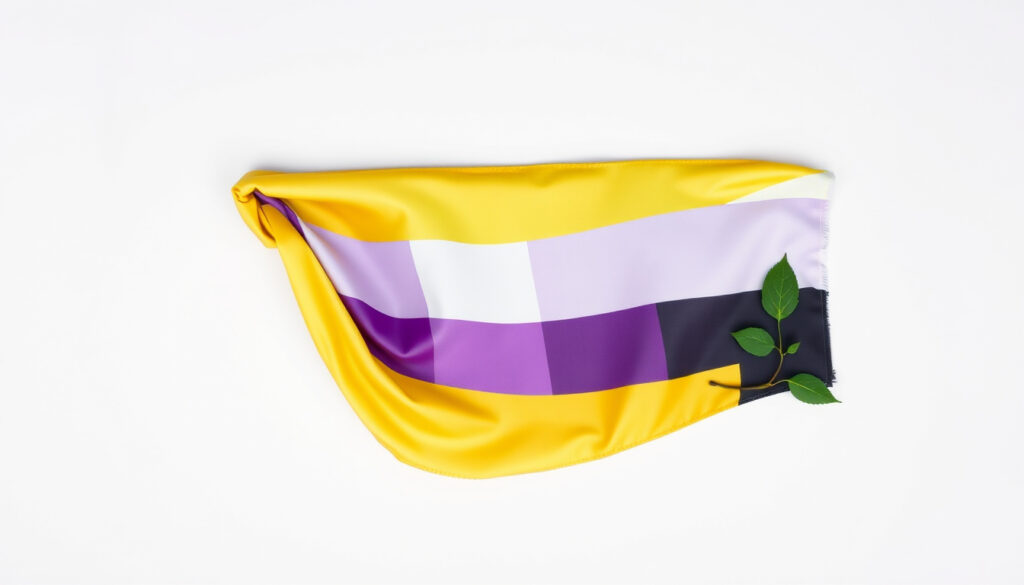
What Is Non-Binary? Definition, Examples, Pronouns, and More
Chances are you’ve seen “non-binary” in a headline or a friend’s Instagram bio and wondered what it actually means. Non-binary is a gender identity that isn’t exclusively male or female — the definition used by the Human Rights Campaign, an LGBTQ+ civil rights group — and an umbrella term for identities like agender, bigender, and genderqueer; pronouns, legal recognition, and the line between identity and attraction are where the concept gets real.
Definition: Not exclusively male or female ·
Pronouns: They/them, ze/zir, etc. ·
Legal recognition: Recognized in some countries; illegal in others ·
Prevalence (US): Estimated 1.2 million non-binary adults (Williams Institute)
Quick snapshot
- Non-binary is an umbrella term for gender identities outside the male/female binary (Human Rights Campaign (LGBTQ+ civil rights group)).
- Official guidance and advocacy groups treat non-binary as a valid gender identity (UK Government; Human Rights Campaign).
- No reliable worldwide data exists on the share of non-binary people; the cited US estimate is 1.2 million adults (Williams Institute). (ILGA World (global LGBTI legal database))
- Legal recognition varies by country and by document type (ILGA World (global LGBTI legal database)).
- India’s Supreme Court recognized a third-gender category on 2014-04-15 (JURIST (legal news and commentary)).
- Recognition keeps shifting; ILGA World’s database tracks legal changes country by country (ILGA World).
Six rows, one pattern: the definition is stable, while legal recognition splits by country.
| Fact | Detail |
|---|---|
| Definition | Not exclusively male or female (UK Government) |
| Pronouns | They/them, ze/zir, he/him, she/her (Broads Authority) |
| Legal recognition | Varies by country; X passport markers in Australia (2011) and New Zealand (2012) (JURIST) |
| Prevalence (US) | Estimated 1.2 million non-binary adults (Williams Institute) |
| Related condition | Gender dysphoria may be present |
| Agender / gender-fluid | No gender identity / flexible or changing identity (UK Government) |
Is gender nonbinary?
Yes — and the reason the question keeps coming up is that “binary” is baked into everyday language. Non-binary names the people who don’t fit the two-slot system.
What does it mean to be non-binary?
- Non-binary is an umbrella term that can include agender, bigender, genderqueer, and gender-fluid; the Human Rights Campaign also notes that not every non-binary person identifies as transgender (Human Rights Campaign).
- Some non-binary people identify as both a man and a woman, between those categories, or outside them entirely (Human Rights Campaign, same FAQ).
- UK Government guidance describes non-binary identities as including people who identify as neither male nor female, both, or whose gender expression is flexible (UK Government).
That’s why the label is an umbrella: it covers people who feel like both, neither, or something that shifts over time. Agender means no gender; gender-fluid means the identity or expression moves (UK Government, same document).
One umbrella, many lived experiences: a non-binary person can say “I have no gender” or “I move between genders” — both are valid under the same label.
Is non-binary a gender?
When official guidance and advocacy groups treat non-binary as a gender identity rather than a phase or a preference, the debate stops being “is this real?” and becomes “how do we respect it?”
Official guidance treats it as exactly that. The UK Government’s own documents use non-binary as a descriptive category alongside male and female, not as a lesser or temporary state, and the Human Rights Campaign is equally explicit that non-binary is a recognized way of describing gender. The pattern: the institutions that define gender — governments and major LGBTQ+ organizations — now treat non-binary as a legitimate identity, which shifts the burden of proof from the person to the system.
What is an example of a non-binary person?
Examples help because non-binary stays abstract until it has a face, a name, or a legal category.
What are the types of non-binary identities?
- Agender — a person who does not identify with any gender (UK Government guidance).
- Bigender — a person who identifies with two genders (Human Rights Campaign FAQ).
- Gender-fluid — a gender identity or expression that shifts over time (UK Government guidance).
- Genderqueer — a gender identity outside or in tension with binary norms (Human Rights Campaign FAQ).
Some of the clearest examples come from law. India’s Supreme Court recognized transgender people as a distinct third-gender category on 2014-04-15; Nepal’s Supreme Court established an “others” gender category in a decision dated 2007-12-27; and Bangladesh announced recognition of hijras as a third-gender category in public documents in November 2013 (legal commentary tracked by JURIST).
Legal recognition isn’t one switch: a country can offer X markers on passports while leaving IDs, birth registries, and adoption law behind — which is why ILGA World tracks recognition document by document.
What this means: “example” covers both personal identities and official categories. Non-binary exists whether or not the law catches up — the law just decides how easy that existence is.
Who is a famous non-binary person?
Who are non-binary celebrities?
- Musician Sam Smith has publicly identified as non-binary.
- Singer and actor Demi Lovato has publicly identified as non-binary.
- Television host Jonathan Van Ness has publicly identified as non-binary.
Visibility does real work. When a celebrity says “non-binary” in an interview, the word enters everyday vocabulary, and people with the same experience suddenly have language to name it. That’s why the Human Rights Campaign FAQ is so widely shared: it gives people a plain-English reference for something that used to go unnamed. Why this matters: famous faces don’t make the identity more valid — but they do make it more visible, and visibility is what turns a glossary term into a livable word.
Can you be straight if you’re nonbinary?
What does binary mean sexually?
- The “binary” in non-binary refers to the male/female gender system, not to a sexual practice.
- In a strict binary, everyone is sorted into “man” or “woman”; non-binary describes people who don’t fit that sorting.
So the question has no single yes or no — it depends on how a person describes their own orientation. Gender identity answers “who am I?” while sexual orientation answers “who am I attracted to?”
What is the difference between gender identity and sexual orientation?
- Gender identity is a person’s internal sense of their own gender; sexual orientation is about the genders a person is attracted to.
- Non-binary people can identify as straight, gay, bisexual, pansexual, asexual, or anything else — none of it contradicts their gender.
Pronouns sit on the identity side of that line. Pronouns are simply words used in place of a person’s name (Royal Devon NHS (hospital trust care guidelines)), and they/them/their are gender-neutral pronouns commonly used by some non-binary people (Broads Authority). Pronoun use is also distinct from legal gender-marker status — a distinction ILGA World tracks in country-level detail.
The distinction: conflating gender identity with sexual orientation — or with pronouns — is how well-meaning people get it wrong. Keep the three separate and most of the confusion clears.
What is gender dysphoria?
How is gender dysphoria related to being non-binary?
- Gender dysphoria is the distress that can come from a mismatch between a person’s assigned sex at birth and their gender identity.
- Not every non-binary person experiences gender dysphoria; it’s one possible part of the experience, not a requirement.
That’s consistent with how official guidance frames the identity: as a person’s own description, not a diagnosis. UK Government documents define non-binary through self-description and expression, and nowhere make non-binary conditional on suffering. The Human Rights Campaign draws the same line — gender identity exists independently of dysphoria. Supportive care, when someone seeks it, focuses on aligning life with identity — through pronouns, social recognition, documents, or medical care depending on the person. That’s why pronoun use and legal gender markers run on separate tracks: a person can be fully recognized in daily life without having changed any documentation.
The catch: dysphoria is often what gets non-binary people taken seriously in medical settings, but it was never the identity itself.
Recognition has real upside — and real gaps
Upsides
- Official guidance gives people language for an identity that was long invisible (UK Government; Human Rights Campaign).
- Legal categories like X passport markers let non-binary people travel with documents that match who they are (JURIST).
- Using a person’s stated pronouns reduces everyday friction and affirms the person (Broads Authority; Royal Devon NHS).
Downsides
- Recognition is uneven: some countries offer X markers, others offer nothing, and legal change moves slowly (ILGA World).
- Misgendering stays common because pronouns aren’t guessable from appearance — guessing wrong is the default, not the exception (Human Rights Campaign).
- In places without legal protection, being visibly gender-nonconforming carries real risk (ILGA World database; JURIST commentary).
The trade-off: recognition isn’t binary either. It arrives in pieces — a pronoun here, a passport there — and the gap between countries is the next fight.
How to get it right: five practical steps
- Use the pronouns a person states for themselves. They/them/their are the gender-neutral pronoun set commonly used by some non-binary people (Broads Authority).
- If you don’t know, ask. Pronouns are simply words used in place of a person’s name (Royal Devon NHS) — asking is as normal as asking someone’s name.
- When you slip, correct yourself. A quick “sorry, they” keeps the conversation moving without turning it into a moment.
- Don’t read pronouns off appearance. People don’t carry a sign; the only reliable source is the person themselves.
- Keep pronouns separate from paperwork. Someone can use they/them without changing legal gender markers (ILGA World).
The trade-off: unlearning a lifetime of guessing takes attention, but the cost of guessing wrong is telling someone their identity isn’t visible to you.
What’s confirmed, what’s still unclear
Confirmed facts
- Non-binary is a recognized gender identity distinct from male and female (UK Government; Human Rights Campaign).
- Not every non-binary person identifies as transgender (Human Rights Campaign).
- Several countries legally recognize third-gender or X categories (JURIST commentary).
What’s unclear
- Exact global percentage of non-binary people — no reliable cross-country census exists.
- Long-term legal protection trends — recognition changes by country and by document type (ILGA World).
- Individual pronoun preferences — not guessable from appearance, which is why asking is the standard.
- Whether legal recognition or social recognition changes non-binary people’s lives more — the data is still thin.
The pattern: the gaps aren’t about whether non-binary is real. They’re about how fast institutions catch up to the people already living it.
Voices on non-binary identity
“Non-binary” is an umbrella term that means the gender a person feels exists outside the binary definitions of “man” or “woman.”
Point of Pride (nonprofit supporting LGBTQ+ youth)
Non-binary is one of many terms used to describe people whose gender identity is neither entirely male nor entirely female.
Human Rights Campaign
The common thread: both definitions put the person’s own sense of self at the center — which is the whole point of the label.
Where this leaves us
Non-binary identity is already named in official guidance, court decisions, and medical protocols — it isn’t a trend waiting for permission. The remaining gaps are legal and cultural, not definitional. For an ally, the choice is clear: use the pronouns you’re given, correct your mistakes openly, and treat non-binary as ordinary — or keep making a shared vocabulary harder for everyone else.
Frequently asked questions
What does it mean if a girl is binary?
“Binary” here refers to the male/female gender system. A binary girl is someone whose gender identity sits fully within the female category. Non-binary describes people whose identity falls outside, between, or beyond those two categories (Human Rights Campaign FAQ).
What are the four main genders?
There is no single official list of “four main genders.” Many cultures recognize more than two: India’s Supreme Court formally recognized a third-gender category on 2014-04-15, Nepal’s on 2007-12-27, and Bangladesh in November 2013 (JURIST). Western guidance tends to use “non-binary” as an umbrella term rather than a single fourth gender.
What does “semi-binary” mean?
Semi-binary isn’t a formal term in the official guidance used by major LGBTQ+ organizations. Some people use it informally to describe a gender identity that partially aligns with the male/female binary. If someone uses it for themselves, the respectful move is to follow their description.
What is a sistergirl?
Sistergirl is a culturally specific term used in some Aboriginal and Torres Strait Islander communities in Australia for a person assigned male at birth who lives and identifies as a woman. It carries its own cultural meaning and isn’t a simple synonym for the Western term non-binary.
Can a non-binary person have female parts?
Yes. Non-binary is a gender identity, not a body type. Non-binary people have all kinds of bodies, and gender identity is separate from biological sex — a distinction at the center of most LGBTQ+ guidance (Human Rights Campaign FAQ).
Do non-binary people have periods?
Some do. Menstruation is tied to biology, not gender identity, so non-binary people with a uterus may menstruate. Identity doesn’t dictate anatomy — which is exactly why non-binary people exist across every body type.
Where is it illegal to be non-binary?
No country has a law that literally says “being non-binary is illegal,” but gender-nonconforming people face legal penalties in several countries through broader laws, and many jurisdictions offer no non-binary recognition at all. ILGA World’s legal gender recognition database tracks where recognition exists, where it’s partial, and where it’s denied.
Related reading
More related posts
 Nike Tiempo Legend 10 Review: Elite vs Pro
 Real Madrid vs Real Betis: TV Channel, Mbappé Injury
 Campervans for Sale in Ireland: Prices & Where to Buy
 Woman of the Dead: Netflix Guide to Seasons & Setting
 Cheapest Electricity Supplier Ireland 2026: Compare & Save
 New York Yankees Standings 2026: Record & Playoff Chances
 Drogheda United vs Bohemians – 0-0 Draw, Stats & Highlights
 Colin Farrell Net Worth (2026): $80 Million Salary, Homes & Biography
