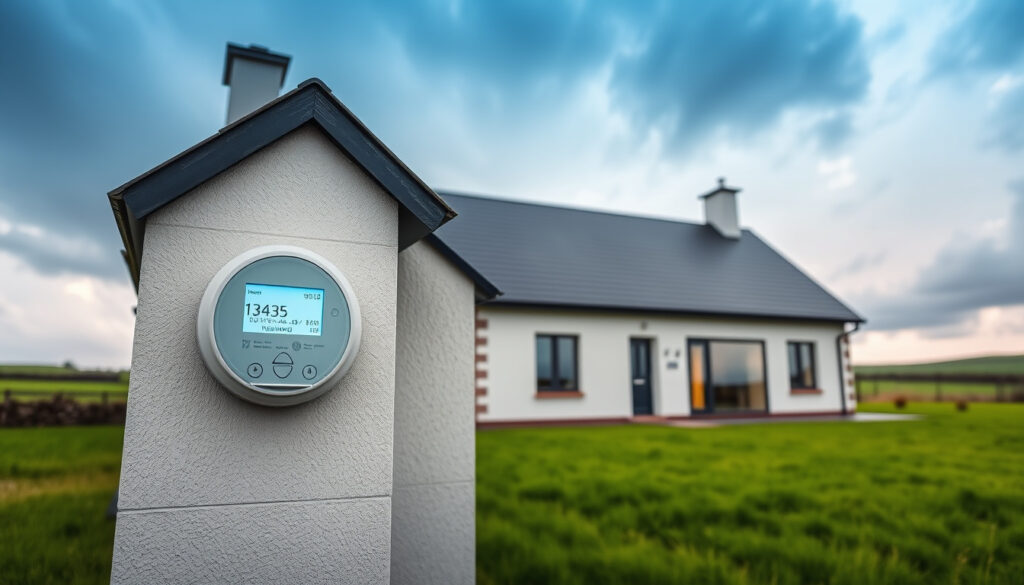
Pay As You Go Electricity Ireland: Compare Costs & Plans
Nobody wants to open an electricity bill and find a shock. But what if you could pay exactly for what you use, in advance, and watch your balance drop in real time? That’s the idea behind pay-as-you-go electricity in Ireland — a system that hands you control over spending, while often carrying higher standing charges than standard billing. Electric Ireland’s Smarter Pay As You Go, for instance, includes an in-home monitor that shows your consumption at a glance (Electric Ireland (official provider site)). Here we compare the three main PAYG providers — Electric Ireland, PrepayPower and Bord Gáis — so you can see the real costs and decide if prepaid actually saves you money.
Number of PrepayPower customers: 180,000+ · Electric Ireland PAYG feature: In-Home Monitor included · Top-up options: Online, app, Payzone, phone · Typical standing charge increase for PAYG: €0.50–€1.00 per day higher than standard billing
Quick snapshot
- Electric Ireland offers Smarter Pay As You Go with free meter installation (Electric Ireland)
- PrepayPower has over 180,000 customers and requires no credit check (PrepayPower (company website))
- Bord Gáis PAYG uses the Payzone network for online top-ups (Bord Gáis Energy (official site))
- Which provider is cheapest for the average household depends heavily on usage pattern (Switcher.ie (energy comparison site))
- Whether PAYG is overall cheaper than standard billing once standing charges are included is still debated (Switcher.ie (energy comparison site))
- Growing shift from traditional prepay meters to smart PAYG meters with real-time data (Switcher.ie)
- More providers, including SSE Airtricity and Energia, now offer prepay options (Switcher.ie)
- Smart prepay meters could lower costs as the technology matures
- Regulatory pressure may force providers to cap standing charges on PAYG plans
Three providers dominate the Irish PAYG market, but their pricing structures differ in ways that matter to your wallet. Here’s the key data at a glance.
| Attribute | Value |
|---|---|
| PrepayPower customer count | 180,000+ |
| Electric Ireland PAYG meter type | Smarter Pay As You Go with in-home monitor |
| Top-up network for Bord Gáis PAYG | Payzone |
| Typical standing charge premium vs standard | €0.50–€1.00 per day higher |
| Electric Ireland PAYG unit rate (standard) | ~35.83c/kWh (urban meter) (Selectra (energy price comparison)) |
| Electric Ireland PAYG annual standing charge (urban) | ~€250.77 + €131.45 service charge (Selectra) |
| Credit check required (PrepayPower) | No (PrepayPower (company website)) |
| Credit check required (Electric Ireland) | Standard terms apply |
The takeaway: PAYG standing charges are consistently higher, but the unit rates can be competitive if you use electricity outside peak periods.
Who is the cheapest pay as you go electricity?
There is no single cheapest provider — it depends on your usage profile. However, the comparison below shows the key differences.
Electric Ireland vs PrepayPower vs Bord Gáis: price comparison
- Electric Ireland Smarter PAYG: ~35.83c/kWh standard, plus €0.72/day combined standing/service charge (Selectra (energy price comparison)).
- PrepayPower does not publish standard rates publicly; reports indicate higher standing charges than billed plans (Money Guide Ireland (personal finance site)).
- Bord Gáis PAYG: rates vary by area; online top-up via Payzone, no credit check required (Bord Gáis Energy (official site)).
Standing charges and unit rates for PAYG plans
PAYG plans typically have a daily standing charge plus a per-kWh unit rate. Electric Ireland’s annual PAYG standing charge (urban) is roughly €250.77, with an additional €131.45 service fee — totalling over €382 per year before you use a watt (Selectra). That’s significantly higher than a standard meter’s standing charge.
How to compare pay as you go electricity plans
- Check both the daily standing charge and the unit rate (c/kWh).
- Look for additional fees: top-up charges, disconnection fees, etc.
- Compare estimated annual cost for your household size — typical urban 2-bed flat vs 4-bed house will differ.
The catch: PAYG’s transparency in real-time usage can help you cut waste, but the higher standing charges mean heavy users may not save overall.
Does Electric Ireland do pay as you go?
Yes — Electric Ireland’s Smarter Pay As You Go is one of the most modern PAYG options in Ireland. It includes an in-home monitor, automatic top-up delivery, and no manual code entry (Electric Ireland (official provider site)).
How to switch to Electric Ireland PAYG
- Visit Electric Ireland’s website or call customer service.
- Request a Smarter Pay As You Go meter installation (free).
- Once installed, top up via the app, text, or Payzone and credits flow automatically.
Electric Ireland’s Smarter Pay As You Go features
- Free meter installation
- In-home monitor showing real-time usage and remaining credit (Electric Ireland)
- Automatic top-up — no manual code entry
- View top-up history and consumption on the meter
Other providers offering pay as you go in Ireland
Besides Electric Ireland, PrepayPower and Bord Gáis are the main dedicated PAYG providers. Pinergy also offers prepay electricity, and Energia and SSE Airtricity have prepay options through specific plans (Switcher.ie (energy comparison site)).
The pattern: smart PAYG from Electric Ireland is the most user-friendly, but you pay a premium for the convenience.
Why is PrepayPower so expensive?
PrepayPower often gets a reputation for being pricey. The main reason: higher standing charges than standard billed plans. With over 180,000 customers, it’s a popular choice for those without a strong credit history — no credit check is required (PrepayPower (company website)).
Cost breakdown: PrepayPower vs standard billing
- PAYG standing charges can be €0.50–€1.00 higher per day than standard meters.
- Unit rates are comparable, but the daily fees add up.
- No monthly bill means you pay in advance — no risk of debt, but no ability to smooth out spikes.
Standing charges and top-up fees
PrepayPower customers pay a daily standing charge, and top-ups can be done via app, online, or Payzone for free. However, some Payzone outlets charge a small fee. The service is designed for budgeting control, not low cost (Money Guide Ireland (personal finance site)).
Customer experiences and value for money
Many customers appreciate the transparency of seeing their balance and avoiding bills. But the cost premium is real. A PrepayPower spokesperson highlights: “Our customers value being in control of their spending — no surprises, no bills.” However, comparison site Switcher.ie notes that PAYG “is often more expensive than billed electricity” (Switcher.ie).
The trade-off: control for cost. If you can manage a standard billing plan, you will likely pay less overall.
What are the disadvantages of prepaid electricity meters?
Prepaid meters have practical downsides that many users discover only after switching.
Higher standing charges and unit rates
- Daily standing charges are often 50 cents to 1 euro higher than standard plans.
- Unit rates may be slightly higher or comparable, but the fixed daily cost makes PAYG more expensive for light users (Money Guide Ireland).
Risk of disconnection if credit runs out
When your balance hits zero, the electricity stops — no grace period. Warnings appear as credit gets low, but if you forget or can’t top up, you’ll be without power (Switcher.ie).
Limited provider choice and fewer discounts
- Fewer promotional offers (e.g., cashback, fixed-rate discounts) are available on PAYG plans.
- You may not be able to switch to the cheapest market offers as easily.
Why this matters: the convenience of PAYG can become a disadvantage for heavy users or those who prefer predictable monthly bills.
What is a prepaid meter?
A prepaid electricity meter — also called a PAYG meter — requires you to pay for electricity before using it. Think of it like a pay-as-you-go phone: you top up, and the credit is consumed as you use power.
How a prepaid meter works
After installation, you top up your meter via a key card, app, online, or Payzone. The credit is loaded onto the meter, which subtracts from your balance as you consume electricity. When the balance runs out, the supply is cut until you top up again.
How to top up a prepaid meter
- Electric Ireland: Top up online, by text, via the Top Up Now app, or over the counter at Payzone. Payment is sent automatically to the meter — no code entry needed (Electric Ireland).
- Bord Gáis: Top up online via Payzone, receive a 20-digit Power Code by email, then enter it manually on the meter. Code may lengthen if a price change has occurred (Bord Gáis Energy (official site)).
- PrepayPower: Use the PrepayPower app, online account, or Payzone.
Difference between prepaid and standard meters
- Standard meters: use electricity first, receive a bill later (often monthly).
- Prepaid meters: pay in advance, no bill, no risk of debt — but higher standing charges and risk of disconnection if credit runs out.
The upshot: prepaid gives you control and eliminates bill shock, but at a cost.
Provider comparison: Electric Ireland vs PrepayPower vs Bord Gáis Energy
Three providers, three different approaches. The table below compares the key features.
| Feature | Electric Ireland Smarter PAYG | PrepayPower | Bord Gáis Energy PAYG |
|---|---|---|---|
| Meter type | Smart PAYG with in-home monitor | Standard prepay or smart prepay | Standard prepay (smart prepay available) |
| Top-up methods | App, text, online, Payzone | App, online, Payzone | Online via Payzone, 20-digit code manual entry |
| Automatic top-up | Yes — credit sent to meter automatically | No — manual code entry | No — manual code entry |
| Credit check required | Standard terms | No | No |
| Customers | Part of ESB group, large base | 180,000+ | Part of Bord Gáis Energy (Centrica) |
| Typical annual cost (urban 2-bed flat, moderate use) | ~€1,900 (Selectra) | Comparable or slightly higher | Comparable |
The pattern: Electric Ireland’s smart PAYG is the most convenient, while PrepayPower and Bord Gáis appeal to those who prefer existing brand relationships or no credit checks.
Pros and cons of pay-as-you-go electricity
Upsides
- No bill surprises — you see exactly what you spend
- No credit check required with some providers (PrepayPower, Bord Gáis)
- Real-time usage data helps you reduce consumption
- No risk of debt collection or late fees
Downsides
- Higher standing charges (€0.50–€1.00/day more than standard)
- Risk of disconnection if you don’t top up
- Fewer promotional offers and fixed-rate options
- May be more expensive for heavy users
The pattern: the control-vs-cost trade-off favors light users who can monitor usage.
How to switch to pay-as-you-go electricity
Switching to PAYG is straightforward. Follow these steps.
- Check if your current provider offers PAYG — most do, but you can also switch to a dedicated provider like PrepayPower.
- Compare rates and standing charges using comparison sites like Switcher.ie (energy comparison site).
- Contact the provider to request a meter installation (usually free for smart PAYG).
- Once installed, top up and start monitoring your usage.
The catch: switching back to standard billing later may involve a meter change fee, so consider long-term plans.
Clarity: what we know vs what remains uncertain
Confirmed facts
- Electric Ireland offers a pay-as-you-go option called Smarter Pay As You Go
- PrepayPower has over 180,000 customers
- Bord Gáis PAYG uses the Payzone network for top-ups
- Standing charges are typically higher than standard meter plans
What remains unclear
- Which provider is cheapest for the average household — depends on usage pattern
- Whether PAYG is overall cheaper than standard billing once standing charges are included
- How much the cost gap will narrow as smart prepay meters become more common
- PAYG meters require payment in advance
The implication: the decision to choose PAYG depends heavily on personal financial habits and usage.
Expert perspectives
“PAYG electricity is often more expensive than billed electricity, but it can help users monitor and control their usage.”
Switcher.ie (Ireland’s energy comparison site)
“Our customers value being in control of their spending — no surprises, no bills.”
PrepayPower spokesperson (company website)
Both perspectives highlight the control-vs-cost trade-off that defines PAYG in Ireland.
PAYG may save you from bill shock, but the daily standing charges mean you’re paying a premium for that peace of mind. For households on a tight budget who can monitor usage, it can work — but heavy users will likely find standard billing cheaper.
For those on a tight budget, it’s worth taking time to compare electricity rates across Ireland before switching to a prepaid meter.
Frequently asked questions
Can I switch from pay-as-you-go to standard billing?
Yes, you can request a meter change. Some providers charge a fee for switching back. Contact your provider for details.
Do I need a deposit for pay as you go electricity?
Generally no — PAYG is designed to avoid the need for a deposit since you pay in advance. However, some providers may require a refundable meter deposit.
Is pay as you go electricity available for gas?
Yes, several providers offer PAYG gas meters, including Bord Gáis Energy and PrepayPower. The same principles apply — pay in advance for usage.
What happens to unused credit if I switch providers?
Unused credit is typically refunded by the old provider once the final meter reading is processed. Check your provider’s terms.
Can I have a prepaid meter in a rented property?
Yes, but you need the landlord’s permission to install a prepaid meter. Some landlords include PAYG meters already.
Are there any pay-as-you-go electricity plans with no standing charge?
No — all PAYG plans in Ireland include a daily standing charge to cover network costs. The amount varies by provider and meter type.
For Irish households weighing their options, the choice is clear: pay-as-you-go offers control and no bill surprises, but at a premium. If you can handle a monthly budget and have access to good credit, standard billing with a low-cost provider — like the options compared in our Cheapest Electricity Supplier Ireland guide — will likely save you money. For those who need to avoid debt or simply prefer to see every cent spent, PAYG remains a solid, if pricier, safety net. Ultimately, choosing PAYG means accepting higher daily costs in exchange for control, a trade-off that suits some households better than others. For broader personal finance planning, see our Income Tax Ireland Calculator 2026.
More related posts
 Error Meaning: Definition, Synonyms, Types, and How to Fix
 Jackpot108 Slot Review: Games, Login, and Play Guide
 What Is Today’s Wordle? Answer and Hints for May 12
 Carer’s Support Grant Ireland Increase – €2,000 Rate, Eligibility and Dates
 The Studio TV Series Guide: Episodes, Awards & More
 High Blood Pressure Treatment: What Actually Works
 Is Monaco a Country? Sovereignty, Wealth & Residency Guide
 Tesco Top Up Online: Clubcard Voucher & Recurring Top-Up
