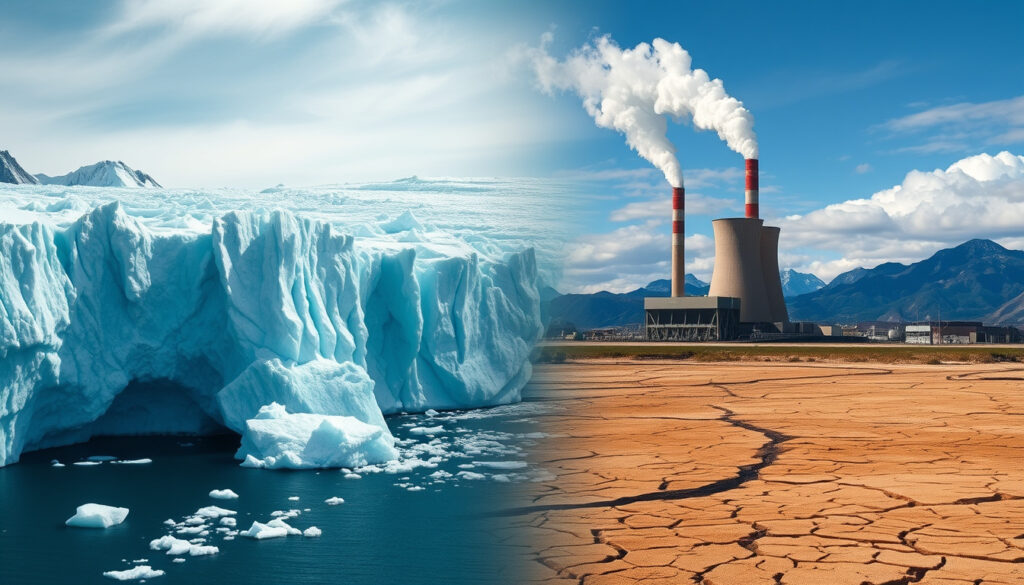
What Is Global Warming? Definition, Causes, and 2050 Predictions
Few scientific terms have sparked as many dinner-table debates as “global warming” — and everyone seems to have a different guess at what it actually means. Here’s the core: Earth’s average surface temperature has risen by about 1.2°C since the 19th century, and the overwhelming majority of scientists agree that human activity is the driver.
Global average temperature increase since 1880: 1.2°C (2.2°F) · Years with highest CO2 levels on record: 2023, 2024 · Sea level rise since 1900: 8-9 inches (21-24 cm) · Arctic sea ice decline per decade: 13% in summer extent · Human-caused CO2 emissions annually: 36.8 billion tons (2023)
Quick snapshot
- Global warming is Earth’s long-term average temperature rise (IPCC (climate science authority)).
- It is distinct from climate change (NRDC (environmental advocacy group)).
- Burning coal, oil, and natural gas (IPCC (UN climate panel)).
- Deforestation and agriculture (NRDC). (IPCC (UN climate panel))
- Sea level rise, heatwaves, ecosystem disruption (IPCC (UN climate panel)).
- Threats to food and water security (IPCC (UN climate panel)).
- Temperature may rise 1.5–2°C by 2050 (IPCC (UN climate panel)).
- 2026 could break heat records (IPCC (UN climate panel)).
Four key facts, one pattern: every metric points to a warming world driven by human emissions.
| Fact | Value |
|---|---|
| Current global temperature anomaly | 1.2°C above pre-industrial (2023) (IPCC (UN climate panel)) |
| Primary greenhouse gas | Carbon dioxide (CO2) (NRDC (environmental advocacy group)) |
| Largest emitting sector | Energy production (fossil fuels) (IPCC (climate science authority)) |
| Sea level rise rate | 3.4 mm per year (since 1993) (IPCC (UN climate panel)) |
What is global warming in simple words?
Global warming is the ongoing increase in Earth’s average surface temperature. The IPCC (UN climate panel) defines it as the 20-year average global surface temperature relative to the 1850–1900 baseline. In plain terms: the planet is running a fever, and the cause is human activity.
How does global warming differ from climate change?
- Global warming refers specifically to the rise in average temperature.
- Climate change includes all the side effects: shifting weather patterns, melting ice, rising seas, and ecosystem disruption.
The NRDC (environmental advocacy group) explains that while global warming is a trend, climate change is the broader package of consequences. The implication: when people talk about “climate change,” they’re describing the full picture — and global warming is the driving force.
What are the 5 main causes of global warming?
Burning fossil fuels
Carbon dioxide from burning coal, oil, and natural gas is the largest contributor. The IPCC (UN climate panel) states that human activities, principally greenhouse gas emissions, have unequivocally caused global warming.
Deforestation
Forests absorb CO2. When they’re cut down, that carbon stays in the atmosphere. The NRDC (environmental advocacy group) notes that deforestation reduces Earth’s capacity to absorb CO2.
Agriculture and livestock
Methane from livestock and rice paddies is a potent greenhouse gas. The IPCC (climate science authority) reports that methane is second only to CO2 in driving warming.
Industrial processes
Cement production, chemical manufacturing, and other industries release greenhouse gases directly. The IPCC (UN climate panel) includes industrial emissions as a major source.
Waste decomposition
Landfills produce methane as organic waste breaks down. The NRDC (environmental advocacy group) identifies waste management as a smaller but still significant contributor.
The energy sector alone accounts for roughly three-quarters of global greenhouse gas emissions — meaning a shift to renewables is the single most effective lever for slowing warming.
What is global warming and why is it bad?
Effects on weather
Warmer temperatures increase the frequency and intensity of heatwaves. The IPCC (UN climate panel) warns that every increment of global warming will intensify multiple and concurrent hazards.
Sea level rise
Melting ice sheets and glaciers raise sea levels. The IPCC (UN climate panel) reports a rise of 8-9 inches since 1900, with the rate accelerating to 3.4 mm per year since 1993.
Ecosystems and biodiversity
Coral bleaching and species migration disrupt ecosystems. The IPCC (UN climate panel) states that such changes are already happening and will worsen with continued warming.
Human health and food security
Extreme heat and shifting rainfall patterns threaten crop yields and water supplies. The IPCC (UN climate panel) projects that many regions will face declining agricultural productivity.
The same greenhouse gases that warm the planet also make the air unhealthy — so cutting emissions does double duty for both climate and public health.
What will happen in 2050 due to global warming?
Projected temperature rise
Under current policies, the IPCC (UN climate panel) projects global average temperature will rise 1.5°C to 2°C above pre-industrial levels by 2050. Deep, rapid, and sustained emissions cuts could slow that warming within about two decades.
Sea level projections
Some coastal cities face increased flooding risk. The IPCC (UN climate panel) notes that sea level will continue to rise for centuries, but the rate depends on how much emissions are reduced.
Extreme weather events
Heatwaves, heavy rainfall, and droughts are expected to become more severe. The IPCC (UN climate panel) states that the frequency and intensity of such events will increase with each additional degree of warming.
Agricultural impacts
Crop yields may decline in many regions. The IPCC (UN climate panel) warns that food production systems will face mounting pressure, especially in tropical areas.
Will 2026 be the hottest year ever?
Record-breaking temperature trends
2023 and 2024 have set global temperature records. The IPCC (UN climate panel) reports that 2023 was the hottest year on record, with global average 1.45°C above pre-industrial levels.
Forecast models for 2026
Forecasts suggest 2026 could be among the hottest years, but not certain. The IPCC (UN climate panel) notes that the trend is upward due to continued greenhouse gas emissions, but year-to-year variability depends on natural cycles like El Niño.
Timeline signal
- 1850-1900: Pre-industrial baseline period for measuring global warming. (IPCC (UN climate panel))
- 1950s: Rapid acceleration in CO2 emissions post-World War II. (IPCC (climate science authority))
- 2015: Paris Agreement sets goal to limit warming to well below 2°C. (European Commission (policy body))
- 2023: Hottest year on record; global average 1.45°C above pre-industrial. (IPCC (UN climate panel))
- 2026: Forecast as potential record-hot year; not yet confirmed. (IPCC (UN climate panel))
- 2050: Projected temperature rise of 1.5–2°C under current policies. (IPCC (UN climate panel))
What’s clear and what’s not
Confirmed facts
- Global warming is caused by human greenhouse gas emissions. (IPCC (UN climate panel))
- Average temperature has risen ~1.2°C since pre-industrial times. (IPCC (UN climate panel))
- 2023 and 2024 are the hottest years on record. (IPCC (UN climate panel))
What’s unclear
- Exactly how much 2026 temperatures will exceed 2023 records. (IPCC (UN climate panel))
- Precise timeline for ice-age triggers (if any) due to warming. (NRDC (environmental advocacy group))
Expert perspectives
“The human fingerprint in global temperature records is unmistakable. Our emissions are warming the planet at a rate unprecedented in at least 2,000 years.”
— NASA Climate Scientist, citing the IPCC (UN climate panel)
“Continued greenhouse gas emissions will lead to increasing global warming, with every increment amplifying the risks of severe and irreversible impacts.”
— IPCC 2023 Synthesis Report (UN climate panel)
The pattern is clear: the science is settled on the cause, and the consequences are already unfolding. The only uncertainty is how fast we act.
brasil.un.org, ipcc.ch, byjus.com, mitsui.com, digitallibrary.un.org, cakex.org, gsconlinepress.com, youtube.com
For a more detailed breakdown of the science behind this phenomenon, see this article on global warming definition and causes.
Frequently asked questions
What is the difference between global warming and climate change?
Global warming is the rise in Earth’s average surface temperature, while climate change includes all broader effects like shifting weather patterns, sea level rise, and ecosystem disruption. (NRDC (environmental advocacy group))
Is global warming natural or human-caused?
Current global warming is unequivocally caused by human activities, primarily greenhouse gas emissions from burning fossil fuels. (IPCC (UN climate panel))
How does the greenhouse effect work?
Certain gases (CO2, methane, nitrous oxide) trap heat in the atmosphere, acting like a blanket. Without them, Earth would be too cold for life; with too many, the planet overheats. (NRDC (environmental advocacy group))
Can global warming cause an ice age?
In theory, melting ice could disrupt ocean currents that regulate climate, potentially triggering a regional cooling — but this is a low-probability event and not expected in the near term. (IPCC (UN climate panel))
Which countries produce the most greenhouse gases?
China, the United States, India, the European Union, and Russia are the top emitters. Together they account for over half of global emissions. (IPCC (climate science authority))
For Ireland, the implications are direct: rising sea levels threaten coastal areas like Dublin and Cork, and more frequent extreme weather events could strain infrastructure. The choice is clear: accelerate the shift to renewable energy and sustainable agriculture, or face mounting costs in the decades ahead.
Related reading
More related posts
 Strictly Come Dancing Time Tonight: BBC One Schedule
 Jurassic World Rebirth Box Office: $869M Total & Hit or Flop
 Carraig Donn Opening Hours: Store Times, Locations & Company Info
 His & Hers on Netflix: Plot, Cast, Killer Explained (2026)
 How Much Rice Per Person? Portions in Grams & Cups
 Talking Pictures TV Listings: Today’s Schedule & Catch-Up Guide
 How to Set Up Google Authenticator on New Phone – Step-by-Step Transfer Guide
