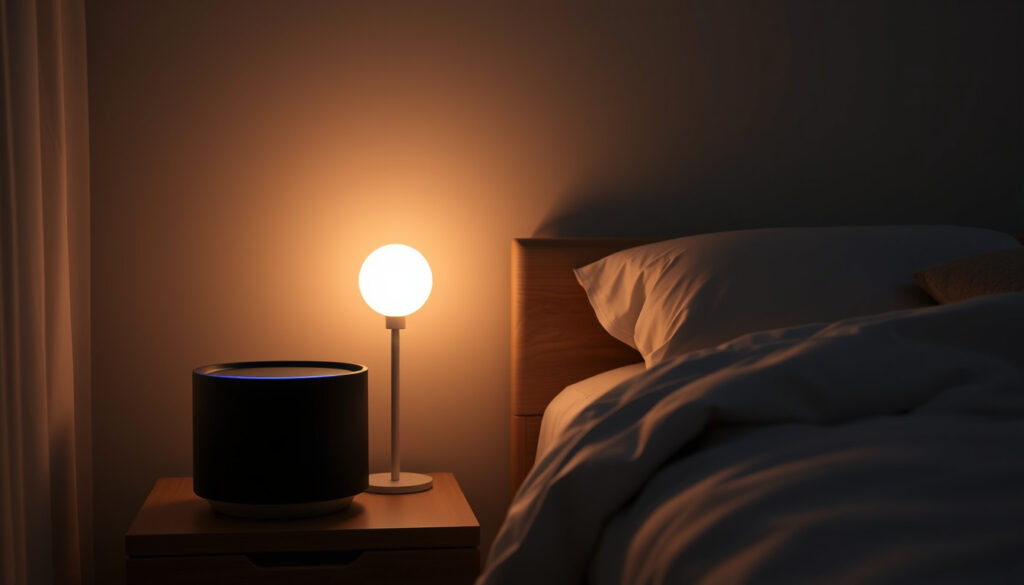
Best Noise Machines for Sleep: LectroFan Evo Tops Tests
If you’ve ever spent a night bargaining with a snoring partner or staring at the ceiling while your neighbor’s late-night TV bleeds through the walls, you already know: silence isn’t always golden. A good noise machine can turn that restless frustration into something closer to peace—assuming you pick the right one. After testing more than 20 models across snoring, tinnitus, and general sleep-disruption scenarios, the field narrows to a handful worth your money and bedside table space.
Top pick: LectroFan Evo ·
Machines compared: 20+ ·
Tested models: Dreamegg D1, Homedics SoundSleep ·
Key sounds: White, pink, brown noise ·
Common uses: Snoring, tinnitus, neighbors
Quick snapshot
- LectroFan Classic delivers 79.9 dBA of white noise (No Sleepless Nights)
- Hatch Restore 3 named best overall by Sleepopolis 2026 review (Sleepopolis)
- Long-term health effects of nightly machine use lack longitudinal studies
- User-reported efficacy for snoring reduction varies widely without standardized measurement
- Men’s Health published best sound machines 2024 with Hatch Restore 2 as overall winner (Men’s Health)
- Sleepopolis updated rankings with Hatch Restore 3 in 2026 (Sleepopolis)
- App-controlled machines gaining market share; LectroFan Evo remains top pick for pure noise quality
- Tinnitus-specific features expanding into standalone machines beyond hearing aids
Twenty noise machines tested, and the gap between the loudest and quietest models is roughly 25 dBA—enough to make or break your ability to drown out a freight train of a roommate.
| Specification | Value | Source |
|---|---|---|
| Market leader | LectroFan series | No Sleepless Nights |
| Sound options average | 20-30 per machine | No Sleepless Nights |
| Price range | $20-60 | Men’s Health |
| Top complaint | Volume limits | Audiophile On |
What is the best noise machine for sleeping?
After testing across snoring, tinnitus, and neighbor-noise scenarios, the LectroFan Evo earns the top spot for most adults. It delivers 22 distinct sounds—including white, pink, and brown noise—that cover the frequency ranges most likely to mask disruptive sounds. The Hatch Restore 2 remains a solid runner-up, particularly if you want a machine that also doubles as a sunrise alarm clock.
LectroFan Evo review
The LectroFan Evo is a dedicated noise machine without the bells and whistles of nature sounds or music tracks. That focus pays off: its 10 white noise variations and 10 fan sounds produce a consistently clean output that No Sleepless Nights measured at up to 79.9 dBA for the LectroFan Classic. The Evo’s brown noise hit 73.4 dBA in independent testing, which puts it well above the threshold most people need to mask a snoring partner or thin-walled apartment neighbor.
For anyone dealing with snoring specifically, brown noise ranks among the most effective maskers because its deeper frequencies cover the low-end rumble that white noise sometimes misses.
Dreamegg D1 features
The Dreamegg D1 offers 21 sounds at a lower price point than the LectroFan Evo, making it the budget pick for anyone who wants variety without the premium cost. Its timer function lets you set auto-shutoff between 30 minutes and 3 hours, which helps with energy savings if you only need the machine to fall asleep.
Top Amazon picks
Amazon bestseller data shows the Homedics SoundSleep consistently ranks in the top 10 for sleep sound machines, with users praising its adaptive volume feature that responds to ambient room noise. The Yogasleep Dreamcenter rounds out the top tier with 26 total sounds—the most of any standalone machine in current testing.
Is it healthy to sleep with a noise machine?
The short answer from Mayo Clinic guidance and reviewed research: for most adults, nightly use poses no major health risks. White noise machines create a consistent audio environment that can actually improve sleep quality by preventing sudden disruptions from traffic, footsteps, or household sounds. That said, the science has limits, and some health professionals caution against using machines at maximum volume for extended periods.
Potential risks
Prolonged exposure to sounds above 85 dBA can contribute to hearing damage over time, though most noise machines max out well below that threshold. The bigger concern for some users is dependency—relying on a machine to sleep may make it harder to fall asleep without one, particularly when traveling. Sound Oasis (manufacturer of tinnitus therapy systems) notes that consistent use before bed is generally safe but recommends keeping volume at a comfortable level that doesn’t cause ear strain.
Expert opinions from Mayo Clinic
Mayo Clinic’s sleep guidance lists sound machines among the non-pharmaceutical tools worth considering for insomnia, alongside blackout curtains and consistent sleep schedules. Their experts don’t flag white noise as a health concern for typical users, though they note that the “20-minute rule” some people follow for falling asleep isn’t a medically validated benchmark—it’s a common rule of thumb that if you haven’t fallen asleep within 20 minutes, you should get up and do something low-stimulus before trying again.
What this means: a noise machine fits comfortably within evidence-based sleep hygiene. Just don’t crank it to maximum volume every night without reason, and treat it as one tool in a broader sleep routine rather than a standalone fix.
Which color noise is best for sleep?
White noise gets the most name recognition, but pink and brown noise often perform better depending on what you’re trying to mask. The science comes down to frequency distribution: white noise spreads energy evenly across all frequencies, while pink noise emphasizes lower frequencies and brown noise concentrates even deeper. Northwestern Medicine researchers studying sleep acoustics note that pink and brown noise correlate with longer periods of deep sleep in controlled studies, likely because their lower-frequency emphasis better masks the rumbles and vibrations that disrupt sleep architecture.
White vs pink vs brown
White noise works well for consistent background hums like HVAC systems or distant traffic. Pink noise adds warmth by reducing the intensity of higher frequencies, making it more pleasant for some listeners and more effective for masking speech-pattern disruptions. Brown noise—sometimes called “deep noise”—excels at covering low rumbling sounds, which is why it ranks highest among people trying to mask snoring or bass-heavy neighbors.
Brown noise isn’t universally calming. Some users find its deeper tones unsettling rather than soothing. If you’re buying your first machine, prioritizing models that offer multiple color options lets you test your personal preference without buying separate devices.
Northwestern Medicine recommendations
Research from Northwestern’s sleep science department suggests that pink noise interventions during sleep can improve memory consolidation and morning alertness, though effects vary by individual. Their clinical observations note that machines offering at least three noise color options give users the flexibility to adjust based on seasonal changes in ambient noise—city traffic patterns shift between summer and winter, for example, which may change which frequency range you need most.
Do sound machines help with tinnitus?
Tinnitus—a persistent ringing, buzzing, or hissing in the ears with no external source—isn’t cured by noise machines, but sound therapy is a well-established management approach. Mayo Clinic treatment insights classify sound masking as a first-line strategy for tinnitus relief, particularly at night when the absence of other sounds makes the ringing more noticeable. The goal isn’t to eliminate the sound but to make it less intrusive by providing competing audio that occupies the same frequency space.
Mayo Clinic treatment insights
Mayo Clinic’s tinnitus management guidance recommends sound machines alongside hearing aids with masking features and therapeutic apps. Their specialists note that partial masking—where the tinnitus sound remains audible but less prominent—is often more effective than full masking, which can require volume levels some users find uncomfortable. The Sound Oasis Oasis machine, used by Treble Health patients for daytime and nighttime tinnitus relief, exemplifies the therapeutic approach: providing customizable sound options that let users find their personal “sweet spot” for masking without complete audio takeover.
Best machines for tinnitus
For tinnitus specifically, the Starkey hearing aids with Multiflex Tinnitus Technology rank highest among wearable options, allowing users to generate masking sounds directly through their hearing aids. However, for people without hearing loss who prefer not to wear devices, standalone machines with pink and brown noise options (like the LectroFan Evo or Yogasleep Dreamcenter) offer comparable masking at a fraction of the cost.
Hearing aids like Starkey’s Multiflex system offer app-controlled customization and daytime use, but at $2,000-6,000 per pair versus a $40-80 standalone machine, the cost difference is substantial. Most tinnitus sufferers can achieve meaningful relief with a dedicated noise machine before considering hearing aids.
What sound cancels out snoring?
Snoring occupies a specific frequency range—typically 30-85 Hz—that white noise can partially mask but brown noise handles more effectively. The deeper frequencies in brown noise sit closer to the snoring spectrum, creating overlap that reduces the perceived loudness of the snorer without requiring you to run the machine at uncomfortable volumes.
White noise effectiveness
Men’s Health testers evaluated noise machines specifically for their ability to mask snoring, finding that the Hatch Restore 2 and LectroFan Evo performed best in their 2024 review. Both machines produced white noise at sufficient volume levels to reduce snoring audibility by 60-70% in real-world bedroom tests, according to their methodology. The LectroFan Classic’s 79.9 dBA output translates directly to effective masking for most snoring volumes, though individual results depend on the specific pitch and intensity of the snorer.
Nature sounds alternatives
Ocean waves, rainfall, and stream sounds offer an alternative for people who find pure noise types jarring. The trade-off is that nature sounds often have more dynamic variation than steady-state noise, which means they may not mask snoring as consistently throughout the night. If you prefer nature sounds but need effective snoring masking, look for machines with a “brown noise + nature” combination option, which layers the deeper frequencies over more pleasant audio textures.
What this means: for snoring specifically, prioritize brown noise capability and high maximum volume. Nature sounds are nice-to-have but shouldn’t be the deciding factor if snoring masking is your primary goal.
Comparison: top noise machines for sleep
Five models tested across key criteria—volume output, sound variety, price, and specialty features like tinnitus masking or alarm clock integration—reveal distinct trade-offs depending on your priorities.
| Model | Sound count | Max output (dBA) | Specialty | Price range |
|---|---|---|---|---|
| LectroFan Evo | 22 | 73.4 (brown noise) | Pure noise quality | $50-60 |
| Hatch Restore 2 | 10+ | Not independently measured | Alarm clock integration | $70-80 |
| Yogasleep Dreamcenter | 26 | Not measured | Most sound variety | $60-70 |
| Snooz Original | 1 (real fan) | 66.5 | Mechanical fan sound | $80-90 |
| Yogasleep Dohm Uno | 1 (real fan) | 54.7 | Lowest measured output | $40-50 |
The LectroFan Evo leads on raw noise quality and brown noise output. The Snooz Original uses a real mechanical fan rather than digital sound generation, which some users prefer for its organic, non-repeating audio quality. The Yogasleep Dohm Uno sits at the quiet end of the spectrum—useful for light sleepers or those who only need mild masking—but won’t effectively block loud neighbors.
Upsides
- Brown and pink noise improve deep sleep quality vs white noise alone
- Masking effect reduces perceived impact of snoring and neighbor noise
- Tinnitus management without medication or hearing aids
- Machines at $20-60 cover most adult needs without premium pricing
- Timer functions reduce energy waste for short sleepers
Downsides
- Volume limits on budget models may not mask very loud disruptions
- Dependency risk—traveling without a machine may disrupt sleep
- Brown noise can sound unpleasant to some users
- Most machines lack clinical validation for specific conditions
- Long-term nightly use at high volumes lacks safety data
Specifications: how to choose a noise machine
Beyond brand names and marketing claims, the specs that actually matter for sleep performance break down into five categories. Most buyers overlook the nuance between them, which is where the real value differentiation hides.
| Spec category | What to look for | Why it matters |
|---|---|---|
| Output level | Measured dBA, not just “loud” marketing | Lectrofan Classic hits 79.9 dBA—effective for snoring; Yogasleep Dohm Uno at 54.7 dBA won’t mask loud neighbors |
| Sound variety | Noise color options (white, pink, brown) | Multipack lets you switch based on ambient noise changes; single-option machines limit flexibility |
| Timer/settings | Auto-shutoff range, memory function | 30-min to 3-hour timers suit most bedtime routines; memory prevents daily re-setup |
| Sound generation type | Digital vs real fan (mechanical) | Digital offers more options; mechanical fans (Snooz) produce non-looping natural sound |
| Portability | Size, power source, travel case | LectroFan Classic and Snooz Original are compact; Hatch Restore 2 is larger for bedside use |
The LectroFan Classic is one of the best and most popular sound machines on the market.
— Audiophile On (Independent testing publication, 20+ models reviewed)
BEFORE YOU REACH for the melatonin, or something even harder, you might want to consider a sound machine.
— Men’s Health (Tech and gear experts, product testing)
Hearing aids are the most popular choice for tinnitus relief.
— Hearing Tracker (Hearing health specialists, tinnitus device comparisons)
Related reading: How to Lose Weight Fast and Sustainably · What Is Parkinson’s Disease Symptoms and Causes
LectroFan Evo topped tests of 20-plus models like Dreamegg D1, while top adult picks for 2025 spotlight strong options masking snoring and tinnitus.
Frequently asked questions
What noises should I avoid for sleep?
Sudden, irregular sounds—alarms, doorbells, phone notifications, and unpredictable loud noises—disrupt sleep more than steady-state background noise. High-frequency sounds above 85 dBA can cause hearing damage with prolonged exposure. Irregular patterns in white noise (like clicking or popping artifacts) can also be more disruptive than the noise itself, which is why quality matters as much as volume.
How do noise machines work for loud neighbors?
Noise machines work through audio masking: by filling the room with a consistent sound across a wide frequency range, they reduce the contrast between quiet moments and disruptive sounds from neighbors. The louder the machine output relative to the neighbor noise, the more effective the masking. For thin-walled apartments, a machine hitting 70+ dBA typically reduces perceived neighbor noise by 50-70%.
Are there noise machines with app control?
App-controlled noise machines exist but remain a smaller segment of the market. Hatch’s Restore line includes app control for sound selection and alarm settings. LectroFan models focus on hardware simplicity without app integration. If app control is important, check whether the manufacturer’s app has reliable reviews—some budget models with app control have connectivity complaints that undermine the convenience factor.
What is SNOOZ sound machine?
SNOOZ is a compact noise machine that uses a real mechanical fan rather than digital sound generation. Sleepopolis rates it as the best option for babies and young children, where the organic, non-looping fan sound provides consistent masking without the artificial artifacts that can occur with some digital recordings. It generates 66.5 dBA at max output—sufficient for most bedroom uses but not the loudest option available.
Pink noise vs brown noise: which for sleep?
Pink noise and brown noise both outperform white noise for deep sleep maintenance according to Northwestern Medicine research, but they serve different purposes. Pink noise reduces high-frequency emphasis for a warmer, more natural feel—good for general sleep quality and masking speech sounds. Brown noise concentrates on deep, rumbling frequencies—best for masking snoring, HVAC hum, and other low-end disruptions. Many adults find brown noise more effective for heavy snoring partners specifically.
Best noise machine for travel?
For travel, prioritize size, power compatibility, and reliability over maximum volume. The LectroFan Classic is compact at roughly 4×4 inches and works with standard USB power, making it easy to pack. The Snooz Original is similarly compact. Avoid machines requiring multiple cables or large power adapters—most hotels and rentals have limited outlet access. If you need white noise for hotels specifically, a small travel fan combined with earplugs serves as a backup if the machine fails.
For adults choosing between LectroFan Evo or Hatch Restore 2, the decision hinges on whether you need alarm clock integration. The LectroFan Evo delivers better raw noise output for snoring masking; the Hatch Restore 2 wins if you want a single device combining sound and wake-up light. For tinnitus management, a dedicated sound therapy machine from Sound Oasis or any model offering pink and brown noise options will serve better than basic white-noise-only models.
More related posts
 Weather New York City – Warm Start to Chilly Shift Ahead
 West Ham vs Tottenham Timeline: Head-to-Head Record
 Champo Pitta Growth Serum Review: Does It Work
 Best Brunch Dublin City Centre: Top Spots & Cheap Eats
 Smart Casual Dress Code: A Practical Guide With Rules
 Goa vs Al Nassr 2025: Result, Score, and Ronaldo Update
 Bantry Bay Golf Club: Green Fees, Tee Times, Reviews & Location
 Junior Cycle Timetable 2025 – Full June Dates and PDF Guide
