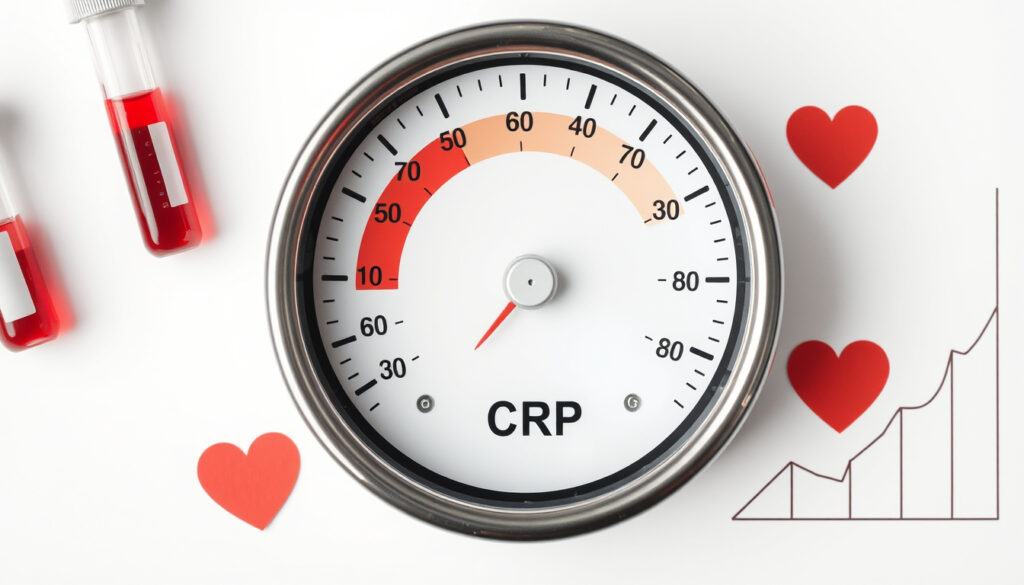
How Much CRP Level Is Dangerous – Thresholds, Ranges and Risks
C-reactive protein, commonly known as CRP, serves as one of the body’s primary indicators of inflammation. When the immune system responds to infection, injury, or chronic disease, CRP levels rise accordingly. Understanding which CRP level is dangerous helps patients and healthcare providers make informed decisions about testing and treatment.
A CRP blood test measures the concentration of this protein in the bloodstream, expressed in milligrams per liter (mg/L) or sometimes milligrams per deciliter (mg/dL). The results provide valuable insight into whether acute inflammation, chronic disease, or infection is present in the body. Different thresholds indicate varying severity levels, from normal readings to those requiring urgent medical intervention.
This guide breaks down the dangerous CRP level thresholds, normal ranges, and what elevated results mean for your health. Whether you have received a recent test result or are researching preventive care, knowing these benchmarks enables better conversations with your physician about next steps.
What CRP Level Is Dangerous?
CRP levels crossing certain thresholds signal varying degrees of medical concern. Healthcare providers interpret results within the context of symptoms, medical history, and additional testing. The following overview summarizes danger levels at a glance.
Quick Reference: CRP Level Danger Thresholds
CRP levels rise and fall rapidly, often within hours of an inflammatory trigger. A single reading provides a snapshot; persistent elevations warrant closer investigation.
| Level | mg/L Range | Risk Category | Typical Action |
|---|---|---|---|
| Normal | Less than 10 | Low inflammation risk | Monitor as needed |
| Mild Elevation | 10–50 | Moderate | Investigate underlying cause |
| High | 50–100 | Significant | Medical treatment typically required |
| Severe | Greater than 100 | Emergency | Immediate medical care needed |
Levels exceeding 10 mg/L indicate marked inflammation that warrants investigation. When CRP surpasses 50 mg/L, the situation becomes dangerous, often associated with severe bacterial infections, sepsis, or advanced inflammatory conditions. Readings above 100 mg/L typically reflect major inflammatory responses and require urgent intervention.
Persistently elevated CRP—meaning levels remain above 8–10 mg/L over time—signals chronic risk even when no symptoms are apparent. This chronic elevation has been linked to increased cardiovascular risk and other long-term health complications.
Critical Findings to Know
- CRP levels above 10 mg/L require medical investigation to identify the underlying cause
- Values exceeding 50 mg/L are classified as dangerous and often indicate severe infection or systemic inflammation
- Readings above 100 mg/L typically demand emergency medical attention
- High-sensitivity CRP (hs-CRP) uses different thresholds, with values above 3 mg/L indicating elevated cardiovascular risk
- Minor lab variations occur between facilities; always reference the specific ranges provided by your testing laboratory
- CRP testing alone does not provide a diagnosis—it must be interpreted alongside symptoms and additional tests
- Conversion between units: 1 mg/dL equals 10 mg/L
What Is the Normal Range for CRP Levels?
Normal CRP levels typically fall below 1 mg/L when measured using standard testing methods. Some laboratories report normal ranges up to 3 mg/L or 0.9 mg/dL depending on the testing methodology and equipment used. These lower values indicate minimal baseline inflammation in the body.
Understanding Standard CRP Versus hs-CRP Ranges
Two distinct testing approaches measure CRP with different reference ranges and clinical purposes. Standard CRP tests detect higher concentrations and are primarily used when acute infection or inflammation is suspected. High-sensitivity CRP (hs-CRP) tests use more sensitive technology to detect subtle elevations that help assess long-term cardiovascular risk.
CRP results may be reported in mg/L or mg/dL. To convert mg/dL to mg/L, multiply by 10. For example, 0.3 mg/dL equals 3 mg/L.
| CRP Level (mg/L) | Standard CRP Interpretation | hs-CRP Cardiovascular Risk |
|---|---|---|
| Less than 1 | Normal, low inflammation risk | Low risk |
| 1–3 | Mild elevation, low-level inflammation | Average risk |
| 3–10 | Moderate, mild infection or chronic issues | High risk |
| Greater than 10 | High, significant infection or trauma | Very high (acute event if above 10) |
| 50–100 | Severe, bacterial infection or sepsis | Not applicable for cardiovascular assessment |
| Greater than 100 | Very high, major inflammatory response | Not applicable for cardiovascular assessment |
hs-CRP Cardiovascular Risk Thresholds
The American Heart Association recognizes hs-CRP testing as a valuable tool for assessing heart disease risk. Individuals with hs-CRP levels above 3 mg/L face elevated cardiovascular risk, potentially predicting cardiac events even a decade in advance. This test proves particularly useful for patients with diabetes, obesity, or a family history of heart disease.
What Does a High CRP Level Mean?
A high CRP level indicates that the immune system is actively responding to inflammation somewhere in the body. The severity and source of that inflammation determine the clinical significance. Higher values generally correlate with more acute or severe conditions, though context always matters.
CRP and Cardiovascular Disease Risk
Research consistently links elevated CRP to increased cardiovascular risk. Heart attack risk rises significantly when hs-CRP exceeds 3 mg/L, according to cardiovascular specialists. Chronic inflammation contributes to atherosclerosis—the buildup of fatty deposits in arteries—and CRP serves as a measurable marker of this process.
Metabolic syndrome and diabetes also show strong associations with elevated CRP through similar inflammatory pathways. Even modest elevations between 1–3 mg/L on hs-CRP tests flag early cardiovascular risks that may benefit from preventive intervention.
CRP in Infections and Acute Illness
Bacterial infections typically produce the highest CRP elevations, frequently exceeding 50 mg/L. Viral infections generally cause more modest increases, though COVID-19 demonstrated that viral illness can also drive significant CRP rises—often reaching 20–50 mg/L in moderate to severe cases.
CRP levels above 50 mg/L, particularly when accompanied by fever, severe pain, or difficulty breathing, may indicate sepsis or other life-threatening conditions requiring immediate medical care.
Symptoms Associated with Elevated CRP
CRP itself does not produce specific symptoms—it reflects underlying processes occurring in the body. Associated manifestations typically stem from the condition causing the inflammation. These may include fever and fatigue with infection, chest pain with cardiac involvement, or joint pain with autoimmune conditions. The Cleveland Clinic notes that symptoms vary widely based on the source of inflammation rather than CRP levels specifically.
What Causes High CRP Levels?
Multiple factors can trigger elevated CRP, ranging from acute infections to chronic diseases. Identifying the underlying cause guides appropriate treatment and helps lower elevated levels over time.
Infections
Bacterial infections represent the most common cause of significantly elevated CRP, particularly readings above 10 mg/L. Common sources include pneumonia, urinary tract infections, cellulitis, and intra-abdominal infections. Viral infections such as bronchitis may produce moderate elevations, while COVID-19 demonstrated that viral pathogens can also drive substantial CRP increases in severe cases.
Chronic Inflammatory Conditions
Autoimmune and inflammatory diseases maintain persistent CRP elevation through ongoing immune activation. Rheumatoid arthritis, lupus, inflammatory bowel disease, and pancreatitis commonly produce elevated readings. Certain cancers, particularly those affecting the immune system, also generate chronic inflammatory responses reflected in CRP levels.
Other Contributing Factors
Physical trauma from accidents or surgery triggers inflammatory responses that raise CRP. Pregnancy produces moderate elevations in many women. Sedentary lifestyle and obesity contribute to chronically elevated levels through low-grade inflammation associated with excess adipose tissue. Smoking cessation, regular exercise, and dietary improvements can help address these modifiable risk factors.
For those interested in reducing inflammation through lifestyle, incorporating protein-packed vegetarian meals and regular home workouts without equipment may support healthier CRP levels over time. For those interested in reducing inflammation through lifestyle, incorporating protein-packed vegetarian meals and regular home workouts without equipment may support healthier CRP levels over time, and you can learn more about dangerous CRP levels at Pepto-Bismol dosage for children.
What Is CRP and hs-CRP?
C-reactive protein is produced by the liver in response to inflammatory signals from the immune system. It serves as an acute-phase reactant—meaning levels rise quickly when inflammation occurs and fall as conditions resolve. This rapid response pattern makes CRP a useful marker for tracking infection and inflammatory conditions.
Standard CRP Testing
Standard CRP tests detect concentrations above approximately 10 mg/L, making them well-suited for identifying acute infections, trauma, and significant inflammatory events. These tests lack the sensitivity to measure the lower-range elevations relevant to cardiovascular risk assessment. When doctors suspect active infection or inflammation, standard CRP provides clear, actionable results.
High-Sensitivity CRP (hs-CRP)
High-sensitivity CRP tests use more refined technology to measure lower concentrations accurately. This enables assessment of subtle chronic inflammation that standard tests cannot detect. The Mayo Clinic recognizes hs-CRP as valuable for cardiovascular risk stratification, particularly in patients with diabetes, metabolic syndrome, or family history of heart disease.
CRP Versus ESR
Both CRP and erythrocyte sedimentation rate (ESR) measure inflammation, but they differ significantly in behavior and specificity. CRP rises and falls rapidly—within hours—making it ideal for detecting acute changes. ESR responds more slowly and can be influenced by factors such as anemia, age, and red blood cell abnormalities. Healthcare providers generally prefer CRP for assessing acute conditions due to its greater specificity and faster response time.
CRP Levels: Context and Variations
While standard ranges provide useful guidelines, CRP interpretation requires consideration of individual circumstances. Laboratory reference ranges may vary slightly between facilities based on testing equipment and methodology. Some labs define normal as less than 0.9 mg/L while others use thresholds up to 3 mg/L.
Results must always be interpreted alongside clinical presentation, medical history, and additional diagnostic findings. A single elevated CRP reading does not confirm a specific diagnosis—rather, it indicates that inflammation is present and warrants further investigation. Serial measurements often provide more useful information than isolated values, helping doctors track whether conditions are improving or worsening.
Expert Sources and Medical Guidance
Medical organizations including the National Library of Medicine and the American Heart Association provide standardized guidance on CRP interpretation. These resources emphasize that CRP testing should be ordered and interpreted by qualified healthcare providers who can integrate results with complete clinical pictures.
CRP testing provides valuable information about inflammation in the body, but it is one piece of a larger diagnostic puzzle. Understanding what your numbers mean in context—alongside symptoms, physical findings, and other tests—enables informed healthcare decisions.
What to Do If CRP Is High
Elevated CRP results should prompt consultation with a healthcare provider who can determine appropriate next steps. The specific course depends on the suspected cause, severity of elevation, and individual patient factors.
For chronic elevations linked to lifestyle factors, meaningful reductions often come through sustained changes: regular physical activity, anti-inflammatory diets rich in fruits, vegetables, and omega-3 fatty acids, weight management, and smoking cessation. These modifications address underlying inflammation at its source rather than simply lowering a number.
High-risk cases may warrant pharmacological intervention. Statins and anti-inflammatory medications have shown effectiveness in reducing both CRP and associated health risks in appropriate patients. Your physician can evaluate whether medication is indicated based on your complete cardiovascular risk profile.
Frequently Asked Questions
What causes high CRP levels?
High CRP levels result from inflammation triggered by infections (bacterial or viral), chronic conditions such as rheumatoid arthritis or lupus, trauma, surgery, certain cancers, obesity, and pregnancy. Lifestyle factors including sedentary behavior and smoking also contribute.
How to lower high CRP?
Lifestyle modifications including regular exercise, healthy diet, weight loss, and smoking cessation can reduce chronic CRP elevations. For high-risk individuals, physicians may recommend statins or anti-inflammatory medications. Addressing the underlying cause remains essential.
What CRP level indicates infection?
CRP levels above 10 mg/L suggest significant inflammation that may stem from infection. Bacterial infections typically produce higher elevations exceeding 50 mg/L. Viral infections generally cause more modest increases, though COVID-19 demonstrated that severe viral illness can also drive substantial CRP rises.
What is hs-CRP?
High-sensitivity CRP (hs-CRP) is a more sensitive test that detects lower CRP concentrations used primarily for cardiovascular risk assessment. While standard CRP measures values above 10 mg/L, hs-CRP can accurately measure subtle elevations below 10 mg/L that predict heart disease risk.
Is CRP level 10 high?
CRP levels above 10 mg/L are considered elevated and warrant investigation. At this threshold, significant inflammation is present, potentially from infection, trauma, or chronic inflammatory conditions. Your healthcare provider will determine appropriate next steps based on symptoms and clinical context.
What is the difference between CRP and ESR?
CRP rises and falls quickly (within hours) with acute inflammation, while ESR responds more slowly and can be affected by age, anemia, and other factors unrelated to inflammation. CRP provides more specific information about acute inflammatory conditions and is generally preferred for detecting recent or ongoing inflammation.
Can CRP levels vary between laboratories?
Yes, minor variations occur between laboratories due to differences in testing methods and equipment. Always reference the specific reference ranges provided by the laboratory that performed your test. Significant elevations remain concerning regardless of minor threshold variations.
Does high CRP always mean serious disease?
Not necessarily. Temporary elevations occur with minor infections, injuries, or intense exercise. However, persistent elevation or very high readings do indicate conditions requiring medical attention. Your healthcare provider interprets CRP results within the context of your overall health status.
More related posts
 Vodafone iPhone 17 Pro: Price, Plans & Value in Ireland
 NYC Weather Today: 83°F, 90% Rain, Flash Flood Warning
 Female Pancreatitis Pain Location & What It Feels Like
 Eid ul Fitr 2025: Date, Confirmation & Regional Updates
 Last Minute World Book Day Costumes: 50+ Easy DIY Ideas (2026)
 Houses for Sale in Monkstown: Dublin & Cork Buyer’s Guide
 Power City Near Me: Store Locator & Hours (2025)
 Houses for Sale in Macroom – Prices €55k to €650k Guide
