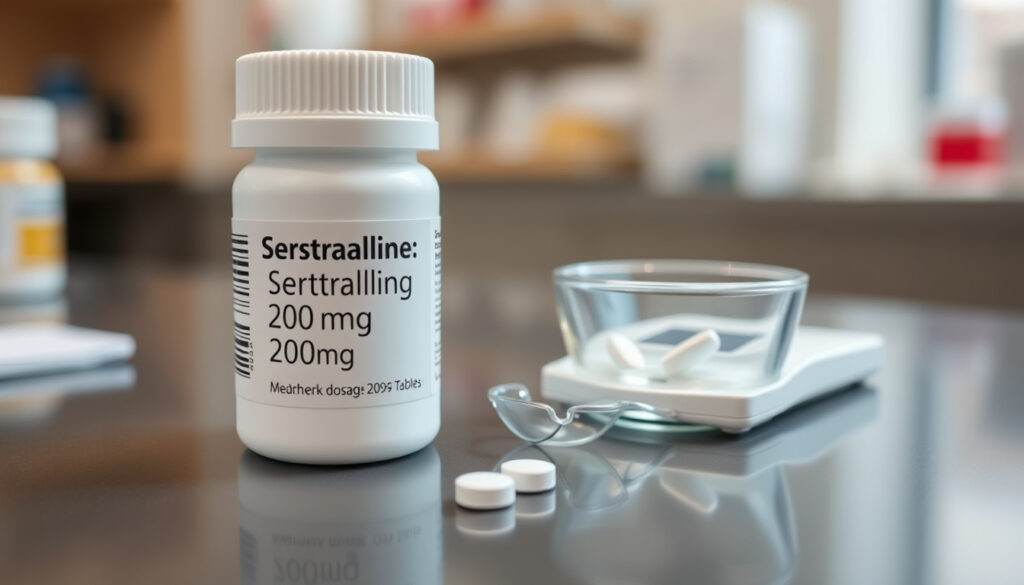
Maximum Dose of Sertraline for Adults: 200 mg Limit
Anyone who has been prescribed sertraline for anxiety or depression has probably wondered at some point whether there is a ceiling on how much they can take. The answer, backed by the FDA (U.S. drug regulator) and other major health authorities, is 200 mg per day. This guide walks through what that limit means for real-world treatment, how dosing works for anxiety, and where the numbers come from.
Maximum dose for adults: 200 mg per day ·
Typical starting dose: 50 mg per day ·
Common maintenance range: 50–200 mg per day ·
Minimum effective dose: 50 mg per day (25 mg rarely used) ·
Usual dose for anxiety disorders: 50–200 mg per day
Quick snapshot
- 200 mg per day (FDA label)
- Set by all major health authorities (Mayo Clinic)
- Not to be exceeded without specialist supervision (GoodRx) (FDA label)
Six key facts define how sertraline is dosed for adults, from the ceiling to the floor.
| Parameter | Value |
|---|---|
| Maximum adult dose | 200 mg/day |
| Standard starting dose | 50 mg/day |
| Usual maintenance range | 50–200 mg/day |
| Minimum effective dose | 50 mg/day (25 mg off-label) |
| Dose adjustment frequency | No more than once per week |
| Source authority consensus | FDA, Mayo Clinic, NIH |
What is the maximum dose of sertraline for adults?
What is the highest dose of sertraline approved?
The highest approved dose for adults is 200 mg per day, as specified by the FDA label and other health authorities.
Why is 200 mg the upper limit?
Fixed-dose studies found no additional benefit beyond 200 mg, while side effects become more frequent. According to a review in NIH/PMC (National Library of Medicine), there is no evidence of a dose-response relationship in the 50–200 mg range — meaning 50 mg can be as effective as 200 mg for many patients. The 200 mg cap exists as a safety threshold, not a target.
A patient prescribed 200 mg may not get more symptom relief than someone on 100 mg, but they face a higher risk of side effects like nausea, insomnia, and sexual dysfunction.
The implication: the maximum dose is a safety cap, not a therapeutic target.
Is 200 mg of sertraline a high dose?
Yes. The Mayo Clinic (health authority) notes that 200 mg is the maximum and is considered a high dose — it is never a starting point. Most patients begin at 50 mg and increase only if needed.
Is 100 mg considered high?
No. 100 mg is within the standard maintenance range and is not classified as high. The threshold for “high” begins around 150–200 mg. As the PsychPlus (clinical resource) explains, most patients find relief between 50 and 150 mg.
What is the threshold for a high dose?
The threshold for a high dose begins around 150–200 mg. According to the Mayo Clinic, 200 mg is considered high and is never a starting point.
The pattern: 100 mg is a common, effective dose for both depression and anxiety. 200 mg is reserved for those who do not respond to lower doses and can tolerate the higher side effect load.
What is the typical dose of sertraline for adults?
What is the average dose of sertraline?
The average maintenance dose for adults is between 50 mg and 200 mg daily. Most patients stabilise in the 50–150 mg range.
How is the dose adjusted over time?
Dose adjustments depend on how you respond. The maintenance dose typically falls between 50 mg and 200 mg daily. A NIH/PMC research article confirms that 50 mg is the minimum effective dose, but some patients need higher levels for full relief.
What this means: Most adults will land somewhere in the 50–150 mg range after a few weeks of titration. Only a minority go up to 200 mg.
What is the best dose of sertraline for anxiety?
Anxiety disorders — including panic disorder, social anxiety, and generalised anxiety — are treated with the same dosage range as depression: 50–200 mg per day. The FDA label (official prescribing information) lists starting doses of 25 mg for panic and social anxiety, but the target remains the same.
Is there a different dose for anxiety versus depression?
No — the approved dose range is identical. However, clinical experience suggests many anxiety patients respond well to 50–100 mg. PsychPlus (mental health clinic) reports that most patients on sertraline for anxiety find adequate relief between 50 and 150 mg, with higher doses reserved for severe cases.
What dose is commonly used for panic disorder or social anxiety?
The FDA label specifies a starting dose of 25 mg for panic and social anxiety, with the same target range of 50–200 mg per day.
A person with severe anxiety who pushes to 200 mg may gain an extra 10–20% symptom reduction while doubling their chance of side effects like diarrhoea or jitteriness. The decision requires weighing both sides carefully with a prescriber.
The pattern: higher doses come with diminishing returns and increased risk.
What is the minimum dose of sertraline for adults?
Can the starting dose be lower than 50 mg?
Yes, some doctors start at 25 mg for patients sensitive to side effects, but that is considered off-label. The standard minimum effective dose is 50 mg.
When is a minimum dose used?
Low-dose starts (25 mg) are occasionally used for panic disorder or for older adults, but the GoodRx (drug information service) notes that children and adults over 65 may start at 25 mg. For most adults, 50 mg remains the evidence-based floor.
The catch: If 50 mg is too much for you to tolerate, your doctor may drop to 25 mg temporarily. But staying below 50 mg long term is not supported by clinical data.
What we know and what remains unclear
Confirmed facts
- Maximum dose is 200 mg per day (FDA label)
- Starting dose is typically 50 mg (Mayo Clinic)
- Dose increases should be gradual (once per week) (FDA label)
- 200 mg is considered a high dose (Mayo Clinic)
What’s unclear
- Optimal dose for anxiety may differ from depression for some individuals (PsychPlus)
- Exact dose at which side effects become intolerable varies widely
- Whether doses above 100 mg provide additional benefit for anxiety over 50 mg is not consistently shown in trials
- The long-term tolerability of 200 mg daily maintenance is not well-studied beyond 12 months
Expert perspectives on sertraline dosing
The usual dose for adults is 50 mg once daily, but it may be increased up to a maximum of 200 mg a day. Dose increases should be given at intervals of at least one week.
FDA label (official prescribing information)
The dose is usually not more than 200 mg per day. In general, doses should be started at 50 mg once daily and increased gradually.
Mayo Clinic (trusted medical reference)
Fixed-dose studies demonstrate that 50 mg is the minimum effective dose with no evidence for a dose-response relationship in the dosing range of 50 to 200 mg.
NIH/PMC (National Library of Medicine pharmacology review)
These three authoritative sources converge on the same ceiling: 200 mg, no matter the condition. The room for nuance lies in individual response and tolerability, not in the clinical limit.
For anyone managing anxiety or depression in Ireland, the implication is clear: work closely with your GP to find the dose that works for you, but never exceed 200 mg without specialist oversight. The ceiling is firm, and the evidence says most people won’t need to touch it.
Frequently asked questions
Can you take sertraline 200 mg at once?
Yes, the full 200 mg dose is typically taken as a single daily dose, usually in the morning to reduce the chance of insomnia. Splitting doses is not required unless directed by your doctor.
How long does it take for sertraline to reach full effect?
Initial benefits may appear within 2–4 weeks, but the full therapeutic effect for anxiety or depression usually takes 6–8 weeks. Dose adjustments are made after at least 4 weeks of stable dosing.
What should I do if I miss a dose of sertraline?
Take it as soon as you remember, unless it is almost time for your next dose. In that case skip the missed dose. Do not double up.
Can sertraline cause weight gain?
Weight changes are possible but are less common with sertraline compared to other SSRIs. Some patients report weight gain, others loss. Monitor with your GP.
Is it safe to stop sertraline suddenly?
No. Abrupt discontinuation can cause withdrawal-like symptoms including dizziness, anxiety, and flu-like feelings. Taper off under medical supervision.
Does sertraline interact with other medications?
Yes. Sertraline interacts with MAOIs, blood thinners, NSAIDs, and other serotonergic drugs. Always review your full medication list with a pharmacist or doctor.
Can sertraline be taken with food?
Sertraline can be taken with or without food. Taking it with food may help reduce nausea, a common early side effect.
Also read: How Often Can You Take Paracetamol Safely: Dosage Guide and How Much CRP Level Is Dangerous – Thresholds, Ranges and Risks.
More related posts
 Emergency Dentist Near Me: ER or Dentist for Tooth Pain
 How to Use a Tommee Tippee Bottle Warmer: Step-by-Step Guide
 Ryanair Share Price Euro: Live €22.60 on Euronext Dublin
 Our Lady’s Hospital Navan: Visiting Hours, Age Limit & More
 Irish Social Welfare Application Rejections: Reasons & Appeals
 When Does Wimbledon Start? 2026 Dates, TV & Tickets
 Error Meaning: Definition, Synonyms, Types, and How to Fix
