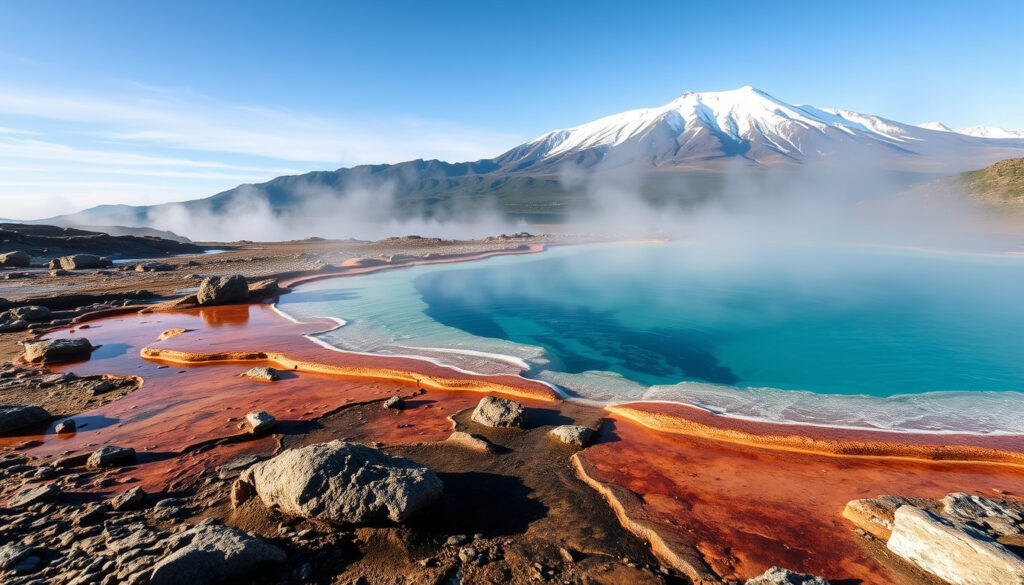
Iceland Swimming in Hot Springs: Pools, Etiquette & Safety
There’s a moment when you’re standing in an Icelandic parking lot in 6°C drizzle, staring at a pool that looks more like a forgotten construction site than a spa, and you wonder if you’ve made a terrible mistake. Iceland’s hot springs are world-famous — over 800 natural springs bubble up across the country — but the gap between Instagram and reality is wide.
Number of geothermal swimming pools in Iceland: ~170 ·
Average water temperature in hot pots: 36–43°C (97–109°F) ·
Blue Lagoon water temperature: 37–39°C (99–102°F) ·
Annual visitors to Blue Lagoon: over 1 million ·
Entry fee to Blue Lagoon (2025): from 8,990 ISK (~$65)
Quick snapshot
- Blue Lagoon water is safe and clean — bacteria are controlled (Guide to Iceland, a travel platform)
- Naked shower before swimming is mandatory in all public pools (Iceland Highlights, a local travel information service)
- Silica in Blue Lagoon water causes hair damage if wet (Guide to Iceland)
- Exact number of free hot springs accessible to the public is unknown
- Whether some remote hot springs are on private land is often disputed
- Long-term effects of silica on hair with regular exposure are unstudied
- Blue Lagoon created in 1976 by geothermal power plant runoff (Guide to Iceland)
- Blue Lagoon opened to public as a spa in 1992 (Guide to Iceland)
- New geothermal spas continue to open (e.g., Sky Lagoon, Vök Baths)
- Free hot springs face increasing visitor pressure and potential regulation
The data points below shape every hot-spring decision in Iceland.
| Attribute | Value |
|---|---|
| Total geothermal pools in Iceland | ~170 |
| Blue Lagoon year opened | 1992 |
| Average cost of a public pool | 1,500 ISK (~$11) |
| Common hot pot temperature | 38–42°C |
| Swim cap required | No, but recommended at Blue Lagoon for hair protection |
Can you swim in Iceland hot springs?
Yes — and in more ways than most visitors realize. Swimming in geothermal water is a national pastime, not a tourist attraction. Icelanders treat their pools the way other cultures treat coffee shops: they’re social hubs, meeting points, and daily rituals. You have three distinct categories to choose from, and each serves a different purpose.
Iceland’s hot spring culture isn’t about luxury — it’s about community and geothermal abundance. A visitor who skips the local public pool in favor of only the Blue Lagoon misses the actual cultural experience.
Where can you swim in geothermal water?
- Public geothermal pools (Sundlaugar): Every Icelandic town has at least one. Entry costs 1,000–1,500 ISK (€6–10) per adult (Iceland Highlights, a local travel information service). Laugardalslaug in Reykjavík charges 1,050 ISK.
- Developed lagoons: Blue Lagoon, Sky Lagoon, and the Retreat Spa use engineered systems to control temperature and chemistry (Iceland Highlights). These cost €82–€126.
- Natural hot springs: Free, unregulated pools in remote areas. Conditions vary wildly. Examples include Seljavallalaug and Secret Lagoon (which charges a fee).
The pattern: pay more for predictability, less for authenticity, and nothing for adventure. Each choice comes with trade-offs around safety, facilities, and crowd size.
What types of hot springs exist in Iceland?
The range is broader than most visitors assume. You can swim in a geothermal beach (Nautholsvik in Reykjavík), a river-fed valley pool (Seljavallalaug), or a luxury geothermal spa built around a power plant’s runoff. The water itself comes from the same source: groundwater heated by volcanic activity. The difference is how it’s filtered, treated, and priced.
Is Blue Lagoon water clean and safe?
Yes — and the persistent rumors that it’s “poo water” are false. The water is geothermal seawater, rich in silica, algae, and minerals. It emerges from the ground at about 200°C (392°F) and cools in the lagoon, where natural bacteria and filtration keep it safe. The milky-blue appearance that alarms some visitors is caused by silica scattering light, not contamination (Guide to Iceland, a travel resource).
What makes Blue Lagoon water unique?
The water is three substances in one: silica (which creates the signature white mud), blue-green algae (which gives the water its milky cast), and minerals like sulfur and magnesium. This combination is what makes the lagoon feel silky and what damages your hair. It’s also why the Blue Lagoon was named one of “The Top 25 Wonders of the World” by National Geographic (Guide to Iceland).
Is the Blue Lagoon poo water?
No. The rumor started because the lagoon was created from runoff of the Svartsengi geothermal power plant, which some people interpreted as wastewater. In reality, the water is continuously cycled and treated. Bacteria levels are monitored and controlled. Travel blogs often repeat the myth because it generates clicks, but no official health or tourism body has flagged contamination at the Blue Lagoon (Guide to Iceland).
The water’s silica content damages hair, not health. For first-time visitors, the real problem isn’t what’s in the water — it’s what the water does to your hair when you ignore the warnings.
Why can’t you wet your hair in the Blue Lagoon in Iceland?
Silica is the culprit. The mineral coats each hair strand, making it stiff, tangled, and impossible to manage. The effect can last for days unless you use a clarifying conditioner or special shampoo afterward. The Blue Lagoon’s own guidance warns that the water can leave hair feeling “dry and stiff” (Guide to Iceland).
- Some visitors wear a swim cap to avoid contact entirely.
- Others simply avoid submerging their head — not hard to do in chest-deep water.
- If you do get your hair wet, condition immediately after. Many guests bring a travel-sized conditioner.
The trade-off: the same silica that wrecks your hair is the ingredient that makes the water feel luxurious and is why people pay €82 for the experience. You can’t have the effect without the side effect.
What to be careful of in Iceland?
Iceland’s hot springs are beautiful, but the country is also an active volcanic landscape with real dangers — and shower etiquette that surprises many first-timers.
What are common dangers at natural hot springs?
- Scalding water: Natural pools can be hotter than they look. Temperatures fluctuate. A pool that’s 38°C today might be 55°C tomorrow.
- Unstable ground: Thermal areas often have thin crust over boiling mud. Marked paths exist for a reason.
- Strong currents: Some natural pools are connected to rivers. Flash floods can change conditions in minutes.
- Missing facilities: Free hot springs have no lifeguards, no changing rooms, no emergency phones.
The rule: if you see a warning sign, believe it. If there’s no path, don’t make one. The Icelandic Association for Search and Rescue (ICE-SAR) doesn’t publish specific safety guidelines for hot springs, but local tourism boards advise checking weather and road conditions before driving to remote pools (Iceland Highlights).
What should I know about Iceland swimming etiquette?
This is where most tourists stumble — literally and socially. Iceland’s public pools enforce a strict rule: you must shower naked with soap before entering the water. No exceptions. Swimwear in the shower is considered unhygienic because fabric can trap bacteria (Iceland Highlights, a local travel information service).
- Showers are typically gender-segregated and open-plan. Private stalls exist in some newer pools.
- Most pools provide soap. Bring your own if you want something specific.
- After showering, you walk to the pool in your swimsuit. The shower area is the only place where nudity is required.
“We don’t ask for naked showering to embarrass people. We do it because we know what happens when 500 people swim in a pool without washing first.”
— Icelandic travel guide, cited in local travel advice
This rule is about pragmatism, not prudishness. Iceland’s geothermal water is a shared resource, and the pool system treats hygiene as a collective responsibility, not a personal choice.
What are the best natural hot springs in Iceland?
If you’re visiting Iceland to swim, you have a decision to make: pay for an engineered experience or chase the wild ones. Both are worth doing, but for different reasons.
Top free hot springs near Reykjavík
- Nautholsvik Geothermal Beach: Located in Reykjavík. Free hot tub area, cold ocean for contrast. Open year-round.
- Reykjanesfólkvangur: A short drive from the city. Natural pools in a protected area. Unregulated, so check temperature before entering.
- Seljavallalaug: An old outdoor pool (built 1923) in a valley near Skógafoss. Free, but the pool is shallow and weedy. Legendary for its setting.
Best paid hot springs and geothermal pools
Seven options, one pattern: the cost correlates with infrastructure, not water quality. All use geothermal water.
The table below shows what you actually get for your money — entry fee, temperature, and the distinguishing feature that might tip your decision.
| Name | Entry fee (2025) | Temperature | Type | Key feature |
|---|---|---|---|---|
| Blue Lagoon | 8,990 ISK + (~$65+) | 37–39°C | Engineered lagoon | Silica mud masks, swim-up bar |
| Secret Lagoon (Flúðir) | 4,200–5,200 ISK | 38–40°C | Natural hot spring | Oldest pool in Iceland (1891), natural surroundings |
| Sky Lagoon | ~7,900 ISK | 38°C | Engineered lagoon | Ocean views, seven-step ritual |
| Laugardalslaug | 1,050 ISK | 26–32°C (pool), 38–42°C (hot pots) | Public pool | Multiple hot pots, waterslides, lap pool |
| Seljavallalaug | Free | ~30°C (variable) | Natural pool | Valley setting, historic |
| Nautholsvik | Free (hot tub area) | ~38°C (hot tub) | Geothermal beach | In Reykjavík, ocean adjacent |
| Reykjaneslaug (Westfjords) | ~1,200 ISK | ~38°C | Public pool | Ocean views, remote location |
Steps: how to plan your Iceland hot spring visit
-
Step 1: Decide your budget and tolerance for crowds
One number tells the story: Blue Lagoon sees over 1 million visitors per year. Laugardalslaug sees locals and a few tourists. If you want quiet, skip the lagoons during peak hours (11:00–15:00).
-
Step 2: Book ahead for lagoons, not for pools
Blue Lagoon and Sky Lagoon require advance reservations — walk-ins are rarely accepted during summer. Public pools never require reservations. Natural hot springs are first-come, first-served.
-
Step 3: Pack the right gear
- Swimsuit (mandatory)
- Towel (most pools rent them for ~500 ISK)
- Flip-flops (the ground can be hot near natural springs)
- Waterproof phone pouch (useful but not essential)
- Conditioner (for Blue Lagoon especially)
- Reusable water bottle (to stay hydrated)
The catch: skip the conditioner and your hair pays the price. Pack it even if you think you won’t need it.
-
Step 4: Learn the shower routine
This is the step most visitors get wrong. Enter the changing room, undress, leave your swimsuit in the locker, walk to the shower area, shower naked with soap, rinse thoroughly, then put on your swimsuit and enter the pool. When exiting, reverse the process: shower naked again.
-
Step 5: Respect the water
Don’t use soap or shampoo in the pool. Don’t run on wet surfaces. Don’t take glass bottles into the water. And for the love of everything, don’t dunk your head at Blue Lagoon unless you’ve planned for the consequences.
“The water at Blue Lagoon is safe, clean, and carefully monitored. The silica, algae, and minerals are natural — they come from the geothermal seawater itself.”
— Blue Lagoon official spokesperson, cited in travel media
rachelsruminations.com, adventures.is, nordicvisitor.com, re.is, anywhereweroam.com
For those planning a trip, Icelands geothermal pools guide provides a comprehensive overview of the best geothermal pools across the country.
Frequently asked questions
Do you need a reservation for the Blue Lagoon?
Yes. Reservations are mandatory for Blue Lagoon and Sky Lagoon. Public pools never require them.
Can you swim in Iceland’s hot springs in winter?
Yes — winter is actually the best time for many visitors. The contrast between cold air (down to -10°C/14°F) and warm water (38–42°C) is the quintessential Icelandic experience. Northern Lights viewings from hot springs are possible but require clear skies.
What should I wear to a geothermal pool in Iceland?
Standard swimsuit. No special gear required. For natural hot springs, wear water shoes (rocks can be sharp). For Blue Lagoon, consider a swim cap if you’re worried about hair damage.
Are children allowed in Iceland’s hot springs?
Yes. Children under 12 often get discounted or free entry at public pools. Blue Lagoon allows children from age 2 but requires adult supervision. Natural hot springs have no rules but can be dangerous for children due to variable temperatures.
Is it rude not to shower before swimming in Iceland?
Yes. It’s not just rude — it’s considered unhygienic and is enforced by pool staff. Failure to shower naked with soap can result in being asked to leave.
Can I swim in the ocean around Iceland?
Yes, but the North Atlantic is cold (averaging 5–12°C/41–54°F). Nautholsvik Geothermal Beach has a designated swimming area with a geothermally heated hot tub. Open ocean swimming requires a wetsuit and experience.
How do I find free hot springs in Iceland?
Use the Hot Pot Iceland map (app or website) and local tourism office recommendations. Most free springs are in the countryside, not near Reykjavík. Check access conditions online before driving — some are on private land.
For more travel inspiration, check out our Hard Rock Hotel Tenerife Guide and Things to Do in Westport.
More related posts
 Kidney Stones Symptoms in Women: First Signs & Pain Guide
 What I Like About You: TV Show, Cast, Song & Streaming
 Best Exercises for Energy: Boost Your Vitality Naturally
 iOS 26 Public Beta – Release Date and Install Guide
 C. Thomas Howell – Biography, Career and Recent Roles
 Best Films of 2025: Top Movies Ranked by Critics
 What Are Query Parameters? Definition and Examples
 What Is Parkinson’s Disease: Symptoms, Causes & Life Expectancy
