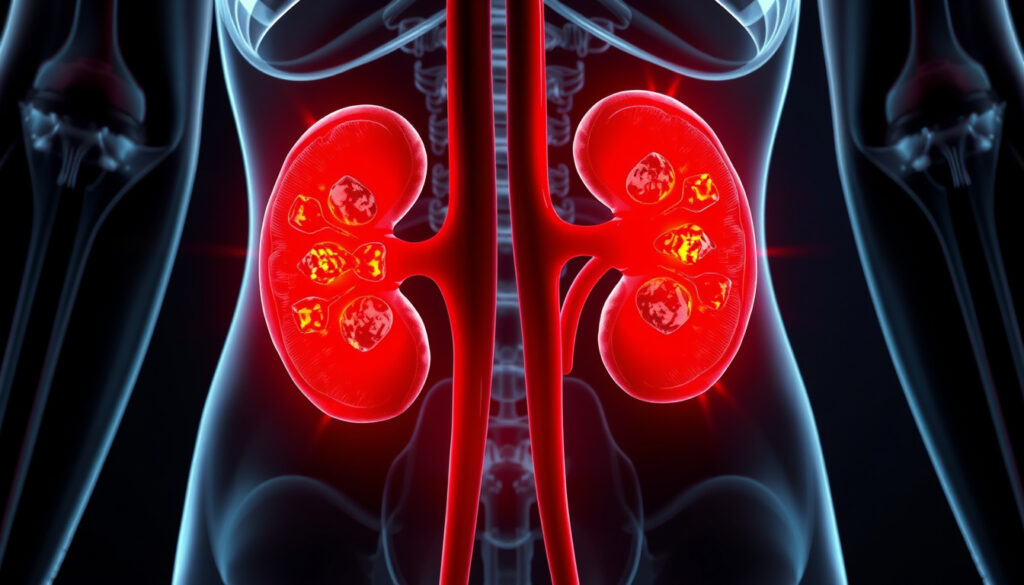
Kidney Stones Symptoms in Women: First Signs & Pain Guide
If you’ve ever felt a deep ache or sharp sting in your back or side that just won’t quit, you know how easy it is to blame it on sleeping wrong or overdoing it at the gym. But for many women, that kind of pain can be one of the earliest signals of something happening deeper — kidney stones. The tricky part? Their symptoms often look like ordinary back strain, which means they get dismissed or misdiagnosed more often than they should. This guide breaks down what to watch for, how the pain actually feels when you’re passing one, and why the differences matter for women specifically.
Primary pain location: back below ribs, one side · Associated symptoms: blood in urine, nausea, vomiting · Fever indicator: high temperature, chills · Pain pattern: comes and goes, severe · Urine change: cloudy or smelly
Quick snapshot
- Extent of symptom differences between women and men beyond gender-specific pain locations
- Whether hormonal cycles affect stone passage pain intensity in women
These diagnostic indicators help clinicians differentiate kidney stones from other conditions.
| Symptom | What to look for | Source |
|---|---|---|
| Most common symptom | Severe pain in back or side | NHS |
| Key urine sign | Blood or cloudiness | PMC |
| Infection flag | Fever and shivers | NHS |
| Pain trigger | Stone movement in ureter | Keck Medicine |
| Hydronephrosis likelihood | 46.6 times higher stone probability | PMC |
| Hematuria likelihood | 39.1 times higher stone probability | PMC |
| STONE score factors | 5 diagnostic categories | PMC |
What are the first signs of kidney stones in women?
The hallmark first signal is usually a sudden, sharp pain in your side or lower back — often just below the ribs on one side. According to the NHS, this pain can range from a dull ache to something much more intense. What separates it from ordinary back strain is how specific and stubborn it is: kidney stone pain typically locks into one side and refuses to budge when you shift positions.
Sudden severe pain in back or side
Unlike a muscle tweak that fades with rest, kidney stone pain announces itself without any provoking event. “Kidney stone pain is almost always severe, sharp or dull, occurring suddenly,” notes Keck Medicine of USC. Urologists there describe the pain as severe enough to be rumored to be as painful as childbirth. The pain starts high up near the kidney, then migrates down as the stone moves through the urinary tract.
Pain radiating to lower abdomen or groin
As the stone travels through the ureter — the narrow tube connecting the kidney to the bladder — the pain wraps around your side and heads toward your groin or lower abdomen. Ivo Dukic describes this as a migrating ache that tracks downward. In women specifically, this pain can extend to the labia and feel surprisingly similar to menstrual cramping, as explained by the American Medical Association.
Burning during urination
When a stone irritates the urinary tract lining, burning or pain during urination often follows. HealthPartners lists this alongside blood in urine and a frequent urge to go as early warning signs to watch for.
What does passing a kidney stone feel like for a woman?
Passing a kidney stone isn’t a subtle experience. Women who’ve been through it describe waves of intense cramping in the lower abdomen, a burning sensation as the stone scrapes through the urinary tract, and periods of agony punctuated by brief moments of relative relief.
Intense cramping in lower abdomen
The medical term for this is renal colic — a gripping pain that comes in waves as the stone tries to move through the ureter. HealthPartners describes kidney stone pain as sharp cramping that starts in the back and side, then migrates downward. Urologists at Keck Medicine note that the pain changes intensity as the stone shifts position.
Burning sensation in urinary tract
The urinary tract isn’t designed to accommodate a hard object passing through it, so irritation is nearly guaranteed. Beyond burning, you may notice cloudy or foul-smelling urine, or an unusually frequent urge to urinate even when only small amounts come out.
Waves of pain during passage
Restlessness and an inability to get comfortable is a hallmark of renal colic. KHC Cares notes that this distinguishes kidney stone pain from other types of back pain — you won’t find relief by lying down or changing positions. Pain during summer months is reportedly nine times more likely to involve a ureteral stone, according to peer-reviewed research.
Doctors note that kidney stone pain can feel similar to menstrual cramping in women, which often leads to delayed diagnosis — women may dismiss the pain as routine period discomfort.
Women often mistake early cramping from a passing stone for menstrual discomfort or digestive issues. The difference: kidney stone pain won’t respond to heating pads or over-the-counter pain relievers the way menstrual cramps typically do.
What side of your body hurts with kidney stones?
Kidney stone pain almost always favors one side — the side of the affected kidney. This unilateral pattern is a key clue that separates stone pain from generalized back problems.
Pain on one side below ribs
The kidneys sit high on either side of your spine, just below the ribcage. The NHS specifies that kidney stone pain typically occurs “in the side of your tummy, abdomen or groin.” Unlike ordinary back pain that might drift left and right, kidney stone pain anchors to one flank and stays there.
Radiates to front and groin
As the stone moves, the pain follows its path. The AMA explains that pain “wraps around from your side to your pelvis or private parts.” For men, this means groin, scrotum, or penis tip. For women, it extends to the labia — and many report it feels eerily like menstrual cramping.
Back pain vs kidney stone signs
The distinction matters clinically. Keck Medicine highlights three distinguishing factors: kidney stone pain comes in waves rather than staying constant, it doesn’t ease when you change position, and it’s usually far more severe than typical backache. Dr. Alex Jimenez adds that accompanying fever can signal kidney involvement rather than pure musculoskeletal strain.
“Kidney stone pain typically starts high up, near the kidney, migrates toward the abdomen and then eventually moves down toward the groin as the stone moves further down the ureter.”
— Mike Nguyen, MD, Urologist at USC Urology, Keck Medicine
“Overall, symptoms are generally the same between men and women when passing a kidney stone… In women, the pain can extend down to the labia and may feel like a menstrual cramp.”
— Dr. Steinberg, American Medical Association
What are the 7 warning signs of kidney stones?
While not every person experiences all seven, these symptoms appear frequently enough that health sources consistently list them together. The NHS and major medical centers broadly agree on the core warning signs.
Blood in urine
Hematuria — visible or microscopic blood in the urine — is one of the most reliable indicators. Research from the National Institutes of Health found that hematuria raises the likelihood of a ureteral stone by 39.1 times compared to patients without this sign. Sometimes the blood is visible to the naked eye, turning urine pink or reddish. Other times it only shows up in lab tests.
Nausea and vomiting
“Nausea and vomiting is a major sign aside from pain,” according to Parade. The body’s response to severe renal colic is often autonomic — your nervous system triggers nausea as a reflex to the intense pain. If you’re experiencing unexplained queasiness alongside back or side pain, kidney stones deserve consideration.
Fever and chills
When stones block urine flow, infection can develop upstream. The NHS specifically mentions “high temperature, feeling shivery” as a symptom. KHC Cares notes that fever and chills may accompany stones, though not always in the earliest stages. Any fever combined with urinary symptoms warrants prompt medical attention.
Blood in urine multiplies your odds of a ureteral stone by nearly 40 times — making urinalysis one of the most powerful diagnostic tools available. If you notice pink or reddish urine alongside flank pain, don’t wait to get checked.
For a comprehensive diagnostic approach, doctors use the STONE score which evaluates five factors: sex, pain duration under 6 hours, race, nausea, and red blood cells in urine.
What can be mistaken for a kidney stone?
Because kidney stone pain is nonspecific and can radiate widely, it commonly masquerades as several other conditions. Getting the right diagnosis matters — delaying treatment for a genuine stone can lead to complications.
Back pain conditions
Muscle strains, herniated discs, and spinal problems can all cause flank or lower back pain. The difference: Keck Medicine emphasizes that kidney stone pain doesn’t ease with rest, stretching, or changing positions. Back conditions typically improve with movement or specific stretches; kidney stone pain usually worsens.
Urinary tract infections
UTIs share some symptoms with kidney stones — burning urination, frequent urges, and sometimes blood in the urine. The distinguishing factor is usually pain location: UTIs cause suprapubic discomfort rather than deep flank pain. However, stones themselves can trigger secondary infections, complicating the picture.
Appendicitis mimics
Because kidney stone pain can radiate to the lower right abdomen, it sometimes mimics appendicitis. The key difference: appendicitis pain typically starts around the belly button and moves to the lower right quadrant in a predictable pattern, while stone pain starts high and moves downward.
Women face a particular challenge because the labial and menstrual-cramping quality of stone pain often leads to dismissal as gynecological or digestive issues. For more context on what is Parkinson’s disease symptoms versus similar conditions, healthcare providers often use similar differential diagnosis approaches.
Women with kidney stones frequently report pain locations and warning signs like intense flank aches that radiate downward, urging early medical attention.
Frequently asked questions
What is the fastest way to flush your kidney stones?
Staying well-hydrated is the most effective approach. Drinking plenty of water helps flush the urinary system and may help smaller stones pass on their own. Water intake increases urine volume, dilutes stone-forming minerals, and supports the natural passage process.
What drink breaks up kidney stones?
Lemon water and citrus juices contain citrate, which may help prevent certain stone types from forming and potentially help dissolve smaller stones. However, the most evidence-backed approach is simply increasing water consumption — aiming for enough to produce clear or nearly clear urine.
What causes kidney stones in women?
Several factors contribute: dehydration, diet high in oxalates or sodium, certain medical conditions, and family history. Women may have additional risk factors related to urinary tract structure and hormonal influences. The NHS notes that concentrated urine from insufficient fluid intake is among the most common culprits.
Are kidney stones dangerous?
Most stones pass on their own without permanent damage, but they can cause serious complications if they block urine flow or trigger infection. Fever alongside stone symptoms is a red flag requiring immediate medical attention. MalaCards notes that recurrence within ten years is common — roughly half of people who’ve had one stone will develop another.
What is kidney stones treatment?
Treatment depends on stone size and location. Small stones under 5 mm often pass naturally with pain management and hydration. Larger stones may require procedures like lithotripsy (sound waves to break the stone) or ureteroscopy. Pain control, infection management, and prevention strategies round out treatment approaches.
What helps pass kidney stones?
Hydration is essential — drink enough water to produce 2 to 2.5 liters of urine daily. Over-the-counter pain relievers like ibuprofen can help manage discomfort. Your doctor may also prescribe alpha-blockers that relax the ureter, making stone passage easier and faster for smaller stones. For timing, how much CRP level is dangerous is a related health marker that doctors may check to rule out infection.
What causes kidney stones?
Stones form when minerals in urine become concentrated enough to crystallize. Common causes include insufficient fluid intake, high-oxalate foods, excess sodium, and conditions like hyperparathyroidism. Family history and certain medications can also increase risk.
For women experiencing back or flank pain that doesn’t fit the usual muscle-strain pattern, kidney stones deserve serious consideration — especially if the pain is one-sided, comes in waves, and accompanies changes in urination. The overlap with menstrual cramping and ordinary back problems means these stones frequently get misdiagnosed, sometimes for weeks. Early recognition and medical evaluation make the difference between passing a stone at home and facing a medical emergency.
More related posts
 How to Stop Grinding Teeth in Sleep: Causes, Remedies & Treatment
 Stranger Things: The First Shadow – Plot, Venues, Tickets & Cast
 Dogs for Sale Kilkenny: Find Puppies, Rescue Dogs & Breeders (2025)
 Viking Hotel Waterford: Free Parking, Dining & More
 European Ryder Cup Team – 2025 Roster and Guide
 Ryanair Share Price Euro: Live €22.60 on Euronext Dublin
 Blue Lagoon Iceland Christmas Opening Times & Winter Guide
 What Is a Dangerous Low Blood Pressure for a Woman?
