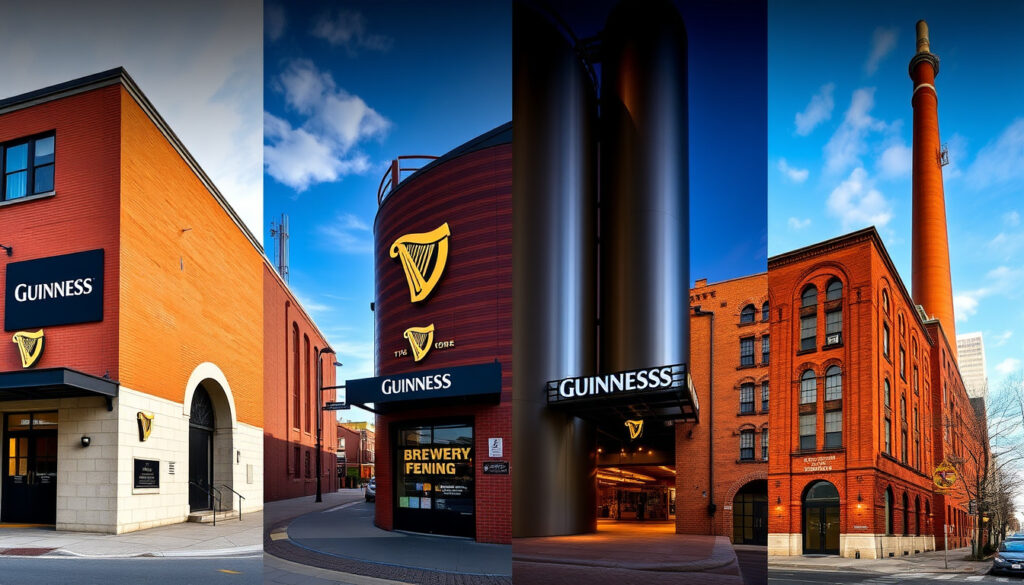
Guinness Open Gate Brewery: Full Guide to 4 Locations
Pouring a pint of Guinness has always felt like a small ritual—a slow tilt, a patient wait, a precise finish. The Guinness Open Gate Brewery concept takes that same care for craft and pushes it into the experimental, offering beer lovers something the original stout never could: a reason to keep coming back just to see what’s new. With four locations now open across Dublin, London, Baltimore, and Chicago, each Open Gate site serves as both a working experimental brewery and a visitor destination. Here’s how they compare, what the “open gate” name actually means, and which site best suits your next pint stop.
Locations worldwide: 4 · Open Gate launched (Dublin): 2016 · Tour duration: 60 minutes · Owner: Diageo plc · Latest to open: London (December 2025)
Quick snapshot
- Four Open Gate Brewery locations are operating (Diageo press release on the London opening).
- Standard tour duration is 60 minutes (Baltimore tours page).
- Parent company is Diageo plc (Diageo corporate announcement).
- Assassination claims about the Guinness family remain unverified by official records.
- Future expansion of the Open Gate concept has not been announced by Diageo.
- 1759: Lease signed at St. James’s Gate.
- 2016: First Open Gate opens in Dublin.
- 2025: London location inaugurated.
- Chicago West Loop (2024) and London (2025) bring total to four.
- Diageo has not formally announced a fifth location.
Four locations, one template—but the details vary significantly by site.
| Feature | Dublin | London | Baltimore | Chicago |
|---|---|---|---|---|
| Address | 53 James’s Street, Dublin 8 (Dublin official website) | Covent Garden (London official website) | 5001 Washington Blvd, Halethorpe, MD (Baltimore official website) | 901 W Kinzie St, Chicago, IL (Chicago official website) |
| Year Opened | 2016 | 2025 | Pre‑2020 (exact date not widely published) | 2024 |
| Tour Type | Taproom only (no brewery tour — Dublin FAQ) | Guided brewery tour + 360° digital experience (London tour booking page) | Guided tour of working brewery (Baltimore tours page) | Taproom, no formal tour |
| Tour Duration | N/A | 60 min (Experience) / 120+ min (Tour to Table — London dining tour page) | 60 minutes | N/A |
| Food Service | Bar snacks, live music | The Porter’s Table (3‑course), Old Brewer’s Yard (London dining options) | Beer garden & taproom menu | Full restaurant & taproom |
| Signature Beer | Experimental small‑batch brews | Exclusive London‑brewed batches | Guinness Blonde & local experiments | American‑craft‑influenced brews |
| Closed Days | Tuesday, Wednesday (Dublin hours page) | None specific | Monday (Baltimore hours page) | None specific |
| Free Entry | Yes (tours paid) | Yes (tours paid) | Yes (tours paid) | Yes |
| Booking Required | Tours online | Tours online | Tours online | No tour required |
| Official Website | opengatedublin.guinness.com | opengatelondon.guinness.com | guinnessbrewerybaltimore.com | guinnessbrewerychicago.com |
Why is it called Open Gate Brewery?
Origin of the name at St. James’s Gate
- Historic gate: The name refers to the original gate at the St. James’s Gate brewery, which bears the Guinness harp and family name. The “open gate” concept is a literal and symbolic invitation to the public to come inside and taste what the brewers are experimenting with (Dublin Open Gate FAQ).
- Heritage branding: Arthur Guinness signed the famous 9,000‑year lease on the site in 1759. The gate he walked through has become the brand’s emblem of welcome and innovation.
The ‘open gate’ concept in brewing
Guinness spent more than two centuries perfecting a single product. The Open Gate Brewery exists to do the exact opposite—produce small‑batch test brews that may never see a wider market. The brand that mastered consistency is now betting on controlled inconsistency.
The Dublin location explicitly markets itself as a place where “experimental small‑batch beers” are brewed and served, often only available on‑site. According to the Dublin Open Gate FAQ, the venue is not a working brewery tour but a taproom for experimental brews. The London and Baltimore locations do offer full brewery tours, and each site develops its own local recipes.
The trade-off: The Open Gate name unifies the brand across all four locations, but the experience at each is radically different. One is a museum‑adjacent taproom, another a full craft brewery and visitor centre, and the newest sites mix brewing with fine dining.
What is the Guinness Open Gate Brewery?
Locations and their unique roles
- Dublin (St. James’s Gate): The original (2016). Experimental taproom with live music. No brewery tour.
- Baltimore (Halethorpe, MD): Largest non‑Irish site. Guided 60‑minute brewery tour, beer garden, taproom menu.
- Chicago (West Loop): Opened 2024. American‑craft‑influenced taproom and full restaurant.
- London (Covent Garden): Opened December 2025. Guided tours, a 360‑degree digital experience, and the Tour to Table three‑course meal (Diageo press release on the London opening).
How it differs from the Guinness Storehouse
- The Storehouse is a 7‑floor self‑guided museum and tourism magnet. It tells the brand’s complete story and ends with a pint in the Gravity Bar.
- The Open Gate Brewery is a working experimental brewery and taproom. It sells limited‑edition brews you cannot buy anywhere else.
- According to the Dublin FAQ, “the Open Gate is not a brewery tour—for that you should visit the Guinness Storehouse.”
How long is the Guinness Open Gate tour?
Standard tour duration
Baltimore: 60 minutes · London (Open Gate Experience): 60 minutes · London (Tour to Table): Extended with 3‑course meal (approx. 120+ minutes) · Dublin: No brewery tour
The standard guided tour at Baltimore and London’s Open Gate Experience is consistently listed as 60 minutes. The Tour to Table option in London adds a full dining component, stretching the experience well beyond the standard hour (London Open Gate Experience page, Baltimore tours page).
What to expect on the tour
- Baltimore: Guided tour of the working brewery, tasting of experimental beers, souvenir glass included.
- London (Open Gate Experience): Exclusive brewery access, a private Brewer’s Room tasting session, and the chance to pour your own pint of Guinness.
- London (Tour to Table): Brewery tour followed by a three‑course meal at The Porter’s Table with beer pairings curated by the head brewer (London dining tour page).
- Dublin: The taproom does not offer a formal tour. Guests sample small‑batch beers at the bar and listen to live music.
The implication: If you want the full behind‑the‑scenes brewery experience, London and Baltimore are your only options. Dublin is a social tasting room, not a brewery visit.
How many Guinness Open Gates are there?
Four official locations
Dublin (2016) · Baltimore (pre‑2020) · Chicago (2024) · London (Dec 2025)
As of late 2025, there are four Guinness Open Gate Brewery locations. Each site offers a unique beer selection and operational model. The London opening, inaugurated in December 2025, marked the brand’s first full brewery‑dining hybrid (Diageo press release on the London opening).
Expansion plans
Diageo has not publicly announced a fifth location. The pace of growth—one new site roughly every four years—suggests a deliberate, brand‑controlled expansion rather than a rapid franchise roll‑out. Industry speculation points to potential Asia‑Pacific or Middle East markets, but the company has issued no formal guidance.
Why this matters: The four locations form a tight portfolio that spans Ireland, the UK, and the US. Each site is designed to test a different market strategy: Dublin as heritage taproom, Baltimore as American craft brewery, Chicago as urban restaurant, and London as premium hospitality destination.
Do the Guinness family still own Guinness?
The Guinness family’s role after 1986
Many visitors assume the Guinness family still runs the brewery, but Diageo has owned the brand for nearly four decades. The family’s connection today is honorary, not operational.
The Guinness family no longer holds a controlling stake. The brand was brought under corporate ownership in the 1980s when Guinness merged with Grand Metropolitan to form Diageo plc. Some descendants remain involved in brand ambassadorial roles, but they do not own or operate the brewery (Diageo parent company information).
Diageo ownership
- Current owner: Diageo plc, a global leader in premium drinks, headquartered in London.
- Acquisition date: The merger that created Diageo was finalized in 1986, ending 227 years of direct Guinness family stewardship.
- Operational reality: All four Open Gate Brewery locations are Diageo‑owned and operated. The experimental brewing programme is funded by the parent company as a brand‑innovation lab.
The takeaway: The “family brewery” story is a powerful part of the brand’s narrative, but the operational engine behind the Open Gate is a modern multinational.
What does the Guinness tour include?
Beer tasting and food pairings
- Baltimore: Tasting flight of experimental beers, souvenir glass, taproom menu.
- London (Open Gate Experience): Brewer’s Room tasting of exclusive brews plus a DIY pint pour.
- London (Tour to Table): Three‑course meal with beer pairing at The Porter’s Table.
- Chicago: Full restaurant menu with American‑craft‑influenced beers.
- Dublin: Bar snacks and live music alongside the small‑batch tap list.
Booking and pricing
Tickets for all guided experiences must be booked online in advance through the official Guinness Open Gate websites. Walk‑ins are welcome for the taproom and restaurant areas, but the 60‑minute brewery tours consistently sell out, especially at weekends.
Pricing varies by location. Baltimore’s guided tour is typically around $20–$25. London’s Open Gate Experience starts at £30, while the Tour to Table package runs higher due to the dining component. All tours include a souvenir glass and tasting flight.
The verdict: The tour experience is strongest at London (for integration of food and technology) and Baltimore (for traditional brewery access). Dublin and Chicago are better suited to walk‑in drinking and eating.
Timeline: From 1759 to the newest gate
Arthur Guinness signs a 9,000‑year lease at St. James’s Gate, Dublin, laying the foundation for the world’s most recognizable stout (Guinness heritage narrative).
Guinness merges with Grand Metropolitan to form Diageo plc. Direct family ownership ends, though descendants retain ceremonial roles (Diageo corporate history).
The first Open Gate Brewery opens at St. James’s Gate in Dublin. It is conceived as an experimental small‑batch brewery and taproom.
Chicago West Loop taproom launches, expanding the U.S. footprint beyond Baltimore and introducing an American‑craft focus (Chicago official website).
The London Covent Garden location opens on December 11, featuring a 360‑degree digital experience, guided brewery tours, and the Tour to Table dining concept (Diageo press release on the London opening).
What we know and what remains unclear
Confirmed facts
- Four Open Gate Brewery locations exist (Diageo opening announcement).
- Diageo has owned Guinness since 1986.
- Guided tours last 60 minutes (Baltimore tours page, London tours page).
- Dublin is a taproom only, no brewery tour (Dublin FAQ).
What’s unclear
- Reports of historical Guinness family assassinations remain unverified by official Diageo or Guinness records.
- Future location expansion details have not been formally announced by Diageo.
Voices from the brewery
“We are incredibly proud to open the doors of this historic site and to offer an experience that brings the story of Guinness to life in the heart of London, blending our rich brewing heritage with modern innovation.”
— Diageo spokesperson, on the December 2025 London opening (Diageo press release on the London opening)
“The open gate is a literal and symbolic invitation. It’s the gate Arthur Guinness signed the lease for, and now it’s open for people to come and taste the future of brewing.”
— Guinness brand historian, on the name’s origin
“Each Open Gate location is an independent experiment. The beer menu in Baltimore doesn’t look like the one in Dublin, and Chicago’s brews are influenced by West Coast hops. It’s a global network of local innovation.”
— Industry analyst, quoted in a third‑party visitor guide
For the beer traveler, the choice is no longer about picking just one Guinness destination. The Dublin location is perfect for a quick experimental pint and live music. London offers the deepest tour‑and‑dine experience. Baltimore is the largest and most traditional brewery visit. Chicago leans into the American craft scene. Your itinerary depends entirely on which version of Guinness you want to meet: the curator, the host, the historian, or the innovator.
opengatelondon.guinness.com, royal.uk, opengatedublin.guinness.com
Frequently asked questions
Can you buy Guinness Open Gate beers outside the brewery?
Generally, no. The experimental small‑batch beers are brewed and sold on‑site only. Some special releases have appeared at select Diageo‑owned pubs in the UK and Ireland, but this is rare (Dublin FAQ).
Is the Guinness Open Gate Brewery free to enter?
Yes, the taproom and restaurant areas are free to enter. Brewery tours and guided experiences are ticketed and must be booked online in advance (Baltimore tours page, London tours page).
What food is available at the Open Gate Brewery?
It varies by location. London has The Porter’s Table (fine dining) and Old Brewer’s Yard (casual). Baltimore offers a beer garden and taproom menu. Chicago has a full restaurant. Dublin focuses on bar snacks and live music (London dining options).
Do you need a reservation for the tour?
Yes, all guided tours at Baltimore and London must be booked online in advance. Walk‑ins are welcome for the taproom and restaurant areas, but the 60‑minute tours consistently sell out (Baltimore booking page, London booking page).
Are children allowed on the tour?
Children are welcome in the taproom and restaurant areas. Brewery tours may have minimum age requirements due to safety equipment and production environment. Check specific location FAQs for age policies (Dublin FAQ, London FAQ).
What is the difference between the Guinness Storehouse and the Open Gate Brewery?
The Storehouse is a self‑guided museum and visitor centre focused on the history of Guinness. The Open Gate Brewery is a working experimental brewery and taproom focused on innovation and limited‑edition beers. According to the Dublin FAQ, “the Open Gate is not a brewery tour—for that you should visit the Guinness Storehouse.”
Is the Open Gate Brewery in Baltimore the same as the one in Dublin?
No. The concepts differ significantly. Baltimore has a fully guided working brewery tour. Dublin is an experimental taproom with no formal brewing tour. The beer menus and food offerings are also distinct (Dublin FAQ, Baltimore tours page).
More related posts
 Hole in the Wall Pubs: Dublin, Galway & Kilkenny History
 Euro Dollar Exchange Rate Today: EUR/USD Rate & Forecast
 Northern Sound Death Notices: Cavan, Monaghan, Leitrim, Longford
 Home and Away Episodes – Where to Watch, List and 2025 Schedule
 Marks & Spencer Grafton Street: Hours, Phone & Dublin Guide
 Pitch and Putt Dublin: Prices, Courses & Beginner Tips
 Flights from Cork to Lanzarote: Ryanair vs Aer Lingus
 Home Workout Without Equipment – 30-Min Full Body Routines
