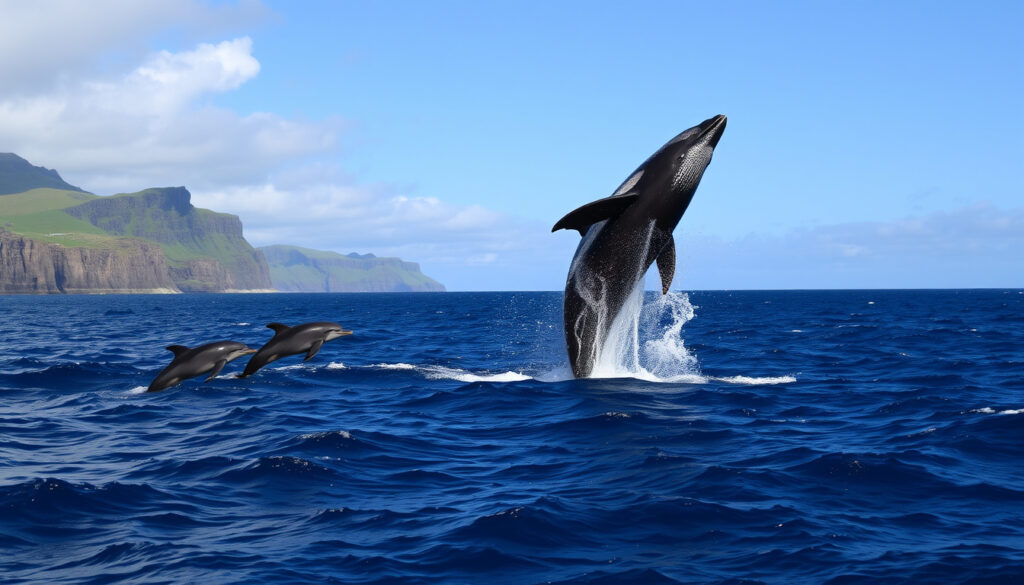
Irish Whale and Dolphin Group: Guide & Opportunities
There’s something magical about spotting a whale breaching off the Irish coast, and for decades, the Irish Whale and Dolphin Group (IWDG) has been the go-to organisation for anyone who wants to turn that fleeting moment into meaningful science. This guide walks through how the IWDG works, how to use its sightings map, and how you can get involved as a volunteer, intern, or citizen scientist.
Years active: 35+ ·
Focus: Whales and dolphins in Irish waters ·
Activities: Research, education, sightings recording ·
Social media: Facebook, Instagram
Quick snapshot
- Marine conservation organisation (Irish Whale and Dolphin Group (official website))
- Active for over 35 years (IWDG – about page)
- Focus on whales and dolphins in Irish waters (IWDG – mission statement)
- Official website at iwdg.ie (IWDG – homepage)
- IWDG app available for reporting (IWDG – recording schemes)
- Active Facebook and Instagram pages (IWDG – social links)
- Volunteer roles (no formal programme yet – alternative ways to help) (IWDG – volunteering page)
- Internships available (IWDG – recruitment notice)
- Job openings listed on website (IWDG – education officer post)
- Real-time sightings map on IWDG site (Explore Your Shore (Irish citizen science platform))
- Public can report sightings online (IWDG – how to report)
- Whale sightings today in Ireland are visible on the map (National Biodiversity Data Centre (Ireland’s central biodiversity database))
Four key facts, one pattern: IWDG is both a research body and a public-facing platform that turns casual encounters into structured conservation data.
| Fact | Value |
|---|---|
| Years active | 35+ (IWDG – official site) |
| Species monitored | Whales and dolphins (IWDG – recording schemes) |
| Type | Non-profit organisation (IWDG – about) |
| Website | iwdg.ie (IWDG – homepage) |
What is the Irish Whale and Dolphin Group?
The Irish Whale and Dolphin Group (IWDG) is a marine conservation organisation that has been monitoring whales, dolphins, and porpoises in Irish waters for more than 35 years (IWDG – official website). It runs a citizen science sighting scheme that anyone can contribute to, turning beach walks and boat trips into valuable research data.
What is the mission of IWDG?
- Promote the conservation of cetaceans in Irish waters (IWDG – mission statement)
- Encourage public participation through reporting schemes (IWDG – recording schemes)
How long has IWDG been active?
- Founded in the late 1980s, the IWDG has operated the all-Ireland cetacean sighting scheme since 1991 (IWDG – recording scheme history)
How can I access the IWDG logo, app, and Facebook page?
IWDG’s digital tools are designed to make reporting and connecting straightforward. Here’s where to find each resource.
Where to find the IWDG logo?
- The official IWDG logo is available on the organisation’s website, typically in the footer or media section (IWDG – website)
How to download the IWDG app?
- The IWDG reporting app can be downloaded from the organisation’s recording schemes page, which provides links for iOS and Android (IWDG – recording schemes page)
How to follow IWDG on Facebook?
- IWDG maintains an active Facebook page where it posts sighting updates and conservation news (IWDG – social media links)
Digital access is easy, but the real value lies in using those tools to submit sightings. A downloaded app that never sends a report is a missed opportunity for science.
What are the volunteer, internship, and job opportunities at IWDG?
IWDG offers several ways to get involved, though its formal volunteer programme is still in development. Here’s what’s currently available.
What volunteer roles are available?
- IWDG does not currently operate a formal volunteer programme, but it lists alternative ways to contribute, such as joining a Local Group as a member or reporting sightings through the website or app (IWDG – volunteering page)
- For specific enquiries, email enquiries@iwdg.ie (IWDG – contact information)
- To help with the research vessel Celtic Mist, email celticmist@iwdg.ie (IWDG – vessel opportunities)
How to apply for an internship?
- Internships are advertised on the IWDG website when available. Past postings include an Education and Outreach Officer role (closing January 2024) and two positions announced in June 2024 (IWDG – education officer recruitment) (IWDG – June 2024 recruitment)
What jobs are currently open?
- Job openings are listed on the IWDG website’s recruitment page. The most recent postings were for an Education and Outreach Officer and two additional roles in mid-2024 (IWDG – latest vacancies)
How to view whale sightings in Ireland today using the IWDG map?
The IWDG sightings map is the heart of its citizen science operation. It shows live reports of whales, dolphins, and porpoises around the Irish coast.
How to access the sightings map?
- Go to the IWDG recording schemes page and click the “Sightings Map” link, or visit the Biodiversity Maps portal at maps.biodiversityireland.ie (Explore Your Shore – IWDG sightings guide)
- Visit the IWDG recording schemes page at iwdg.ie.
- Click the “Sightings Map” link to open the interactive map.
- Browse recent sightings by species, date, and location.
- Submit your own sighting using the online form or the IWDG app.
What information does the map show?
- The map displays recent whale and dolphin sightings submitted by the public, including species, date, and location (IWDG – recording schemes)
- The dataset is restricted – viewable on the mapping system but not available for download (National Biodiversity Data Centre – dataset restrictions)
How to report a sighting?
- Submit your sighting through the IWDG online form or directly via email (IWDG – submission details)
- Reports are used to validate records and build the distribution map (National Biodiversity Data Centre – purpose of dataset)
Every sighting you submit becomes part of Ireland’s national biodiversity record. The data informs conservation policy and helps protect cetacean habitats – a concrete way for a casual observer to influence marine management.
What is the IWDG’s role in marine conservation?
Beyond the sightings map, IWDG drives research, education, and policy influence. It is a recognised voice for cetacean conservation in Ireland.
How does IWDG contribute to research?
- IWDG collects and validates sighting and stranding data, which is shared with the National Biodiversity Data Centre (National Biodiversity Data Centre – IWDG dataset)
- It operates a stranding hotline and advises the public not to refloat stranded animals – a critical safety and research protocol (IWDG – stranding advice)
What educational resources does IWDG provide?
- School talks, workshops, and online materials covering cetacean biology and conservation (IWDG – education page)
- Regular social media posts that highlight recent sightings and explain marine science (IWDG – social channels)
Confirmed facts
- IWDG has operated for over 35 years (IWDG – official site)
- Focuses on whales and dolphins in Irish waters (IWDG – recording schemes)
- Sightings dataset is restricted but viewable on Biodiversity Maps (NBDC – dataset)
What’s unclear
- Exact number of species monitored (IWDG – not specified)
- Number of active volunteers (IWDG – no formal programme)
- Exact annual sighting count (NBDC – aggregate not published)
- Scope of educational resources and stranding hotline operations (IWDG – homepage)
“We are a marine conservation organisation dedicated to the conservation of whales, dolphins and porpoises in Irish waters.”
— IWDG mission statement (IWDG – about page)
“Get involved by reporting your sightings and joining a local group – every record counts.”
— IWDG Instagram bio (IWDG – social channels)
For anyone living along the Irish coast who cares about marine life, the choice is clear: report your sightings, join a local group, and help build the data that protects these animals. The IWDG has turned the simple act of watching the sea into one of Ireland’s most effective conservation tools.
iwdg.ie, iwdg.ie, iwdg.ie, seawatchfoundation.org.uk, iwdg.ie, environmentjob.co.uk, linkedin.com, report.iwdg.ie, ie.linkedin.com
Frequently asked questions
How can I report a stranded whale or dolphin?
Call the IWDG stranding hotline (number on iwdg.ie) and keep people and dogs away until advice is given (IWDG – stranding protocol).
Does IWDG offer membership?
Yes – you can become a member via the website, which includes access to Local Groups and the Celtic Mist vessel (IWDG – membership options).
What is the IWDG’s role in the Sustainable Fisheries Coalition (SFC)?
IWDG participates in the SFC to ensure cetacean bycatch and habitat issues are represented in fisheries policy (IWDG – conservation work).
How can I donate to IWDG?
Donations can be made via the IWDG website’s support page (IWDG – donate).
What educational events does IWDG host?
School talks, coastal workshops, and online webinars – listed on the events section of iwdg.ie (IWDG – education).
Are there internships for international applicants?
Internships are open to all; past postings did not restrict nationality, but check the job description for visa requirements (IWDG – recruitment).
More related posts
 Paddy Power Racing Results Today Live Updates
 The Curious Case of Benjamin Button: Facts, Plot & FAQs
 June Bank Holiday 2025 Ireland: Date and Key Facts
 Best Noise Machines for Sleep: LectroFan Evo Tops Tests
 HSE My Self Service Login, Payslips & Registration Guide
 Viking Hotel Waterford: Free Parking, Dining & More
 Income Tax Ireland Calculator 2026: How to Calculate Your Tax
 Stones and Pounds to Kilos: Quick NHS Conversion Guide
