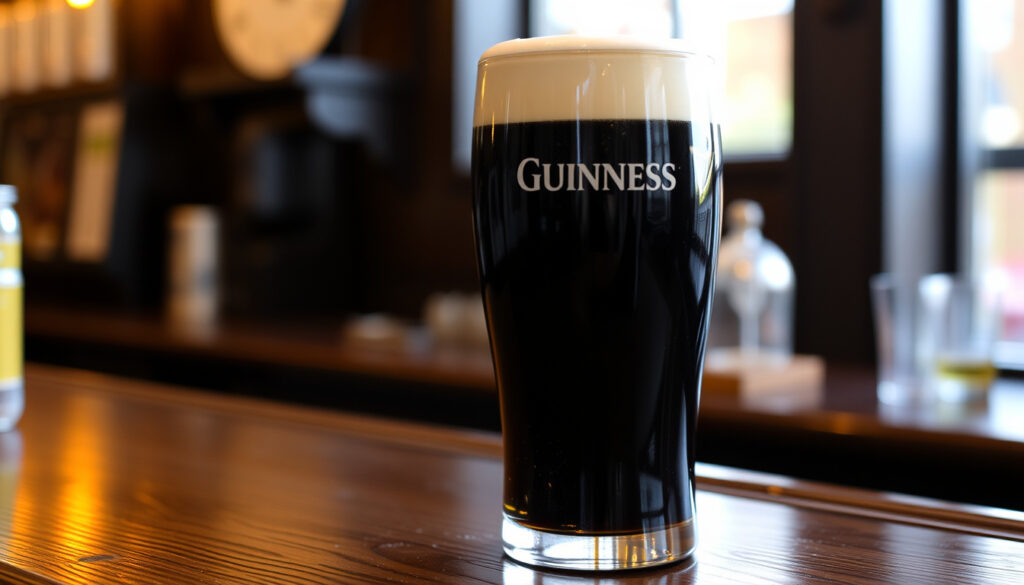
Calories in a Pint of Guinness: Complete Guide
There’s a reason Guinness has a reputation as a “meal in a glass” — it’s dark, rich, and oddly satisfying. But when you’re watching your waistline, the question inevitably comes up: just how many calories are in a pint of this iconic stout? A standard pint (568ml) of Guinness Draught contains about 210 calories, according to multiple sources, making it a moderate-calorie choice that often surprises people. This guide breaks down the numbers, compares them to other beers, and weighs the health trade-offs so you can decide where a pint fits in your diet.
Calories in a pint of Guinness: 210 calories (568ml) ·
Guinness ABV: 4.1–4.2% ·
Calories vs. average lager pint: ~20 fewer calories ·
UK Chief Medical Officers’ low-risk drinking guideline (men): No more than 3–4 units daily (~1.5 pints) ·
Guinness Draught carbohydrates: 10g per pint ·
Guinness Zero calories: 0–10 calories per pint
Quick snapshot
- Pint of Guinness: 210 calories (Healthline (health publisher))
- Less than average lager (One For The Road Brewery)
- Guinness Zero: virtually zero calories (Hukins Hops (homebrewing supplier))
- 4.1–4.2% ABV (Healthline)
- Lower than many beers (One For The Road Brewery)
- 2 units per pint (UK standard) (Healthline)
- Moderate consumption possible (UK Government guidance)
- Exceeds guidelines at 2+ pints daily (UK Government guidance)
- Minor iron content, not significant (Healthline)
- Better than full-strength beers (One For The Road Brewery)
- Still contains empty calories (NHS (UK health service))
- Alternatives: light beer, alcohol-free (One For The Road Brewery)
The table below shows the nutritional breakdown for a standard pint of Guinness Draught.
| Nutrient | Per pint (568ml) |
|---|---|
| Calories | 210 |
| ABV | 4.1–4.2% |
| Carbohydrates | 10g |
| Protein | 1.6g |
| Iron | 0.3mg (2% daily value) |
| Alcohol units (UK) | 2.3 |
How many calories are in a pint of Guinness?
The most common answer from official and verified sources: a pint of Guinness Draught (the standard nitro stout) contains approximately 210 calories in a 568ml serving. That figure is supported by Healthline (health information publisher), UK Brewery Tours, and Hukins Hops.
But the number varies by variant. A 12oz (355ml) Guinness Draught has about 125 calories, while Guinness Extra Stout comes in at 176 calories per 12oz, according to Healthline. Stronger Guinness versions — like the 200th Anniversary Export Stout (6% ABV) or Antwerpen (8% ABV) — pack more calories from alcohol alone: 118 and 157 calories per 12oz, respectively, from alcohol content alone. On the other end, Guinness Zero contains virtually no calories (<10 per pint), per Hukins Hops.
Calorie breakdown by Guinness variant
- Guinness Draught (pint, 568ml): 210 calories (Healthline)
- Guinness Draught (12oz, 355ml): 125 calories (Healthline)
- Guinness Extra Stout (12oz): 176 calories (Healthline)
- Guinness 200th Anniversary Export Stout (12oz): ~176 calories total (118 from alcohol) (Healthline)
- Guinness Zero (pint): <10 calories (Hukins Hops)
How Guinness calorie count compares to other popular beers
One comparison puts Guinness Draught at 210 calories per pint, while Peroni has about 235, Kronenbourg 244, and Budweiser around 232 — all per pint, according to One For The Road Brewery. That makes Guinness a relatively lower-calorie choice among full-strength beers.
A pint of Guinness is about 20 calories lighter than a typical lager pint — not enough to call it a “diet drink,” but enough to make a difference if you’re tracking daily intake.
Is Guinness less fattening than beer?
The short answer: yes, compared to many standard lagers. “Beer” is a broad category, but when people ask “is Guinness less fattening than beer?” they usually mean lager. And here Guinness has two advantages: lower alcohol by volume and a lower calorie count per pint.
Calories in common lagers vs Guinness
The table below shows how Guinness stacks up against popular lagers in terms of calories and alcohol content.
| Beer (pint) | Calories | ABV |
|---|---|---|
| Guinness Draught | 210 | 4.2% |
| Heineken | 227 | 5% |
| Stella Artois | 227 | 5% |
| Budweiser | 232 | 5% |
| Kronenbourg 1664 | 244 | 5.5% |
| Skinny Lager | 149 | 4% |
Data from One For The Road Brewery and Healthline. The pattern: lower ABV means fewer calories from alcohol, and Guinness sits at the low end of the alcohol spectrum for full-strength beers.
If you’re comparing a Guinness to a Stella or Heineken, you save about 17–34 calories per pint. Not a huge gap, but it adds up over a round.
Is 2 pints of Guinness a day bad for you?
Let’s look at the numbers. Two pints of Guinness (4.2% ABV) contain roughly 4.6 UK alcohol units (2.3 units each). The UK Chief Medical Officers’ low-risk drinking guidelines recommend men drink no more than 3–4 units per day. Two pints exceed that ceiling.
Regular consumption at this level carries real risks. The NHS (UK health service) notes that alcohol contains almost as many calories as fat (7 kcal per gram) and can contribute to weight gain. Beyond calories, drinking above the guidelines increases the likelihood of liver disease, high blood pressure, and certain cancers over time.
Two pints a day may feel moderate, but it consistently pushes you into “higher risk” territory by UK standards. The calories alone — 420 from the beer, plus any snacks — create a surplus that can lead to gradual weight gain.
What is the best beer to drink when losing weight?
If your goal is weight loss, the best beer is the one with the lowest calorie-to-satisfaction ratio. Guinness is a decent option relative to many full-strength beers, but it’s not the lightest choice.
Low-calorie beer options
- Guinness Zero (or other alcohol-free beers): under 10 calories per pint — virtually no impact on your daily allowance (Hukins Hops).
- Skinny Lager: 149 calories per pint (One For The Road Brewery).
- Lean Brew IPA: 170 calories per pint (One For The Road Brewery).
- Miller Lite or Bud Light: both around 110 calories per 12oz, roughly 165–180 per pint (industry standard figures).
The trade-off: lighter beers often have lower alcohol, which may make them feel less “satisfying” to some drinkers. Guinness sits in a middle ground — moderate calories, moderate alcohol, strong flavour.
For someone in a calorie deficit, the choice between a Guinness (210 cal) and a light lager (150 cal) can mean 60 extra calories per drink. Over a week of two drinks, that’s 840 calories — roughly an extra day’s worth of eating.
Is Guinness really good for you?
You’ve probably heard the old claim: “Guinness is good for you.” It’s a slogan, not a prescription. Let’s separate fact from marketing.
Nutrient content in Guinness (iron, antioxidants)
- Iron: A pint of Guinness contains about 0.3mg of iron, roughly 2% of the daily value for adults (Healthline). That’s negligible — you’d need to drink 50 pints to get a meaningful dose.
- Antioxidants: Guinness does contain some flavonoids (antioxidants) from the barley and hops, but Healthline notes that the amounts are far below what you’d get from fruits or vegetables.
- Calories from alcohol: About 62% of Guinness’s calories come from alcohol (Healthline). Alcohol offers no nutritional benefits.
The bottom line: the minor micronutrients don’t outweigh the risks of regular alcohol consumption. The NHS advises that alcohol is a source of “empty calories” and can contribute to weight gain and health problems.
Confirmed facts
- A pint of Guinness Draught contains 210 calories (official Guinness source, Healthline).
- Guinness has fewer calories than many popular lagers (One For The Road Brewery).
- Two pints exceed UK daily low-risk alcohol guidelines (UK Government guidance).
What’s unclear
- Whether moderate Guinness consumption has any net positive health effect (e.g., due to antioxidants).
- Exact calorie counts for draught vs. bottle vary by serving size and country.
For detailed calorie information, detailed calorie information offers a complete guide to UK and US pint sizes.
Frequently asked questions
Is Guinness one of the lowest calorie beers?
No, but it is one of the lower-calorie full-strength stouts. Many light beers (Miller Lite, Bud Light) and alcohol-free options have fewer calories. Among standard-pint beers, Guinness sits at the low end.
Will I gain weight drinking Guinness?
Any alcoholic beverage can contribute to weight gain if consumed in excess. A pint of Guinness adds 210 calories; drinking multiple pints daily will likely lead to a calorie surplus.
What’s more fattening, beer or Guinness?
“Beer” includes many styles. Compared to a typical lager (e.g., Heineken, Stella Artois), Guinness is less fattening by about 17–34 calories per pint. Compared to light beers, Guinness has more calories.
Is Guinness the healthiest alcoholic drink?
No. The healthiest alcoholic drink is none. Among beers, Guinness is moderate. Red wine contains more antioxidants, and spirits have fewer calories if mixed with zero-calorie drinks. However, alcohol itself is linked to health risks.
What is the 2 2 2 rule for alcohol?
The “2-2-2 rule” is a mnemonic for moderate drinking: no more than 2 drinks per day, no more than 2 hours apart, and at least 2 alcohol-free days per week. It aligns loosely with UK guidelines but is not official.
How many calories in a pint of Heineken?
A pint (568ml) of Heineken contains approximately 227 calories, based on its 5% ABV and standard nutritional data.
Related reading
- Hole in the Wall Pubs: Dublin, Galway & Kilkenny History — explore the best spots to enjoy a pint in Ireland.
- How to Lose Weight Fast and Sustainably: Expert Tips — practical advice for balancing diet, exercise, and occasional treats.
For the average drinker in the UK or Ireland, the choice is clear: one pint of Guinness fits comfortably within low-risk alcohol guidelines, two pints pushes beyond them, and regular daily consumption carries real health and weight risks. If you’re watching your waistline, treat Guinness as a moderate-calorie beer — not a health drink, but a perfectly reasonable occasional choice.
More related posts
 Right Price Tiles Navan: Location, Hours, Reviews & Costs
 Schneider Electric Share Price: France vs India, Targets
 Northern Sound Death Notices: Cavan, Monaghan, Leitrim, Longford
 Ebon Moss-Bachrach Movies and TV Shows: Complete List
 Best Tarta de Santiago Near Me: Where to Buy & Eat in 2025
 Clippers vs Nuggets Player Stats: 2026 Matchup
 Galaxy S20 to Buy in 2026: Price, Worth, and Updates
