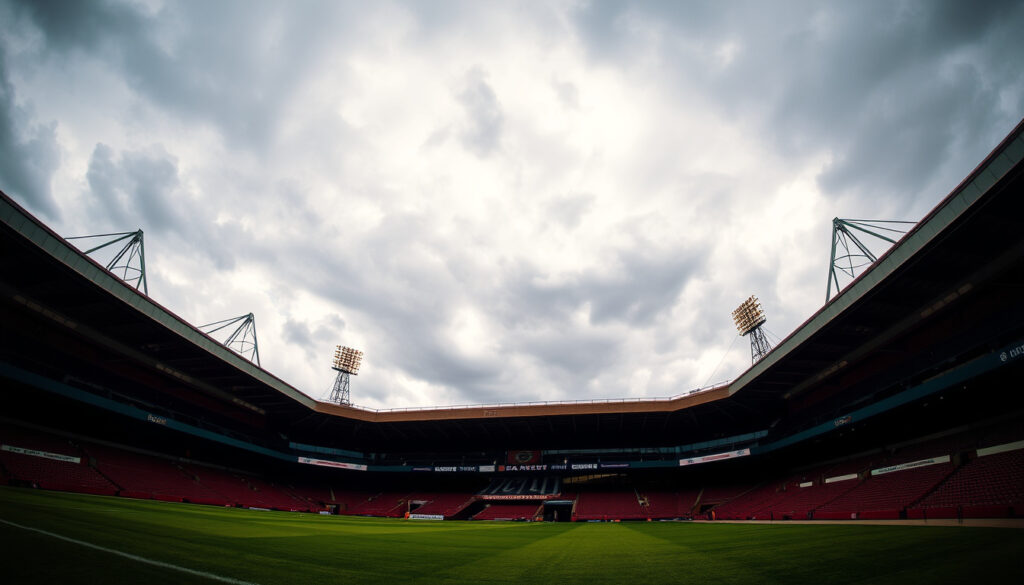
Birmingham City F.C.: League, History, Nickname & Stadium Guide
Ask a Birmingham City supporter for the club’s nickname and they’ll answer in one word: Blues. It’s a name that has outlasted relegations, ownership changes, and even the club’s own rebranding since 1875, when the team first formed in the Small Heath area of Birmingham (Soccerphile (stadium history archive)).
Founded: 1875 as Small Heath Alliance ·
Current league: EFL Championship ·
Home stadium: St Andrew’s @ Knighthead Park ·
Nickname: Blues ·
Most recent top-flight season: Premier League 2010–11
Quick snapshot
- Founded in 1875 as Small Heath Alliance (Soccerphile (stadium history archive))
- Current league: EFL Championship (Football.fm (Championship club profiles))
- Home ground since 1906: St Andrew’s (Football Tripper (stadium visitor guide))
- Who will manage the club by the start of next season
- Construction timeline for the planned 62,000-seat stadium
- Whether a new stadium would replace St Andrew’s or sit alongside it
- 1963: first League Cup win (Wikipedia (club encyclopedia entry))
- 2010–11: League Cup, followed by Premier League relegation (Wikipedia (club encyclopedia entry))
- 62,000-seat stadium plan on the table (BBC Sport (national broadcaster))
- Ground rebranded St Andrew’s @ Knighthead Park in 2024 (BBC Sport (national broadcaster))
- The rebuild’s real test: turning off-field investment into a top-six finish (BBC Sport (national broadcaster))
The pattern: the facts are stable, the future is not.
One look at the essentials, and Birmingham City’s identity is hard to miss: a 19th-century founding, a royal blue nickname, and a ground that has outlasted every league cycle since 1906.
| Label | Detail |
|---|---|
| Full name | Birmingham City Football Club |
| Nickname(s) | Blues |
| Founded | 1875 (as Small Heath Alliance) |
| Ground | St Andrew’s @ Knighthead Park |
| Capacity | 29,409 (Football Tripper (stadium visitor guide)) |
| Current league | EFL Championship |
| Major honours | League Cup: 1963, 2011 |
What this table shows: a club with deep roots but modest recent silverware.
What league is Birmingham City F.C. in?
Birmingham City play in the EFL Championship, the second tier of English football — and they have been there for every season since 2010–11, when League Cup success was followed by relegation from the Premier League (Wikipedia (club encyclopedia entry)).
Half of Birmingham’s ten recorded Championship finishes have been 17th or worse — a pattern closer to survival than to promotion.
- Best finish since relegation: 4th in the 2011/12 Championship (Football.fm (Championship club profiles))
- Multiple Championship campaigns since 2010/11, per the club’s Football.fm profile (Football.fm (Championship club profiles))
The pattern: one play-off push, then a string of bottom-half finishes — Birmingham’s Championship era has been defined by staying up, not threatening to go up.
What is the history of Birmingham City F.C.?
Birmingham City’s story is older than the club’s current name — and it starts not in the city centre but in Small Heath, on Birmingham’s east side.
Formation as Small Heath Alliance (1875)
- Founded in 1875 as Small Heath Alliance, in the Small Heath area of Birmingham (Soccerphile (stadium history archive))
- The club adopted its current name, Birmingham City F.C., in 1943 (Soccerphile (stadium history archive))
Trophies and near-misses
- Birmingham reached FA Cup finals in 1931 and 1956, losing both (Wikipedia (club encyclopedia entry))
- League Cup winners in 1963 and again in 2011 (Wikipedia (club encyclopedia entry))
A home at St Andrew’s since 1906
- St Andrew’s has hosted Birmingham City since 1906 (Football Tripper (stadium visitor guide))
- The ground was named after the adjacent St Andrew’s church to avoid confusion with the club’s old Muntz Street ground (Birmingham Mail (regional football coverage))
- Since 2024 the stadium has carried the sponsorship name St Andrew’s @ Knighthead Park (BBC Sport (national broadcaster))
What this means: the ground may collect new sponsor names, but the Small Heath-to-St Andrew’s address has anchored the club’s identity for more than a century.
What is Birmingham City F.C.’s nickname?
There is no real debate: Birmingham City’s nickname is Blues, and it has been for generations (Wikipedia (club encyclopedia entry)).
Origins of the nickname ‘Blues’
- The nickname comes from the royal blue kit the club has worn for most of its history (Wikipedia (club encyclopedia entry))
- Historical alternatives include ‘The Blue Boys’ and plain ‘City’ (Wikipedia (club encyclopedia entry))
Why the nickname matters
A colour-based nickname has outlasted every owner, every badge redesign and every relegation — in a turbulent club history, ‘Blues’ is the one brand that never changed.
The implication: when supporters talk about the Blues, they are claiming continuity — the same royal blue thread from 1875 to the next kickoff.
Birmingham City’s Championship track record
Ten recorded seasons since the Premier League exit, one pattern: a 4th-place peak in 2011/12, then figures that mostly sit in the bottom third of the Championship (Football.fm (Championship club profiles)).
| Season | Championship finish |
|---|---|
| 2011/12 | 4th |
| 2012/13 | 12th |
| 2013/14 | 21st |
| 2014/15 | 10th |
| 2015/16 | 10th |
| 2018/19 | 14th |
| 2019/20 | 21st |
| 2020/21 | 18th |
| 2021/22 | 21st |
| 2022/23 | 17th |
What this means: the ‘typical’ Birmingham season since relegation has ended between 17th and 21st — a survival band, not a promotion band.
Key dates in Birmingham City’s history
The dates below trace the club from Victorian foundations to the current rebuild.
- — club founded as Small Heath Alliance (Soccerphile (stadium history archive))
- — St Andrew’s becomes the permanent home (Football Tripper (stadium visitor guide))
- — current name adopted: Birmingham City F.C. (Soccerphile (stadium history archive))
- — League Cup winners, then Premier League relegation (Wikipedia (club encyclopedia entry))
- — St Andrew’s rebranded St Andrew’s @ Knighthead Park; 62,000-seat stadium plans announced (BBC Sport (national broadcaster))
Why this matters: every inflection point — 1875, 1906, 1943, 2011, 2024 — shows a club that keeps reinventing itself without dropping its institutional memory.
What’s confirmed, what’s not
Confirmed
- Founded in 1875 as Small Heath Alliance (Soccerphile (stadium history archive))
- Current league: EFL Championship (Football.fm (Championship club profiles))
- Nickname: Blues (Wikipedia (club encyclopedia entry))
- Home ground: St Andrew’s, in use since 1906 (Football Tripper (stadium visitor guide))
Still unclear
- Manager situation at the time of writing
- Construction timeline for the planned 62,000-seat stadium
- Whether a new stadium would replace or complement St Andrew’s
- Whether off-field investment translates into a promotion push
The catch: everything in the confirmed column is history; everything in the unclear column is about what happens next.
What the sources say
Founded in 1875 as Small Heath Alliance, the club later took the name it still wears: Birmingham City F.C., adopted in 1943.
— Soccerphile, stadium history archive
St Andrew’s has been Birmingham City’s home since 1906, and the ground’s name reaches back to the church next door.
— Football Tripper, stadium visitor guide; Birmingham Mail, regional football coverage
Why this matters: the sources agree on the club’s spine — old foundations, a stable home, a durable nickname — while the league table keeps changing.
The verdict
Birmingham City are a historic club trying to become a project again. The confirmed facts are all in the past — 1875 founding, the Blues identity, St Andrew’s since 1906 — while the unclear ones are all about the future: a 62,000-seat stadium, a manager search, and whether the rebuild outperforms the club’s own recent record. For Birmingham City supporters, the choice is clear: trust the rebuild and the stadium plan, or settle for more seasons like 17th, 18th and 21st — because those are the finishes that have defined the club’s recent history.
bcfc.com, en.wikipedia.org, worldsoccerpins.com, aroundthegrounds.org, footballgroundguide.com, footballtripper.com, aotearavoice.nz
Frequently asked questions
What is the capacity of St Andrew’s?
The stadium is listed with a capacity of 29,409 (Football Tripper (stadium visitor guide)).
Is Birmingham City building a new stadium?
Birmingham City have announced plans for a new 62,000-seat stadium, but the construction timeline has not been confirmed (BBC Sport (national broadcaster)).
Has Birmingham City F.C. ever played in the Premier League?
Yes — most recently in 2010–11, a season that brought a League Cup win and ended with relegation (Wikipedia (club encyclopedia entry)).
When did Birmingham City last win a major trophy?
In 2011, when the Blues won the League Cup; the club’s first League Cup triumph came in 1963 (Wikipedia (club encyclopedia entry)).
What does St Andrew’s @ Knighthead Park mean?
It is the sponsored name for St Andrew’s, adopted in 2024 after a naming-rights agreement (BBC Sport (national broadcaster)).
The quick answers are the stable ones; the answers that move — fixtures, form, transfer windows — belong on the club’s own channels.
Related reading
More related posts
 Tattle Life Sebastian Bond: Founder, Court Case, and Legal Woes
 Tomorrow’s Racecards at the Races: Meetings, Tips & Jockeys
 Dr Melaxin Peel Shot Review: Does It Work? Side Effects & Safety
 What Is Dubai Chocolate? Ingredients, Price & Where to Buy
 Jane Elizabeth Ebsworth Oriel: David Attenborough’s Wife
 Homestore and More Limerick: Still Open, Location & Deals
 Campervans for Sale in Ireland: Prices & Where to Buy
 Sick Pay Ireland 2026: Days, Rates & Rules Explained
