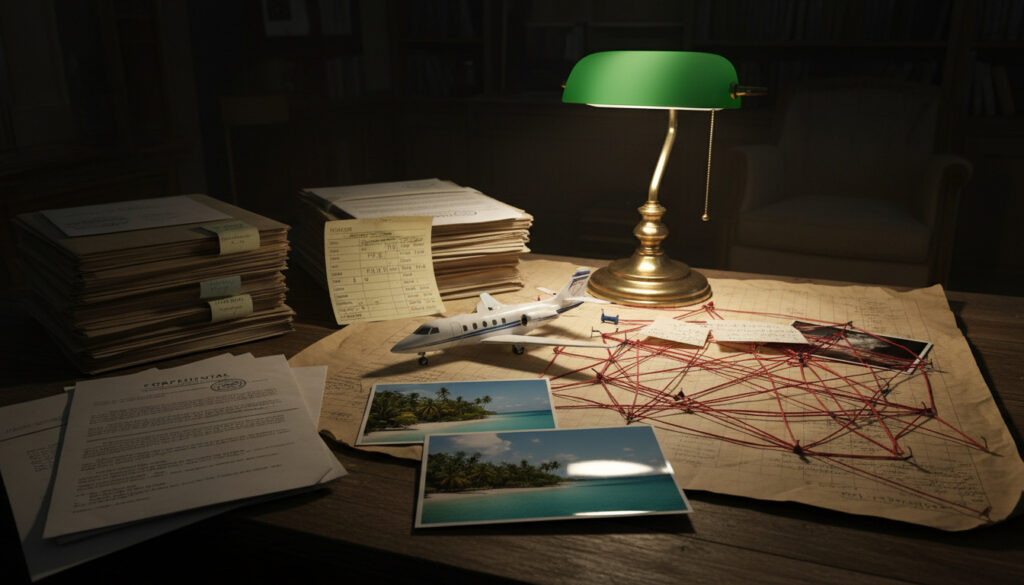
Donald Trump Bill Clinton – Verified History Timeline and Epstein Ties
Donald Trump and Bill Clinton maintained a cordial social and business relationship spanning from the 1990s through the early 2010s, characterized by mutual public praise, shared attendance at high-profile events, and overlapping membership at Trump’s Mar-a-Lago club. Their association underwent a dramatic reversal during the 2015-2016 election cycle, transforming from friendly rapport into political antagonism as Trump leveraged Clinton’s personal scandals against Hillary Clinton’s presidential campaign.
The trajectory of their interactions reflects the convergence of New York real estate, Florida social circles, and national politics. While both men moved within similar elite networks—including connections to Jeffrey Epstein—available documentation establishes no record of joint flights, coordinated business ventures, or explicit social contracts such as golf partnerships. The evolution from wedding guests to debate-stage adversaries offers a case study in how political utility reshapes personal alliances.
Examining primary interviews, club membership records, and congressional documents reveals a relationship built on pragmatic social navigation rather than ideological alignment. Trump’s documented statements shifted from defending Clinton during impeachment proceedings to attacking his character as a campaign strategy, while Clinton maintained public silence on Trump until the electoral contest necessitated response.
What is the relationship between Donald Trump and Bill Clinton?
The association between Trump and Clinton functioned primarily as a social connection rooted in shared geographic and economic strata. From 1998 through 2013, both men publicly acknowledged friendly ties, with Trump offering repeated defenses of Clinton’s conduct during personal scandals and Clinton attending Trump’s 2005 wedding in Palm Beach.
Mutual praise during impeachment, wedding attendance, and Mar-a-Lago membership established a decade of cordial interaction documented in television interviews and newspaper profiles.
Both maintained separate connections to Jeffrey Epstein through the 1990s and 2000s, though flight records and testimony show no confirmed joint travel or coordinated activities.
Trump’s presidential campaign marked a rupture, shifting from describing Clinton as a friend to accusing him of sexism and enabling misconduct as electoral strategy against Hillary Clinton.
No documented interactions have occurred since 2016, with both figures maintaining public silence on their prior social history outside campaign contexts.
Key observations include:
- Impeachment Defense: Trump publicly dismissed the Lewinsky scandal’s severity in 1998, attributing Clinton’s troubles to “bad advice” rather than moral failure.
- Wedding Attendance: Both Clintons attended Trump’s January 2005 marriage to Melania at Bethesda-by-the-Sea Episcopal Church, with Bill Clinton participating in reception festivities.
- Club Membership: Trump confirmed in a 2013 interview that the Clintons were members of Mar-a-Lago, stating, “I like both of them very much.”
- Epstein Separation: Despite mutual acquaintance with Epstein, no manifests or testimony place Trump and Clinton on the same flights or island visits.
- Rhetorical Shift: By 2015, Trump transformed Clinton from a “great president” prospect into a target of “women abuse” allegations.
- Pragmatic Basis: Trump characterized the relationship as business necessity, noting he “got along with everybody” when seeking approvals in New York.
- Documentation Gaps: No phone logs, golf scorecards, or attendance records provide granular detail on interaction frequency.
The following details mark specific moments in their association:
| Fact | Date/Detail | Source Basis |
|---|---|---|
| Trump defends Clinton on Lewinsky scandal | August 1998, CNBC interview | Politico archival reporting |
| Trump calls Linda Tripp “personification of evil” | January 2000, interview with Gov. Jesse Ventura | Politico archival reporting |
| Clintons attend Trump wedding | January 2005, Bethesda-by-the-Sea, Palm Beach | Politico archival reporting |
| Trump praises Hillary Clinton on CNN | 2007, “terrific” person descriptor | Politico archival reporting |
| Trump dismisses impeachment as “nonsense” | 2008, CNN interview contrasting with Bush wars | Politico archival reporting |
| Trump confirms Clinton friendship | October 2013, Larry King interview | Politico archival reporting |
| Trump accuses Clinton of “women abuse” | 2015 campaign statements | Politico archival reporting |
| Clinton flew Epstein jet post-presidency | Early 2000s, relationship cooled by 2003 | Wikipedia cited sources |
| House committee references Epstein tapes | February 2025, congressional record | House Judiciary documents |
The Trump-Clinton friendship history reveals a pattern of transactional cordiality common among New York elites, though the specific depth of personal versus professional motivation remains unquantified in available records.
Did Donald Trump and Bill Clinton know Jeffrey Epstein?
Both Trump and Clinton maintained documented relationships with Jeffrey Epstein independent of one another, though the nature and duration of these connections differed significantly. Clinton’s association began during his presidency with White House visits and extended into post-presidential charity work involving flights on Epstein’s aircraft. Trump’s connection centered on social interactions at Mar-a-Lago and Palm Beach social functions.
Did Trump and Clinton fly together on Epstein’s plane?
No available flight manifests, congressional testimony, or investigative reports confirm that Trump and Clinton traveled together on Epstein’s private jet. Clinton utilized Epstein’s aircraft for international travel related to Clinton Foundation activities during the early 2000s, with records indicating the relationship strained significantly by 2003. Secret Service documentation has not confirmed allegations that Clinton visited Epstein’s Little St. James island property, despite references in victim testimony suggesting Epstein’s associates claimed Clinton’s presence.
House Judiciary Committee documents from February 2025 reference Epstein-related video tapes naming both Trump family members and Clinton separately, but contain no indication of coordinated travel or joint presence on Epstein’s island or aircraft. Clinton’s documented flights occurred primarily between 2001-2003 for charitable foundation work.
Virginia Giuffre’s memoir references Ghislaine Maxwell’s boasts regarding telephone contact with Clinton to arrange Epstein visits, though these accounts describe coordination efforts rather than confirmed attendance. Trump’s presence in Epstein’s social orbit during the 1990s and 2000s focused on Mar-a-Lago gatherings, with no equivalent flight documentation linking Trump to Epstein’s aviation network comparable to Clinton’s travel records.
Why did Trump ban the Clintons from Mar-a-Lago?
Contrary to widespread speculation, primary sources do not substantiate claims that Trump banned the Clintons from Mar-a-Lago. Through at least 2013, Trump publicly identified the Clintons as club members and welcomed guests, describing Bill Clinton as someone who “likes me” and who he “like[s] very much.” The notion of a formal ban appears to be a retrospective inference drawn from the political rupture of 2015-2016 rather than documented club policy changes.
Did Trump and Clinton play golf together?
Specific golf partnerships between Trump and Clinton remain unverified in available sources. While both men maintained memberships at elite clubs and Trump famously utilized golf as a social and business mechanism, no scorecards, photographs, or eyewitness accounts confirm direct competition or leisure rounds between the two. Their documented interactions center on formal events rather than athletic competition.
What phone calls did Trump make to Bill Clinton?
No telephone logs or recorded conversations between Trump and Clinton have been released to the public domain. Trump’s October 2013 interview with Larry King suggested direct communication, with Trump stating that Clinton had expressed personal liking for him, though the frequency, date, or substance of such calls remains undocumented.
Did Bill Clinton attend Trump’s events?
Clinton’s attendance at Trump’s January 2005 wedding to Melania Knauss at Bethesda-by-the-Sea Episcopal Church in Palm Beach stands as the most documented social intersection. Hillary Clinton joined him at the reception, where photographs captured their presence among high-profile guests. Trump later suggested Clinton’s attendance related to campaign donations, though financial records cited by Politico did not establish a direct quid pro quo.
Despite online claims of a 2016 “ban,” Trump’s 2013 statements confirm the Clintons maintained Mar-a-Lago membership during his ownership. Any status change after 2013 lacks confirmation in reviewed primary sources, indicating the social rupture may have manifested through mutual avoidance rather than formal expulsion.
What did Trump say about Bill Clinton in the past?
Trump’s public statements regarding Clinton underwent a complete inversion between 1998 and 2015. During Clinton’s impeachment proceedings and subsequent years, Trump consistently minimized Clinton’s misconduct, attacked those exposing the scandals, and praised Clinton’s presidential potential. By 2015, Trump repurposed these same scandals as political weapons against Hillary Clinton’s candidacy.
Between August 1998 and October 2013, Trump gave at least five major interviews (CNBC, New York Times, CNN, Larry King) defending or praising Clinton. No post-2013 praise appears in the record; the shift to criticism coincided precisely with Trump’s presidential campaign announcement. You can find more details about Donald Trump’s business dealings at Donald Trump Truth Social.
In September 1999, Trump told the New York Times that Clinton could have been “a great president” absent the Lewinsky scandal, which Trump characterized as handled “disgracefully.” By January 2000, Trump attacked Linda Tripp—whose recordings exposed Clinton’s affair—as “the personification of evil,” blaming her rather than Clinton for the political fallout. During a 2008 CNN appearance, Trump dismissed the impeachment as “nonsense” and “totally unimportant” compared to foreign policy matters.
The 2016 campaign brought a rhetorical reversal. Trump accused Clinton of having a “terrible record of women abuse,” invited Clinton’s accusers including Paula Jones and Juanita Broaddrick to a presidential debate, and criticized Hillary Clinton’s use of a “women’s card” while highlighting her husband’s past conduct. Biographical records confirm Clinton faced multiple misconduct allegations during this period, though Trump’s 1990s defenses had previously dismissed these matters as politically motivated.
How did Trump and Clinton’s relationship change over time?
The chronological arc moves from social convergence to electoral combat, marked by specific documented milestones:
- Paula Jones files harassment lawsuit against Clinton; Trump has not yet entered political commentary sphere regarding Clinton personally.
- Trump defends Clinton on CNBC during Lewinsky scandal, sympathizing: “I really like this guy, but… Where does it stop?” Source
- Trump tells New York Times Clinton could be “a great president” without the scandal. Source
- Trump labels Linda Tripp “the personification of evil” alongside Gov. Jesse Ventura. Source
- Bill and Hillary Clinton attend Trump’s wedding in Palm Beach. Source
- Trump praises Hillary Clinton as “terrific” on CNN. Source
- Trump dismisses Clinton impeachment as “totally unimportant” on CNN. Source
- Trump confirms ongoing friendship with Clintons on Larry King, noting Bill “said he likes me.” Source
- Trump pivots to attacking Bill Clinton’s “record of women abuse” during campaign launch. Source
- Trump invites Clinton accusers to presidential debate; Clinton accusers appear alongside Trump. Source
What is established versus unclear about their relationship?
Separating documented fact from speculative claims requires careful distinction between social inference and concrete evidence.
| Established Information | Information That Remains Unclear |
|---|---|
| Social friendship documented 1998-2013 through interviews and event attendance | Specific frequency of phone calls or private meetings |
| Clinton attendance at 2005 Trump wedding confirmed by multiple sources | Whether Clinton visited Epstein’s Little St. James island (Secret Service records unclear) |
| Mar-a-Lago membership for Clintons confirmed through 2013 | Existence of a formal “ban” on Clintons from Mar-a-Lago post-2016 |
| Both men knew Epstein independently in 1990s-2000s | Any joint flights or coordinated Epstein-related travel |
| Trump’s 2015-2016 attacks on Clinton’s character documented | Business partnerships or financial transactions between Trump and Clinton entities |
| Trump defended Clinton during 1998 impeachment on record | Golf rounds or athletic competitions between the two men |
What social and political context shaped their interactions?
New York’s real estate and social infrastructure provided the primary ecosystem for Trump and Clinton’s intersection. As a developer requiring municipal approvals and zoning variances, Trump operated within networks that included Democratic politicians and fundraising circles. Clinton’s post-presidency foundation work and speaking engagements created overlap with Trump’s event-hosting at Mar-a-Lago, a venue designed specifically for elite social consolidation.
The transformation from personal rapport to political weaponry reflects broader patterns of electoral competition. Trump’s 2016 strategy recognized that Clinton’s established personal scandals, which Trump had previously dismissed as irrelevant or overstated, provided asymmetric ammunition against a female opponent running on experience and stability. By inviting Clinton’s accusers to debate venues, Trump forced a public reckoning with history he had previously characterized as “nonsense,” demonstrating how social familiarity converts into tactical advantage when private knowledge becomes public attack surface.
The Washington Post political archives and contemporaneous reporting confirm that both men understood their interactions as transactional—Trump explicitly noting he “got along with everybody” when seeking business approvals, while Clinton’s attendance at Trump’s wedding served mutual social capital accumulation within Palm Beach’s seasonal elite.
What do primary sources reveal about their relationship?
Direct quotations from interviews provide unfiltered insight into Trump’s shifting perspective:
“I really like this guy, but… Where does it stop? He’s got a bad advice-giver.”
— Donald Trump, August 1998, CNBC interview regarding Clinton’s Lewinsky scandal
“He could have been a great president… He handled it disgracefully. But he could have been a great president.”
— Donald Trump, September 1999, New York Times interview
“I know her very well… I like both of them very much. Bill said he likes me.”
— Donald Trump, October 2013, Larry King interview regarding the Clintons
“He has a terrible record of women abuse… He has a terrible record of women abuse.”
— Donald Trump, 2015 campaign statements regarding Bill Clinton
What defines the Trump-Clinton relationship arc?
The relationship between Donald Trump and Bill Clinton represents a trajectory from social convenience to political collision, spanning three decades of New York and Florida elite circles. Documented evidence establishes cordial interaction from 1998 through 2013, including mutual defenses and wedding attendance, followed by a documented rupture in 2015 when electoral competition transformed private familiarity into public antagonism. The absence of confirmed joint Epstein travel, golf partnerships, or phone logs leaves significant interaction details unverified, though the broad arc from Donald Trump and Bill Clinton relationship friendship to debate-stage hostility remains clearly established in primary sources.
Frequently asked questions
Did Donald Trump visit Epstein’s Little St. James island?
Available flight records and testimony do not confirm Trump visited Epstein’s private island. Unlike Clinton, whose post-presidential Epstein jet travel is documented, Trump’s Epstein interactions appear limited to social settings like Mar-a-Lago.
What financial donations connected Trump and the Clintons?
Trump claimed Clinton attended his 2005 wedding due to campaign donations, though Politico’s review of records did not establish a direct transactional link. Specific donation amounts and timing remain unspecified in primary sources.
Did Trump and Clinton maintain contact during the 2016 election?
No documented contact occurred during the 2016 campaign. Trump publicly attacked Clinton’s character while inviting Clinton’s accusers to debate events, indicating a complete cessation of private cordiality.
How did Trump describe Clinton during the Lewinsky impeachment?
Trump defended Clinton extensively in 1998-2000, calling the impeachment “nonsense” and labeling Linda Tripp “the personification of evil” for exposing the affair, while sympathizing with Clinton’s “bad advice” problem.
When did Trump stop praising Bill Clinton?
Trump’s last documented praise occurred in October 2013. By 2015, he had shifted entirely to criticism, accusing Clinton of sexism and abuse as part of his presidential campaign strategy against Hillary Clinton.
Did Bill Clinton visit Trump’s properties other than Mar-a-Lago?
Primary sources confirm Clinton’s attendance at Trump’s 2005 wedding venue and Mar-a-Lago membership. No additional property visits are documented in available records or interview archives.
More related posts
 When Does Wimbledon Start? 2026 Dates, TV & Tickets
 France v New Zealand Rugby: Scores, History & How to Watch
 Jackpot108 Slot Review: Games, Login, and Play Guide
 Google Pixel 10 Pro XL – Release Date, Price and Specs
 Cast of Barbie (2023) – Full Actors and Characters List
 Find a Grave Ireland: Free Search for Burial Records & Cemeteries
 Easter Art for Kids: Fun Drawings and Crafts
 Dr Melaxin Peel Shot Review: Does It Work? Side Effects & Safety
