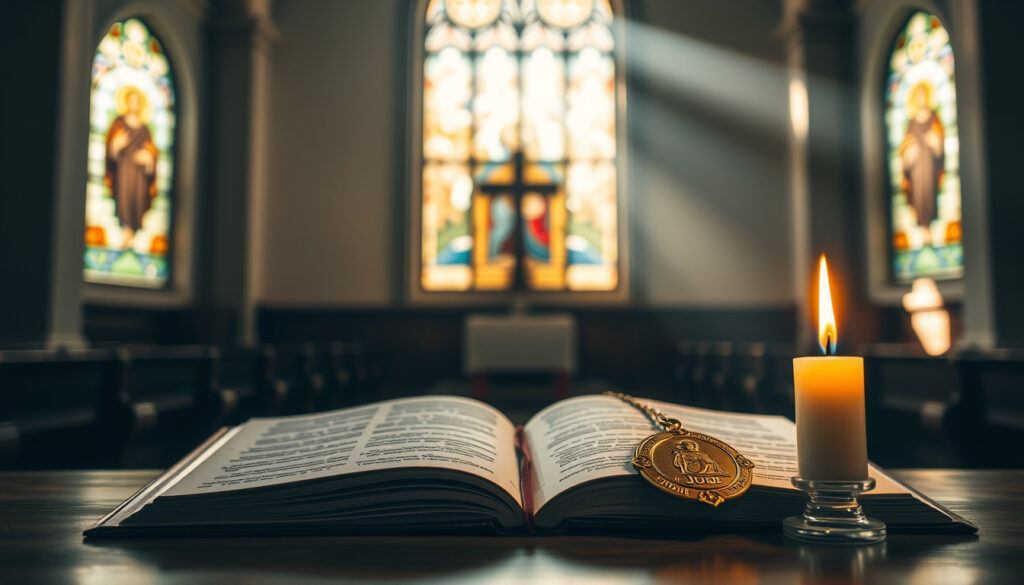
Prayer to St. Jude: The Powerful Prayer That Never Fails
There are moments when life feels like a dead end — a diagnosis that shakes you, a financial hole that keeps widening, a relationship that seems beyond repair. In those moments, millions of people, Catholic or not, find themselves typing a simple plea into a search bar: a prayer to St. Jude, the saint of hopeless causes.
Patronage: Hopeless causes, desperate situations · Feast Day: October 28 · Traditional Prayer Origin: 19th century · Popular Devotion: Novena to St. Jude
Key Facts at a Glance
- Hopeless causes, desperate situations
- Flame around head, club, medallion with Jesus
- October 28
- Novena to St. Jude
Who Is St. Jude and Why Do People Call Him the Saint of the Impossible?
St. Jude Thaddeus was one of the twelve apostles of Jesus Christ, and he is distinct from Judas Iscariot, the betrayer. The Gospels list him as “Jude” or “Thaddeus,” and the Catholic Church has long venerated him as the patron of hopeless causes and desperate situations. The title “Apostle of the Impossible” comes from his intercession in cases where human effort has failed and divine help seems like the only option. According to the National Shrine of St. Jude (official shrine of the Claretian Missionaries), the devotion grew significantly in the 19th century, and the shrine has become a focal point for those seeking his help.
Why “hopeless causes”? Tradition holds that St. Jude, having been martyred for his faith, understands what it means to face impossible odds. The Shrine of St. Jude (the national shrine in Chicago) describes three preached novenas each year, three non-preached novenas, a preached triduum, and a month-long commemoration of the faithful departed during November, all centered on this very devotion.
What Is the St. Jude Prayer That Never Fails?
The prayer most commonly associated with “never fails” is the St. Jude Novena, typically prayed for nine consecutive days. The traditional text is simple but earnest: “Most holy Apostle, St. Jude, faithful servant and friend of Jesus, the Church honors and invokes you universally as the patron of hopeless cases, of things despaired of. Pray for me, who am so miserable. Make use of that particular privilege accorded to you to bring visible and speedy help where help is almost despaired of. Come to my assistance in this great need that I may receive the consolation and help of heaven in all my necessities, tribulations, and sufferings, particularly (here make your request) and that I may bless God with you and all the elect forever. I promise you, O blessed St. Jude, to be ever mindful of this great favor, to always honor you as my special and powerful patron, and to gratefully encourage devotion to you. Amen.”
Another widely used version, often called the “Prayer to St. Jude Novena” by the Catholic Church Times (a recognized Catholic publication) is shorter and direct: “St. Jude, hope of the hopeless, pray for us.” The full text can be found at the St. Jude Shrine (the official shrine administered by the Dominican Friars).
What makes it “never fails” isn’t the wording — it’s the devotion. The phrase refers to the consistent intercession of St. Jude for those who pray with faith, not a guarantee of receiving exactly what you ask. The Catholic Church Times explains that the prayer can also be prayed on the 28th of any month, which it attributes to a Solemn Novena day observed at the National Shrine.
What Is the Miracle Prayer That Works Instantly?
There is no prayer that works “instantly” in the sense of a magic spell. What people often call the “miracle prayer” is a short, fervent prayer said with complete trust. A common one is the “Prayer to the Holy Spirit” or a direct plea: “Come, Holy Spirit, fill the hearts of your faithful and kindle in them the fire of your love.” For St. Jude specifically, the “never fails” novena is often referred to as a miracle prayer because of the many reported conversions and healings attributed to it. The National Shrine of St. Jude notes that the novena’s power lies in its persistence over nine days, reflecting the nine days the apostles spent in prayer between the Ascension and Pentecost.
If you’re looking for a “miracle” prayer, the St. Jude novena is the closest Catholic tradition comes to a direct line for urgent needs. The key is that it’s a prayer of petition, not a demand.
What Is the Catholic Miracle Prayer?
The Catholic miracle prayer most often invoked for desperate situations is the St. Jude novena, but the Church also recognizes other powerful intercessory prayers such as the 3-Day Miracle Prayer to the Sacred Heart of Jesus, the Prayer to the Holy Spirit, and the 3-Day Prayer to St. Joseph. All share a common structure: persistent petition over several days, rooted in trust in God’s will. The St. Jude novena, however, remains the most popular due to its specific association with hopeless causes.
What Is a Powerful Healing Prayer That Never Fails?
The Catholic Church doesn’t have one single “miracle healing prayer,” but the St. Jude Novena is often prayed for physical and emotional healing. The prayer text itself asks for “consolation and help of heaven in all my necessities, tribulations, and sufferings,” which includes illness. Many people also combine it with the Prayer to St. Jude for Healing, which reads: “St. Jude, you were chosen by Jesus to be one of His apostles. You are known as the patron of hopeless causes. Look upon me with compassion and intercede for my healing. Restore me to health and strength, and fill me with hope and peace. I ask this in Jesus’ name. Amen.”
The Shrine of St. Jude in Chicago offers novena services daily at 5:30 p.m. Central Time, where healing intentions are lifted up, and the shrine’s community prays with the faithful.
What Should You Not Do When Praying?
This is a crucial question, and the answer is grounded in Catholic teaching on prayer. The Church is clear that you should not pray with doubt or lack of faith. The Catholic Church Times advises that when you pray the novena, you should believe that God hears you, even if the answer is not what you expect. Another thing to avoid is treating prayer as a commercial transaction — “if I pray nine days, I get my wish.” That’s superstition, not faith. The Catechism of the Catholic Church teaches that prayer is a relationship, not a formula.
Also, don’t abandon the prayer after the novena ends. The tradition is to give thanks whether or not you see an immediate answer, and to continue praying even for the same intention. Many devotees report that their prayers were answered in ways they didn’t anticipate, which is why the “never fails” promise holds up — because God never fails to respond, even if the response is different from what was asked.
How to Pray the St. Jude Novena That Never Fails (Step-by-Step)
If you’ve decided to pray the novena, here is how to do it faithfully:
- Set a time: Choose a consistent time each day for nine days. Many people pray at 5:30 p.m., aligning with the Shrine’s daily novena service in Chicago, but any consistent time works.
- Begin with intention: State your specific intention clearly, whether it’s healing, financial help, a relationship, or a hopeless situation.
- Pray the novena text: Use the traditional prayer to St. Jude listed above, or the shorter version from the St. Jude Shrine.
- Add personal reflection: Spend a few minutes thinking about the situation you’re praying for, trusting that God is with you.
- Close with thanksgiving: Always thank St. Jude and God, believing that your prayer has been heard.
- Continue after the novena: Some people pray the novena for an extra day of thanksgiving if their prayer is answered, which is a common Catholic practice.
You can also pray the St. Jude prayer as a one-time plea, not just a novena — the “never fails” reputation is tied to the novena, but any sincere prayer is heard.
Prayer to St. Jude: The Powerful Prayer That Never Fails (And the Truth Behind It)
Here’s the full, traditional text of the prayer that has earned the “never fails” reputation. It’s adapted from the version used at the St. Jude Shrine (the national shrine staffed by the Dominican Order):
“Most holy Apostle, St. Jude, faithful servant and friend of Jesus, the Church honors and invokes you universally as the patron of hopeless cases, of things despaired of. Pray for me, who am so miserable. Make use of that particular privilege accorded to you to bring visible and speedy help where help is almost despaired of. Come to my assistance in this great need that I may receive the consolation and help of heaven in all my necessities, tribulations, and sufferings, particularly (here make your request) and that I may bless God with you and all the elect forever. I promise you, O blessed St. Jude, to be ever mindful of this great favor, to always honor you as my special and powerful patron, and to gratefully encourage devotion to you. Amen.”
Traditional prayer, as prayed at the National Shrine of St. Jude (Shrine of St. Jude, Chicago)
A shorter, equally powerful version used in daily devotion is:
“St. Jude, hope of the hopeless, pray for us. St. Jude, patron of desperate cases, pray for us. St. Jude, friend of Jesus, pray for us.”
Short invocation from the Catholic Church Times
The stories of answered prayers — whether healings, reconciliations, or financial reversals — are widespread, and the National Shrine collects thousands of testimonials annually. The devotion isn’t about a magic formula; it’s about placing your trust in a saint who understands despair.
Prayer to St. Jude: A Guide to the Miracle Prayer That Never Fails
Let’s address the most common questions people have about this prayer.
What is the St. Jude prayer that never fails?
The prayer is the novena to St. Jude, prayed for nine consecutive days with a specific intention. The “never fails” designation comes from the countless testimonies of faithful who have seen their prayers answered, but the Church clarifies that the prayer’s reliability rests on God’s mercy, not a guaranteed outcome.
What is the 3-day miracle prayer that never fails?
There is no official 3-day St. Jude prayer in the Catholic Church. The novena is traditionally nine days, but some people pray a shorter version for urgent needs, such as repeating the “St. Jude, hope of the hopeless” invocation for three days. However, the Church’s official devotional practice favors the nine-day novena.
What is a powerful healing prayer that never fails?
A powerful healing prayer that is often called “never fails” is the Prayer to St. Jude for Healing, which asks for physical and spiritual restoration. The key to its power, according to the Shrine’s teaching, is the faith of the person praying and the intercession of St. Jude before God.
What is the prayer to the Holy Spirit that never fails?
The “Come, Holy Spirit” prayer is often called a “never fails” prayer because it invites the Holy Spirit to guide and strengthen, which the Church teaches is always granted. The text is: “Come, Holy Spirit, fill the hearts of your faithful and kindle in them the fire of your love.” This prayer is never “unanswered” because the Holy Spirit is always present to those who ask.
What should you not do when praying?
As mentioned, you should not pray with doubt or treat prayer as a magical transaction. The Catholic Church Times stresses that the enemy of prayer is presumption — assuming you know exactly how and when God should answer. Instead, pray with humility and trust, and be open to God’s will.
Why “Never Fails” Is Both True and Misunderstood
The phrase “never fails” is a devotional expression, not a doctrinal guarantee. It means that St. Jude, as the patron of hopeless causes, will always present your case to God with compassion. It does not mean you will receive the exact outcome you request. The Catechism of the Catholic Church teaches that God answers every sincere prayer, but sometimes the answer is “no,” “wait,” or “I have something better.”
The theological reality is that prayer is about aligning your will with God, not the reverse. When you pray to St. Jude, you’re not forcing God’s hand; you’re joining a community of believers who trust in God’s goodness even when circumstances look bleak.
shrineofstjude.org, stjude-shrine.org, stjude-shrine.org, stjudeshrine.org, shrineofstjude.org, rosaryshrineofstjude.org, catholic-repository.org, shrineofstjude.org
Frequently Asked Questions
Is the St. Jude prayer appropriate for non-Catholics?
Yes. Many non-Catholics pray to St. Jude because they respect his role as a biblical figure and a companion in suffering. The prayer is not a sacrament; it’s a personal devotion that can be adapted. The Church welcomes all who seek God’s help.
Can I pray the novena more than once for the same intention?
Absolutely. There is no limit to how many times you can pray the novena. Many people pray it repeatedly until they receive peace about a situation, whether the prayer is answered or not. The tradition encourages persistence.
What if I forget a day in the middle of the novena?
If you miss a day, you can simply start over, or continue and acknowledge the gap. The novena is not a legalistic requirement; it’s a rhythm of devotion. The Shrine in Chicago suggests that if you miss a day, just continue with the next day’s prayer — God’s mercy isn’t bound by a calendar.
Is it okay to pray for material things like money?
Yes, you can pray for material needs. The Catholic tradition encourages bringing all your concerns to God, including financial ones. However, the Church also teaches that your prayer should be balanced with a willingness to accept God’s will for your life.
Does the “never fails” promise mean I will get exactly what I ask for?
No. The phrase means that St. Jude will always intercede for you with compassion, but the outcome is always God’s decision. Some prayers are answered with healing, others with strength to endure, and others with a change in perspective. The “never fails” part is that you will always receive the grace you need.
What is the history behind the St. Jude devotion in the United States?
The devotion became popular in the U.S. in the early 20th century, largely due to the work of the Claretian Missionaries, who established the National Shrine in Chicago. Their promotion of the novena during the Great Depression and World War II turned St. Jude into a household name for desperate prayers.
Are there any scientific studies on the effectiveness of prayer?
There have been studies on intercessory prayer, but with mixed and inconclusive results. The Catholic view is that prayer is not subject to scientific validation because it operates in the spiritual realm. The value of prayer is in its relationship with God, not in measurable outcomes.
Can you pray the St. Jude prayer on behalf of someone else?
Yes, this is a common practice. You can offer the novena for a friend, family member, or anyone in need. Intercessory prayer is a cornerstone of Catholic devotion, and the St. Jude novena is often prayed for others who are suffering.
Final Thought: The Prayer That Never Fails Is the Prayer of Trust
When you pray to St. Jude, you’re not gambling on a 19th-century formula; you’re entering a tradition of hope that has sustained millions through their darkest hours. The “never fails” promise isn’t about getting everything you want — it’s about knowing you’re never alone. Whether you pray the nine-day novena, a short invocation on the 28th of the month, or simply whisper “St. Jude, pray for me” in a moment of panic, you’re joining a spiritual community that believes hope is never wasted. The true miracle of the prayer is the peace it brings, even before the answer comes.
More related posts
 What Is Dubai Chocolate? Ingredients, Price & Where to Buy
 Car Hire Faro Airport: Best Companies, Prices & Reviews
 Back Home in Derry Lyrics: Meaning, Author, and Origins
 Find My Phone Google – Locate Ring Lock or Erase Android
 Why Am I Always Tired? Causes, Red Flags, and Quick Fixes
 Ryanair Share Price Euro: Live €22.60 on Euronext Dublin
 Smart Casual Dress Code: A Practical Guide With Rules
 Tomorrow’s Racecards at the Races: Meetings, Tips & Jockeys
