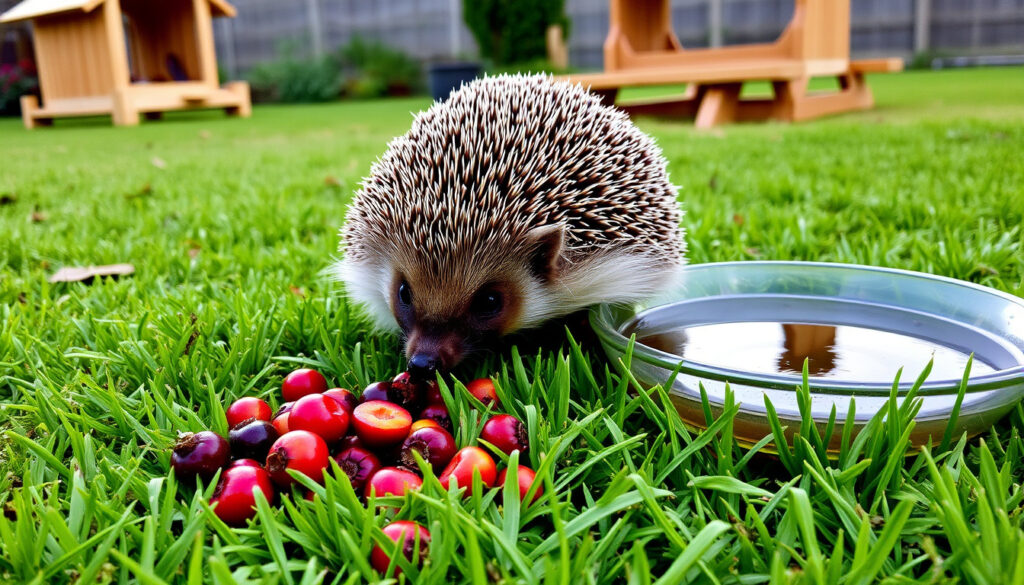
What Do Hedgehogs Eat? Diet & Safe Garden Feeding
You probably already know that hedgehogs are cute garden visitors. But the food you leave out might be doing more harm than good. Hedgehogs are insectivorous carnivores, and their bodies are simply not built to digest bread, milk, or sugary treats.
Main natural food source: Insects and other invertebrates ·
Typical invertebrate prey: Beetles, earwigs, caterpillars, earthworms, millipedes ·
Supplementary food (garden offerings): Cat or dog meat, high-quality wet pet food ·
Primary killer: Habitat loss and road traffic
Quick snapshot
- Wild diet: earthworms, beetles, caterpillars (Hedgehog Street)
- Milk causes diarrhea in hedgehogs (Hedgehog Street)
- Cat/dog meat is safe supplementary food (Hedgehog Street)
- Whether fruit provides any real nutritional benefit to hedgehogs (VCA Animal Hospitals)
- Exact prevalence of parasite transmission from bird feeding stations (VCA Animal Hospitals)
- Active season: March to October – hedgehogs are most likely to visit gardens during this window
- Breeding peaks May–September, meaning extra demand for high-protein food
- Make your garden hedgehog-friendly: safe food, fresh water, and no slug pellets
- Learn to spot when a hedgehog really needs help (e.g., out in daytime)
Four core facts about hedgehog diet and feeding.
The table below gives you a quick reference on hedgehog biology and behavior.
| Aspect | Value |
|---|---|
| Diet type | Insectivorous carnivore |
| Active season | March to October |
| Average lifespan | 2-5 years in wild |
| Predators | Badgers, foxes, dogs, owls |
The implication: hedgehogs need high-protein, low-carb food to stay healthy, and their natural predators are part of the ecosystem you should consider when planning a hedgehog-friendly garden.
What do hedgehogs eat in the wild?
- Main invertebrate prey: beetles, earwigs, caterpillars, earthworms, millipedes (Hedgehog Street)
- Occasional small vertebrates: frogs, mice, birds if available – but insects make up about 90% of the diet
Hedgehogs are not vegetarians. Their digestive system is adapted to chitin and protein, not plant fibre. The RSPCA wildlife rehabilitation guidance stresses that “every effort should be made to mimic the animal’s natural food as closely as possible.” (RSPCA Brighton PDF)
The catch: if you want to help garden hedgehogs, you need to offer food that mirrors their natural prey – meaty, high‑protein, low‑carb.
Can hedgehogs eat Weetabix?
- No. Weetabix and other breakfast cereals contain grains and sugars that hedgehogs cannot digest properly.
- Gardeners’ World warns against cereals, honey, and sugar, noting these ingredients are sometimes even found in so‑called hedgehog food. (Gardeners’ World)
Many well‑meaning people put out bread and Weetabix thinking it’s harmless. In reality, these foods can cause bloating, nutritional imbalances, and dehydration. The catch: hedgehogs may eat them because they’re hungry, but that doesn’t mean they’re good for them.
If you give fruit, keep it to a tiny piece of apple or melon no more than once a week and far less than 10% of total food volume. The risk of sugar overload outweighs any benefit.
What fruit can a hedgehog eat?
- Safe: small amounts of apple, melon, berries, bananas (VCA Animal Hospitals)
- Avoid: citrus, grapes, raisins, avocado (toxic), dried fruit (high sugar) (VCA Animal Hospitals)
Pro Igel, the German hedgehog welfare organisation, goes further and recommends that fruit should not be fed at all because it offers no nutritional value in a hedgehog’s diet. (Pro Igel)
The pattern: experts agree fruit is at best a very occasional treat, and many advise skipping it entirely.
What do hedgehogs eat and drink?
- Water: provide a shallow, clean dish of fresh water every day – never milk. Hedgehogs are lactose intolerant. (Hedgehog Street)
- Food: specialist hedgehog food, meat‑based wet cat/dog food (min 60% meat), cooked eggs, poultry, minced meat, bred insects (Pro Igel)
Pro Igel recommends a 50/50 mix of moist cat food and a protein source like egg or meat. Avoid ham, salted meats, and any leftovers from your plate.
What this means: the easiest safe meal for a garden hedgehog is a bowl of meat‑based cat/dog food in jelly, plus a drink of water. That’s it.
Should I put food out for hedgehogs every night?
- Yes, if you use safe food. Consistency helps hedgehogs rely on your garden as a feeding site. (Hedgehog Street)
- Put food out at dusk (when they become active) and remove any uneaten food in the morning to avoid attracting rats.
- Fresh water should always be available.
Gardeners’ World notes that uneaten cat food left overnight can attract pests, so a timed feeding routine is best. The pattern: set a consistent evening feeding time and clean up before dawn.
What is the main killer of hedgehogs?
- Habitat fragmentation and road traffic: the two biggest threats in the UK. (Hedgehog Street)
- Natural predators: badgers, foxes, dogs, and birds of prey.
- Garden hazards: netting, slug pellets, uncovered ponds, and strimmers.
The catch: even the best feeding station won’t save a hedgehog if your garden is full of dangers. A hedgehog‑friendly garden means no pesticides, no loose netting, and a ramp in ponds so they can escape.
Do hedgehogs sleep in the same place every night?
- No. Hedgehogs build several nests (hibernacula in winter, day nests in summer) and rotate between them. (Hedgehog Street)
- Females with hoglets will stay in one nest for the first few weeks.
- Males may move nests every few days to reduce parasite load and avoid predators.
The implication: a single hedgehog house in your garden might be used only occasionally – they simply have multiple addresses.
Pros & Cons of feeding garden hedgehogs
Upsides
- Helps hedgehogs in urban areas where natural prey is scarce
- Supports females during breeding season (May–September) when they need extra protein
- Allows you to monitor the health of local hedgehog populations
Downsides
- Inappropriate food (milk, Weetabix, peanuts) can cause illness or death
- Feeding stations can attract rats if not cleaned daily
- Over‑reliance on human food may reduce foraging behaviour, though evidence is limited
Step-by-step: how to safely feed hedgehogs
- Choose a sheltered spot away from busy roads and cats.
- Use a shallow dish for water (never milk). Refill daily.
- Offer meat‑based wet cat/dog food (no fish flavour, no gravy) or specialist hedgehog food. (Hedgehog Street)
- Put food out at dusk and remove leftovers at dawn to avoid attracting rats.
- Never give bread, milk, sunflower seeds, peanuts, or dried fruit. (Gardeners’ World)
- If you see a hedgehog out during the day or looking wobbly, contact a wildlife rescue. (RSPCA Brighton PDF)
A responsible feeder gets the benefit of supporting local hedgehogs but must commit to daily hygiene and proper food – otherwise the same bowl can become a health risk.
What’s unclear
As noted in the snapshot, it is not fully known whether fruit offers any real nutritional benefit to hedgehogs. Most authorities recommend avoiding it altogether. Another open question is how often hedgehogs catch parasites from bird feeding stations – few studies have been done.
Quotes from experts
“Insects and other invertebrates are the hedgehog’s main natural food source.”
Woodland Trust blog
“Wild hedgehogs eat a wide range of natural foods… worms, beetles, slugs, caterpillars, millipedes & earwigs.”
Hedgehog Street
“Hedgehogs are lactose intolerant, so milk should not be given to them.”
Hedgehog Street
“Lettuce and celery should be avoided because they are low in nutritional value.”
VCA Animal Hospitals
Summary
Getting the diet right for garden hedgehogs is simple but specific: high‑protein, low‑carb, no dairy. For the average UK gardener, the choice is between helping hedgehogs thrive or inadvertently causing harm. Stick to meaty cat/dog food and fresh water, remove uneaten food by morning, and your garden will be a genuine hedgehog haven – not just a buffet with hidden dangers.
Related reading: Can Dogs Eat Peppers? Safety, Risks & Serving Guide
chewy.com, petmd.com, nationaljournal.uk, rspca-brighton.org.uk, thehedgehog.co.uk, seagomacwildlife.co.uk, helpingalllittlethings.org, catbreedslist.com
Gardeners looking to support local hedgehogs can consult a comprehensive hedgehog diet guide for safe feeding practices.
Frequently asked questions
Can hedgehogs eat bread?
No. Bread provides no nutrition and can cause digestive issues. Hedgehogs need protein, not grains.
Do hedgehogs drink water?
Yes, always provide a shallow dish of fresh water. Never give milk – hedgehogs are lactose intolerant. (Hedgehog Street)
Are hedgehogs nocturnal?
Yes, hedgehogs are mainly active from dusk to dawn. Seeing one out in daylight is often a sign of distress.
How can I make my garden hedgehog-friendly?
Leave a gap in fences so they can roam, remove netting, avoid slug pellets, provide a shallow water dish, and build a log pile for insects – their natural food.
What smell deters hedgehogs?
Strong smells like vinegar, citrus, and certain essential oils can keep hedgehogs away. They rely on scent to navigate, so avoid strong chemical cleaners near feeding spots.
Do hedgehogs carry diseases?
Hedgehogs can carry parasites like ringworm and lungworm, but with good hygiene (washing hands after handling dishes) the risk to humans is low.
How fast do hedgehogs reproduce?
Females can have two litters per year (May–September), each with 4-5 hoglets. They need high‑protein food during this time.
More related posts
 The Beach Boys Songs – Best Hits, Top Tracks and Legacy
 Toby Jones Movies and TV Shows: Career & Personal Life
 Jackpot108 Slot Review: Games, Login, and Play Guide
 The Day the Earth Stood Still: Plot, Cast & Meaning (1951/2008)
 Cast of Just Cause (1995 Film) – Full List and Details
 Is Poland in the EU? Membership, Currency & Schengen
 How to Set Up Google Authenticator on New Phone – Step-by-Step Transfer Guide
 RTÉ 1 Live Today on TV – How to Watch in Ireland & Abroad
