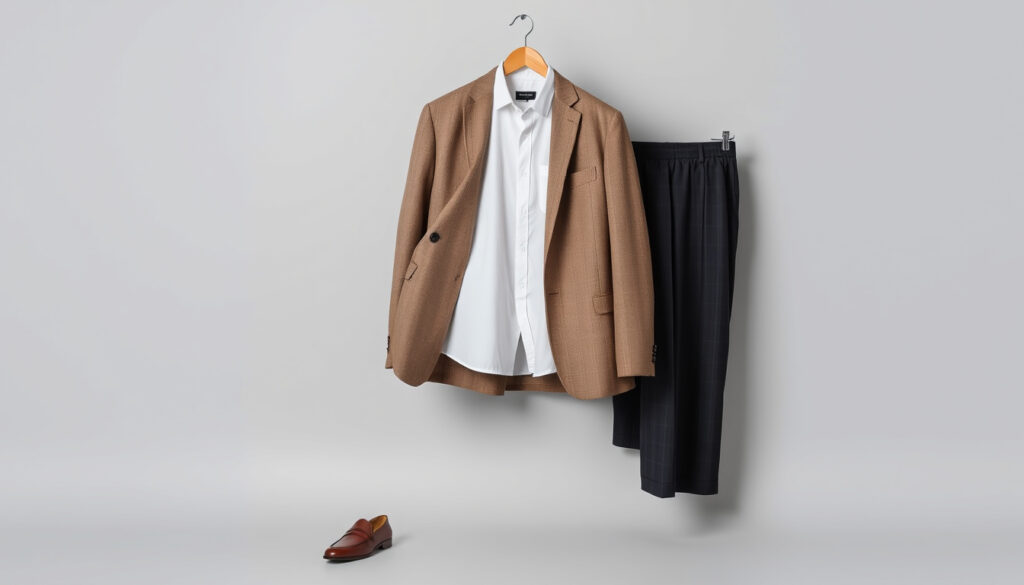
Smart Casual Dress Code: A Practical Guide With Rules
Few dress codes stir up as much second-guessing as smart casual. While the term has been around since the late 1990s, most people still pause before an event wondering if their favourite pair of jeans makes the cut.
Most asked question from Google People Also Ask: Are jeans ok for smart casual? ·
Number of unique PAA questions on smart casual: 10 ·
Wikipedia describes smart casual as: an ambiguously defined Western dress code
Quick snapshot
- Jeans are acceptable if dark, clean, and well-fitted (Indeed career guide)
- Athletic wear and flip-flops are not appropriate (Axcet HR workplace guide)
- Blazers and chinos are classic smart casual staples (Emily Post attire guide)
- Whether sneakers are always acceptable varies by context
- The specific definition of smart casual is ambiguous and subjective
- Whether the 2-finger rule applies to all denim fits is debated
- Term originated in the late 1990s, tied to workplace dress code shifts
- Jeans remain the most debated item under this code
- Smart casual is defined by balance, not a checklist of items
- Heuristics like the 2-finger and 3-3-3 rules make dressing easier
Four facts, one pattern: smart casual lives in the gap between formal and relaxed, and most confusion comes from missing a clear framework. The table below sums up the essentials.
| Aspect | Detail |
|---|---|
| Origin of term | Late 1990s, popularised in workplace dress code shifts |
| Common venues | Office, business casual events, semi-formal parties |
| Most debated item | Jeans – allowed under conditions |
| Key fabric rule | No denim on denim; no athletic materials |
The implication: once you see smart casual as a ratio of formal to casual cues, the “what-if” doubts fade. The next sections unpack each rule and example.
Are jeans ok for smart casual?
Yes, with conditions. The Texas Workforce Commission (state employment resource) lists dark jeans or casual pants as acceptable smart casual items. Pair them with a structured blazer or a crisp button-down shirt and you’re set.
When jeans are acceptable
- Dark wash, no rips or heavy fading
- Clean and well-kept – Axcet HR (workplace policy advisor) emphasises that torn, dirty or excessively wrinkled clothing is inappropriate
- Paired with a blazer, sports coat, or fine-knit sweater
What to avoid with jeans
- Light wash, distressed, or baggy fits
- Jeans with oversized logos or embellishments
- Denim-on-denim (unless it’s a deliberate, refined outfit)
The 2-finger rule explained
If you can pinch two fingers of fabric at your thigh, the jeans are too loose. This quick test ensures a tailored silhouette that reads intentional, not sloppy. The rule works best for straight or slim cuts.
Jeans are allowed, but they must look chosen, not grabbed from the laundry pile. The Emily Post Institute (etiquette authority) recommends nicer casual wear over baggy clothes.
The pattern: denim works when the rest of your outfit raises the overall formality, not when the jeans are the loudest item.
What qualifies as a smart casual attire?
Smart casual combines formal and casual elements in a single outfit. Indeed career platform describes it as a professional style that incorporates trendy pieces for a clean, comfortable semi-formal look.
Core principles: balance and refinement
- One structured piece + one relaxed piece (e.g., blazer + dark jeans)
- Clean lines and good fit trump labels
- Nothing should look borrowed from the gym or the beach
Key pieces for women
- Tailored trousers or knee-length skirts
- Blouses, fine-knit sweaters, smart camisoles
- Blazers, cardigans, structured jackets
- Loafers, ankle boots, block heels, clean ballet flats
Key pieces for men
- Chinos, dark jeans, tailored trousers
- Button-down shirts, polos, fine-gauge sweaters
- Sports coats, blazers, unstructured jackets
- Loafers, brogues, desert boots, clean minimal sneakers
A person who knows these pieces can walk into any smart casual event and feel appropriate. The Blu’s style guide (menswear retailer) calls a tailored blazer the cornerstone of smart casual dressing.
The catch: it’s not about owning everything on the list. Two or three well-chosen items allow dozens of combinations that hit the mark.
What is not allowed for smart casual?
Several items break the code. The Axcet HR guide explicitly bans athletic wear, beach-type clothing, flip-flops, hoodies, crop tops, visible undergarments, and torn clothing. Blu’s style guide (menswear retailer) adds leggings, gym wear, and flip-flops to the no-go list.
Items to avoid
- Ripped or heavily distressed denim
- Graphic t-shirts with slogans or logos
- Sweatpants, joggers, leggings
- Flip-flops, crocs, athletic slides
- Overly formal items like tuxedos or ball gowns
Mistakes that break the dress code
- Mixing too many casual items (e.g., hoodie + sweatpants + sneakers)
- Wearing clothes that are wrinkled, stained, or ill-fitting
- Ignoring the context – a wedding needs more polish than a team lunch
2026 updates in smart casual fashion
Trends are loosening slightly: tailored joggers made from wool or cotton are creeping into acceptable territory, and clean white sneakers are now widely accepted. But ripped denim and athletic mesh remain out.
The trade-off: as the boundaries shift, the core principle stays – your outfit should signal that you made an effort. The Texas Workforce Commission (state employment resource) frames it as “taking a casual look and dressing it up so it looks more professional.”
What are the 2-finger and 3-3-3 rules for smart casual?
These two heuristics simplify building a smart casual outfit without memorising a long list of dos and don’ts.
The 2-finger rule for jeans fit
- Pinch the fabric at your mid-thigh with thumb and forefinger
- If you grab more than two fingers of material, the jeans are too loose
- Aim for a slim or straight leg that skims the body without clinging
The 3-3-3 rule for outfit composition
- Limit your outfit to three colours (e.g., navy, white, tan)
- Incorporate three textures (e.g., cotton, wool, leather)
- Use three main pieces (e.g., jacket, top, bottom)
This rule prevents over-complication while ensuring visual interest. It’s a guideline, not a straitjacket – sometimes four pieces work better.
How these rules simplify dressing
Instead of asking “is this smart casual?”, you ask “does this fit well? Are the colours balanced?”. The rules shift the focus from approval to composition. Indeed career guide notes that smart casual and business casual are similar, but smart casual allows more room for personality.
These two heuristics eliminate the guesswork, turning dress-code anxiety into a simple compositional choice.
What is smart casual dress code for work?
Workplace smart casual varies by industry. The Texas Workforce Commission (government employment resource) lists smart casual as one of four common workplace codes, alongside business professional, business casual, and casual.
Office-appropriate smart casual
- Structured blazers or cardigans over a blouse or button-down
- Tailored trousers, knee-length skirts, or dark jeans (check company policy)
- Leather shoes, loafers, or clean leather sneakers
Indeed career platform recommends avoiding denim in more conservative offices unless the culture explicitly allows it.
Industry variations (tech vs finance)
- Tech: jeans and sneakers are often accepted; hoodies are not smart casual unless layered under a blazer
- Finance & law: trousers, blazers, and closed-toe shoes are expected; denim is rare
- Creative agencies: more colour and texture allowed, but still no gym wear
Smart casual for remote meetings
On video calls, visible smart casual still matters: a collar or blazer on top, but the lower half can be relaxed. However, if you need to stand up, make sure the full outfit holds up. Emily Post Institute advises that even casual dress should be “informal, comfortable, clean, and professional.”
Why this matters: your remote wardrobe still influences colleagues’ perceptions. A well-fitted blazer on screen communicates readiness, even when the meeting is from home.
How to build a smart casual outfit step by step
- Choose a structured base. Start with one tailored item: a blazer, sports coat, or a pair of tailored trousers. Blu’s style guide (menswear retailer) calls the tailored blazer indispensable, and indeed a single structured piece anchors the whole look.
- Add a relaxed counterpoint. If you started with a blazer, wear dark jeans or chinos. If you started with trousers, pair them with a knit sweater or a casual button-down.
- Pick footwear that lifts the outfit. Loafers, brogues, clean desert boots, or minimal leather sneakers. Avoid flip-flops, athletic trainers, and anything with a worn-out look.
- Check the 3-3-3 rule. Three colours, three textures, three pieces. Adjust if something feels off.
- Step back and ask: would I feel comfortable meeting a client or a friend’s parents? If yes, you’re likely good. If no, swap one casual piece for a smarter alternative.
The five-step method only works if each piece is clean and well-fitted.
For quality staples like blazers and chinos, consider retailers featured in our Marks & Spencer Online Ireland: Shopping, Delivery & Food Guide.
What we know and what remains unclear
Confirmed facts
- Jeans are acceptable if dark, clean, and well-fitted (Indeed career guide)
- Athletic wear and flip-flops are not appropriate (Axcet HR workplace guide)
- Blazers and chinos are classic smart casual staples (Emily Post attire guide)
- Smart casual sits between business casual and formal (Texas Workforce Commission)
What’s unclear
- Whether sneakers are always acceptable varies by context
- The specific definition of smart casual is ambiguous and subjective
- Whether the 2-finger rule applies to all denim fits
- Regional expectations (UK vs US vs Ireland) differ
Perspectives from the experts
“Smart casual is an ambiguously defined Western dress code that is generally considered casual wear but with smart (in the sense of well dressed) components.”
“Smart casual is a dress code that combines both formal and casual attire.”
Two definitions, one thread: smart casual is a blend. The hard part is knowing how much of each side to pour in – and that’s where the rules and tables below help.
For the UK professional, the choice is clear: invest in a few quality pieces that bridge casual and formal, or risk being underdressed at the next client meeting or dinner. The difference between a blazer and a hoodie is often just one decision in the morning, but the impression it leaves lasts the entire event.
For a deeper dive into the nuances of this dress code, check out this smart casual dress code guide that breaks down the rules and examples in detail.
Frequently asked questions
Can I wear sneakers with smart casual?
Yes, but choose clean, minimal leather sneakers in neutral colours. Avoid chunky athletic trainers or worn-out gym shoes. Context matters – sneakers are more accepted in tech and creative workplaces than in finance or law.
What colors are best for smart casual?
Neutrals like navy, grey, beige, white, and black work well. Add one accent colour (e.g., burgundy or olive) for interest. The 3-3-3 rule suggests limiting to three colours per outfit.
Is a tie required for smart casual?
No. Smart casual never requires a tie. If you wear a button-down shirt, leave the top button undone. The code sits well below formal dress levels.
Are polo shirts smart casual?
Yes, a well-fitting polo shirt in a solid colour is a classic smart casual piece. Pair it with chinos or dark jeans and loafers for a reliable formula.
Can you wear a dress for smart casual?
Absolutely. A simple midi or knee-length dress in a structured fabric works well. Layer with a blazer or cardigan and finish with ankle boots or flats.
What is the difference between smart casual and business casual?
Business casual is more conservative – think chinos, button-downs, and no denim. Smart casual allows more personality: dark jeans, blazers, and even clean sneakers. Indeed career guide notes they are similar but smart casual is less formal.
Are hats acceptable in smart casual?
Smart casual typically excludes hats unless they serve a stylistic purpose (e.g., a flat cap or fedora with a tailored coat). Avoid baseball caps.
For those looking to build their smart casual wardrobe locally, our Shops in Wexford Town – Clothes, Crafts & Food Guide highlights excellent options for finding these key pieces.
More related posts
 Blue Lagoon Iceland Christmas Opening Times & Winter Guide
 Offshore Law Companies in Guernsey: The Top Firms and Services
 Homestore and More Limerick: Still Open, Location & Deals
 How to Draw Santa: Easy Step-by-Step Guide for All Ages
 Built in Wardrobes Ireland: Costs, IKEA PAX Alternatives & More
 Gold Rings for Women: Complete Guide to Style & Rules
 Dublin Weather This Week: Forecast, Rain & Temperatures
 Calories in a Pint of Guinness: Complete Guide
